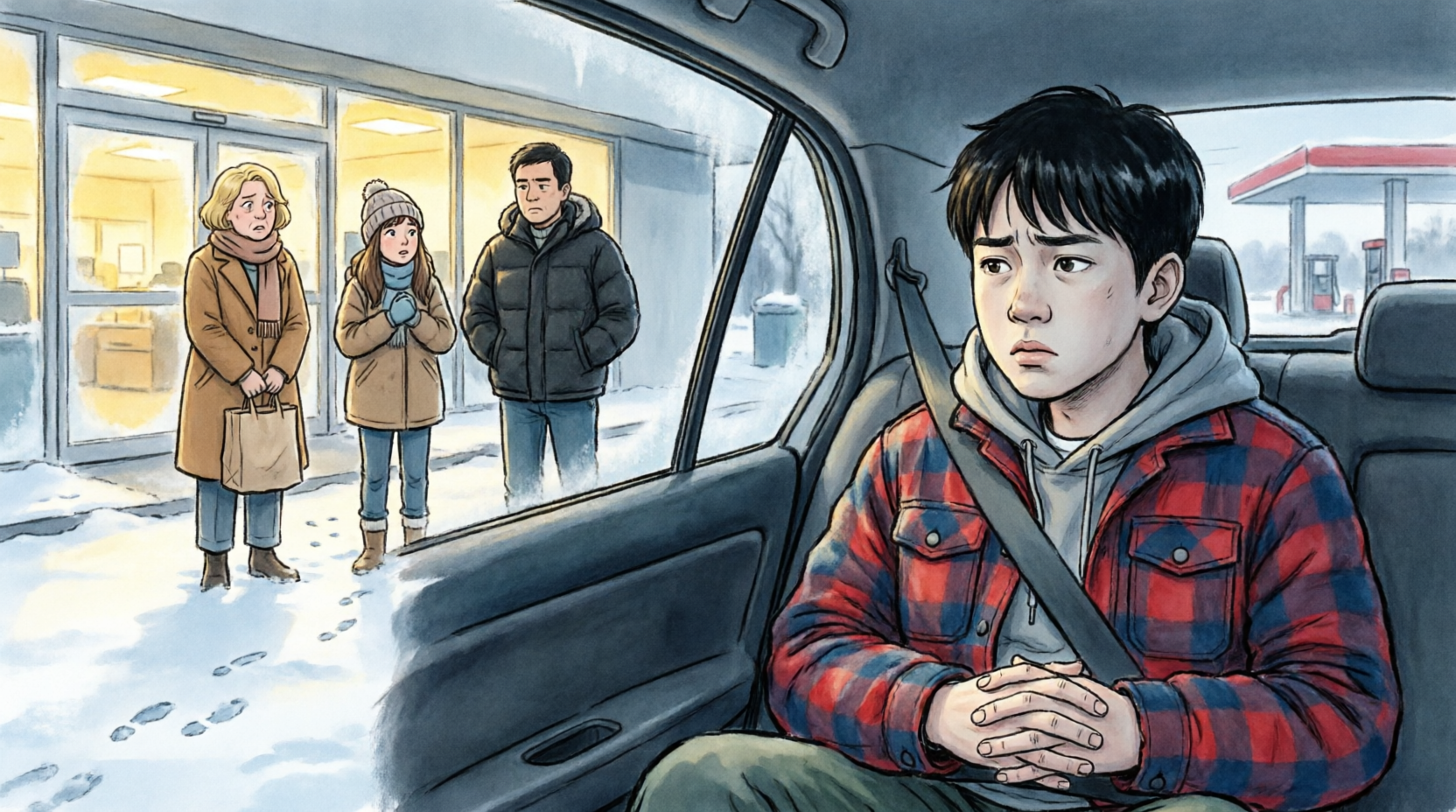
“It’s Just Gas,” My Mom Said Like It Was Nothing—Then My Real Dad Pulled Out 18 Years of Bank Statements and Everyone Went Silent
I was halfway through arithmetic when the pain first announced itself—not as a warning, not as a slow discomfort I could politely ignore, but as a sharp, bright stab in the lower right side of my abdomen, quick and precise, like somebody had reached under my ribs and pressed one finger into a bruise that had been waiting years to be touched.
At first, I did what I had been trained to do.
I pretended nothing was happening.
That was not a medical decision. It was a survival instinct. In the Parker house, pain was not treated like information from your body. Pain was a request, and requests were dangerous. Requests made people look up from whatever they were doing and decide whether you were worth the interruption. Requests invited sighs, eye-rolls, accusations, lectures, and sometimes laughter. If the pain belonged to my younger half sister, Samantha, the whole house shifted around it. If Sam had a headache, my mother dimmed the lights, Greg drove to CVS, and everyone spoke in soft voices. If I had a fever, my mother stood in the doorway with folded arms and asked if I was sure I was not just trying to get out of something.
By eighteen, you learn the rules of your own home even when nobody admits there are rules.
Mine were simple.
Need less.
Want less.
Hurt quietly.
So when the ache came, I lowered my eyes to the worksheet on my desk and kept my pencil moving.
Mr. Henson was at the board explaining rational expressions to a room full of seniors who had mostly given up pretending they cared. It was early December in Warren County, Ohio, and the classroom heaters had been running too high all morning, filling the air with that dusty, metallic warmth school buildings get in winter. A few students had their heads down. Someone behind me was tapping a pen against a notebook. Outside the window, the sky hung low and gray over the football field, promising snow before the end of the day.
I looked at the problem in front of me.
Two fractions. Variables. A line for the answer.
I could not remember what the numbers meant.
The pain pulsed again, deeper this time.
I pressed my palm against my side under the desk and shifted slightly in my chair. Maybe I had pulled something in gym. Maybe it was gas. Maybe I had eaten too fast at lunch. I started making excuses for my body before anybody else could. That was another habit I had learned at home: defend yourself before the trial began.
My name is Ethan Parker, and I had spent most of my life being treated like an unwanted witness to my mother’s first mistake.
My mother, Kelly Parker, got pregnant with me during her junior year of college at Miami University in Oxford. That was the part she admitted. The rest changed depending on who was listening. Sometimes she said my biological father had vanished. Sometimes she said he had been dangerous. Sometimes she said he had been selfish, immature, unstable, a man who “loved the idea of being a father until it got real.” When I was little, I believed her because children believe the parent who stays, even if staying is not the same as loving.
His name was David Miller.
I knew almost nothing else about him except that I looked like him, and that seemed to be the original sin I carried into every room.
Same dark eyes.
Same stubborn chin.
Same thick brown hair that never stayed flat.
My mother once told a neighbor at a Fourth of July cookout, laughing as if she were making a harmless joke, “It’s like living with my ex’s face every day.”
Greg laughed too.
Greg always laughed when my mother found a way to make me smaller.
Greg Parker entered our lives when I was eight. He worked in commercial flooring, owned three pairs of sunglasses, and believed that sarcasm counted as leadership. He moved his boxes into our rented duplex in Mason with the confidence of a man who had decided a family was something he could rearrange to suit himself. He was not violent in the obvious way people imagine when they hear the word stepfather. He did not throw me through walls or show up drunk with a belt in his hand. He was worse in a quieter, more socially acceptable way. He specialized in making cruelty sound like common sense.
“Don’t be soft.”
“Stop playing victim.”
“You always need something.”
“You’re just like your dad.”
That last line worked because it carried a whole mythology with it. My father was selfish; therefore, my needs were selfish. My father was dramatic; therefore, my pain was dramatic. My father was supposedly unreliable; therefore, any emotion I showed was evidence I would become unreliable too.
When Samantha was born a year after Greg married my mother, the house finally had the child it wanted.
Sam was blond like Greg, blue-eyed like my mother, round-faced and charming in the way some children learn early because the world rewards them for existing. To be fair, she did not create the family hierarchy. She was born into it. But by the time she was old enough to understand, she had learned to benefit from it.
Sam got praised for breathing.
I got corrected for taking up space.
Sam got dance classes, soccer, birthday parties with balloon arches, an iPhone upgrade when hers “started acting weird,” and a used Honda Civic for her seventeenth birthday because she needed transportation “for her future.”
I got a twenty-five-dollar gift card and a lecture about gratitude.
Sam got invited on the Disney trip with Mom’s sisters because “it would be crowded” and “you probably wouldn’t enjoy it anyway.” I stayed home with Greg’s frozen pizzas and watched photos appear in the family group chat like evidence presented against me. Sam in mouse ears. Mom holding a glittery drink. Greg pretending to be annoyed while smiling in every picture.
The group chat was called The Parkers ❤️.
I was in it, technically.
That was how most things worked in our family. I was included enough that outsiders could not say I was excluded. I had a place at the table, but it was the chair nearest the kitchen, the one people bumped while carrying plates. I had a room, but it doubled as storage whenever Greg needed somewhere to put tools or Christmas bins. I had parents, but one was a story I had been told not to question, and the other treated mothering me like a bill she resented paying.
By senior year, I had learned to be low-maintenance in the way neglected kids often do. I kept my grades decent. I worked weekends at a movie theater. I did my own laundry. I made my own appointments when I could. I rarely asked for rides. I did not complain about dinner portions or missing field trips or the way my mother’s face tightened when teachers said I had potential.
Potential meant I might become someone who could leave.
I think that frightened her more than failure would have.
So when the pain hit in Mr. Henson’s class, I did not raise my hand.
I put my head down for a second and pretended to study the page.
A bead of sweat slipped down the back of my neck.
The classroom felt suddenly too bright. The hum of fluorescent lights sharpened. The tapping pen behind me became unbearable. I swallowed hard against a wave of nausea and tried to breathe through my nose the way I had seen athletes do when they were hurt but trying to stay in the game.
Five minutes passed.
Then ten.
The pain did not fade. It gathered itself. It became more specific, settling low and right, as if a small hot nail had been driven into me and left there.
I knew enough from health class and late-night internet searches to be afraid of the word appendix. But fear did not make me brave. Fear made me think of my mother.
If the school called home, she would be annoyed.
If I asked to go to the nurse, she would ask why I waited.
If I said it hurt badly, Greg would ask whether I was “dying or just being dramatic.”
If Sam had plans, I would be the problem ruining them.
The thought of dealing with them felt almost as unbearable as the pain itself.
That is the part people who grow up loved do not always understand. When you are neglected long enough, asking for help feels like setting off an alarm inside a building where everyone already thinks you are responsible for the fire.
I lasted another seven minutes.
Then my vision went grainy around the edges.
I slid my phone out under the desk with one shaking hand and opened The Parkers ❤️.
My thumb hovered over the keyboard.
For a moment, I considered texting my friend Kevin instead. Kevin Hayes sat two rows over in English and lived ten minutes from school. But he was in class too, and even if he saw it, what would he do? Drive me? He did not have a car that day. His older brother had borrowed it.
So I typed into the family chat.
Me: I’m not feeling good. Stomach pain. Can someone pick me up?
I watched the message appear beneath Sam’s last photo from the mall, a mirror selfie with the caption outfit crisis lol.
Three dots appeared under my mother’s name.
Then disappeared.
Then appeared again.
Mom: Again?
One word.
That was the whole first response to my body telling me something was wrong.
Greg: You trying to skip school?
Sam: Ugh we’re literally out.
I stared at the screen until the letters blurred.
The pain stabbed again, so sharply that I made a small sound. The girl beside me glanced over, then looked away because high school students are experts at pretending not to notice private humiliation.
I typed again.
Me: It’s bad. Please.
Nobody responded.
Mr. Henson turned around from the board. “Ethan, you with us?”
The entire room seemed to look at me.
I forced myself upright. “Yeah,” I said, though my voice came out thin.
“You need the nurse?”
Every instinct in me screamed no.
“No, I’m okay.”
Mr. Henson frowned, but he turned back to the board.
I put my head down again.
Forty-five minutes is not a long time if you are scrolling your phone, waiting for a pizza, sitting through a lecture, or driving across town in ordinary traffic. Forty-five minutes is an eternity when something inside you has begun to fail and the people responsible for you are debating whether your suffering is inconvenient enough to ignore.
I watched the minute hand move.
10:18.
10:27.
10:36.
Every few minutes, I checked my phone.
Nothing.
I imagined my mother in whatever store Sam had dragged her to, seeing my messages and sighing. I imagined Greg making a face. I imagined Sam rolling her eyes because my pain had interrupted whatever version of family bonding excluded me until I needed something.
By the time the bell rang, I could barely stand.
I gathered my books with hands that felt detached from my arms. Kevin appeared beside me in the hallway.
“Dude,” he said. “You look terrible.”
“I’m fine.”
“You are not fine.”
“My mom’s coming.”
He did not look reassured. Kevin had known me since freshman year. He had seen enough small Parker family moments—missed pickups, weird comments, my mother “forgetting” to sign forms—to understand that the sentence my mom’s coming did not mean what it meant in other households.
“Want me to walk with you?”
I wanted to say yes.
Instead I shook my head. “I’m good.”
He hesitated. “Text me, okay?”
“Yeah.”
I made it to the front office by leaning on walls between waves of pain. The receptionist, Mrs. Carver, looked up from her computer and immediately sat straighter.
“Ethan? Honey, are you sick?”
“My mom’s picking me up.”
“Do you need the nurse?”
“No,” I said automatically.
She looked uncertain, but the office phone rang, and I used that moment to lower myself into one of the plastic chairs near the window.
The chair was cold.
My skin was hot.
I folded forward with one arm wrapped around my stomach and waited.
At 11:03, my phone buzzed.
Mom: Fine. Coming.
Fine.
As if I had negotiated too aggressively and won a favor.
They arrived at 11:31.
I saw the black SUV pull up to the curb through the front office window. Greg was driving. My mother sat in the passenger seat wearing sunglasses even though the sky was flat and gray. Sam was in the back, earbuds in, phone held close to her face.
I stood too quickly and nearly fell.
Mrs. Carver half rose. “Are you sure you don’t want—”
“They’re here,” I said, and pushed through the office door before she could finish.
Outside, the winter air hit my damp face and made me shiver. Snow flurries drifted down like ash. The walk to the curb felt longer than any hallway I had crossed that day.
The passenger window rolled down halfway.
Greg leaned toward it, one hand still on the wheel. “Were you trying to skip school?”
Not are you okay.
Not what happened.
Not you look awful.
I tried to answer, but my stomach clenched and all that came out was a breath.
My mother turned in her seat enough to look at me over her sunglasses. “Get in, Ethan. You’re letting cold air in.”
I opened the rear door and climbed in beside Sam.
The movement sent a bolt of pain through my abdomen so intense my vision flashed white. I gripped the seat in front of me and tried not to vomit.
Sam pulled one earbud out. “You smell like sweat.”
I leaned back, breathing hard.
The SUV smelled like vanilla air freshener, fast-food fries, and Sam’s coconut body spray. The combination made nausea rise in my throat.
My mother twisted around. “Well?”
“It hurts,” I said. “Really bad. Right here.”
I pressed my fingers against the lower right side of my stomach.
Greg glanced at me in the rearview mirror. “Appendicitis now? That what we’re doing?”
“I don’t know. I just need—”
“You know,” he said, turning out of the school driveway, “your dad used to do this.”
My throat tightened.
Greg loved bringing up David when I was cornered. He treated my biological father like a genetic disease I had inherited and failed to manage.
“He’d get some little ache and act like the world was ending,” Greg continued. “Kelly, remember that story?”
My mother gave a small laugh. “He was dramatic.”
I stared at the back of her head.
“I need to go to the hospital,” I said.
Sam groaned. “Seriously?”
My mother looked over her shoulder again, and this time her expression was sharper. “You better not be doing this for attention.”
The words landed with such familiarity that for a second they almost worked.
Maybe I was overreacting.
Maybe I was weak.
Maybe I had pulled something.
Maybe the pain was not as bad as I thought.
Then the SUV hit a pothole, and the world exploded.
I folded forward with a strangled gasp. Hot bile rose in my throat. Greg cursed and grabbed an empty grocery bag from the center console, shoving it backward without looking.
“Here. If you’re going to puke, don’t do it on my seats.”
I vomited into the bag.
Sam made a disgusted sound and pressed herself against the door. “Oh my gosh.”
My mother sighed, not frightened, just irritated. “Ethan.”
I could not speak. My whole body shook.
Greg rolled down his window two inches. “Great. Now the car’s going to stink.”
I wanted to disappear. That was the reflexive shame of it. Even in pain, even with my body revolting, part of me felt embarrassed for inconveniencing them. That is how deep neglect goes. It does not just teach you that other people will not care. It teaches you to apologize for needing care at all.
We drove past the first urgent care.
I watched it through the window.
“Mom,” I whispered. “Please.”
“What?”
“There. Urgent care.”
Greg snorted. “Emergency rooms cost money. You got emergency room money?”
“I have insurance,” my mother said, annoyed at him now but not on my behalf. “But we don’t even know if this is serious.”
“It is,” I said.
“You don’t know that.”
“I can’t— I can’t sit up.”
Sam’s phone dinged.
She looked down and suddenly made a sound of pure panic.
“My phone is dying.”
Nobody answered.
“No, like, actually dying. It’s at ten percent.”
I closed my eyes.
“Owen is going to FaceTime me in twenty minutes,” Sam said, voice rising. “He said he wanted to talk before practice, and if I don’t answer he’ll think I’m ignoring him. And Madison said he’s been talking to Brooke from Chemistry, so if he thinks I’m ignoring him, he’ll probably ask her to homecoming instead.”
Greg muttered, “Teenage emergencies.”
But he said it fondly.
I opened my eyes as a new wave of pain rolled through me, lower and heavier now. “Hospital,” I croaked. “Please.”
My mother and Greg exchanged a look.
I knew that look.
It was the look they used when deciding whether I was worth the inconvenience.
“There’s a Best Buy right there,” my mother said suddenly, pointing through the windshield at the big blue sign across the intersection. “We can grab a portable charger.”
For a moment, I thought pain had scrambled my hearing.
“What?”
“It’ll take two seconds.”
“No.”
My voice came out louder than I expected. It startled even me.
My mother turned around fully. “Excuse me?”
“No. Please. I need a hospital.”
Sam leaned forward between the seats. “Ethan, it’ll literally take five minutes.”
Greg looked at me in the mirror. His eyes were flat. “Stop being dramatic. Five minutes won’t kill you.”
That sentence would later become the one people repeated in court, in reports, in whispers among relatives who had once called me ungrateful.
Five minutes won’t kill you.
The thing is, Greg believed it when he said it. That was the horror of it. He was not making a threat. He was dismissing a reality he did not want to see.
He turned into the Best Buy parking lot.
The store was bright against the gray day, its windows glowing with displays of televisions, laptops, headphones, things that beeped and flashed and promised convenience. The parking lot was half full. Snow flurries spun in the air. My breath came fast and shallow.
Mom unbuckled.
“Don’t,” I said.
She paused with her hand on the door handle. “Ethan.”
“I’m serious. Please don’t leave me.”
Something moved across her face. Not concern. Anger at being forced to feel concern.
Greg opened his door. “Kelly, come on.”
Sam was already out, clutching her phone like a wounded animal.
My mother looked at me once more. “We’ll be right back.”
Greg clicked the lock button.
The sound was sharp and final.
The doors sealed.
The windows stayed up.
Then they walked away.
I remember the first minute clearly because disbelief kept me alert. I watched them cross the parking lot together, Greg slightly ahead, Sam hurrying, my mother pulling her coat tighter around herself. They looked like any family running an errand. Maybe a little rushed. Maybe annoyed. Nothing about them said they had left an eighteen-year-old boy curled in the back seat with a medical emergency.
I tried the door.
Locked.
I pressed the unlock button near my elbow.
Nothing happened because Greg had the key fob and the child lock on the rear door had always been weird.
I reached for my phone.
My fingers were slick with sweat. The screen lit up, then blurred. I swiped wrong twice, opened the calculator somehow, closed it, tried to find the emergency call screen. My hands would not obey. Pain radiated through my abdomen in hot, sick waves.
Outside, a woman loaded a TV into the back of a minivan. A man in a Bengals jacket walked past with a receipt in his mouth while carrying a box under each arm. None of them looked in.
Why would they?
The SUV was just a car.
I was just a shadow in the back seat.
Through the store window, I could see my mother near the phone accessories aisle. She held two charger boxes, comparing them. Greg had drifted toward a wall of televisions showing a basketball highlight reel. Sam stood near the counter, her face lit by her phone.
I pressed my forehead against the cold glass.
“Please,” I whispered.
To them.
To anyone.
To my own body.
Then something changed.
The pain, which had been sharp and localized, suddenly spread. It was not relief. It was worse. A deep internal shift, like pressure bursting through a barrier it had been straining against. A hot wave moved across my abdomen and up into my chest. My skin went cold. My heart began beating too fast and too weak at once.
I did not have medical training.
I did not need it.
Some primitive part of me understood that something inside had ruptured.
My vision narrowed.
I thought, absurdly, of the family group chat. The Parkers ❤️. A little red heart after a name that had never protected me.
I thought of Kevin telling me to text him.
I thought of the father I had been told abandoned me, a man whose face I apparently wore like an accusation.
I thought of my mother laughing through the Best Buy window.
That is the detail that stayed with me more than the pain.
She laughed at something Greg said. Her mouth opened wide. Her shoulders loosened. She looked, in that instant, like a woman on an ordinary errand, not a mother whose son was collapsing behind tinted glass.
Neglect, I would later understand, often looks like normal life continuing around a person who has stopped being seen.
My phone slid from my hand onto the floor.
The store lights stretched into long white lines.
Then everything went dark.
I did not wake up in the ambulance.
I did not wake up in the emergency room.
I did not wake up when they cut off my hoodie, inserted lines, drew blood, ordered scans, or rushed me toward surgery. Those details came later in fragments from records, nurses, doctors, and one witness statement from a stranger named Melissa Grant, who noticed me slumped sideways in the back seat while loading a printer into her car.
Melissa told police later that at first she thought I was sleeping.
Then she saw my face.
She banged on the SUV window. When I did not respond, she tried the door. Locked. She called 911 at 12:18 p.m. She waited beside the car until the ambulance came. She was still there when my mother, Greg, and Sam emerged from Best Buy with a phone charger and found paramedics breaking the SUV window.
My mother screamed—not because I was unconscious, according to Melissa, but because “you’re damaging our car.”
I am grateful I do not remember that part.
What I remember is waking to light.
Too much light.
White ceiling. White walls. A beep somewhere to my right. Something taped to my arm. My throat raw, as if I had swallowed sandpaper. My mouth so dry my tongue felt foreign.
I tried to move and discovered pain everywhere.
Not the same pain as before. This was bigger, duller, surgical, surrounding me like a second body.
A face appeared above me. A nurse. Male, maybe late twenties, dark skin, kind eyes, navy scrubs. He leaned into my line of sight with practiced calm.
“Hey there,” he said. “Ethan? Can you hear me?”
I blinked.
“You’re in the ICU at Kettering Memorial. You had surgery. You’re safe.”
Safe.
The word did not fit anywhere I knew.
I tried to speak. Only a dry rasp came out.
The nurse lifted a small cup with a sponge swab. “Your throat’s going to hurt. You were intubated for a while. I’m Tyler. I’m your nurse tonight.”
He touched the swab gently to my lips.
Water.
Not much, but enough to make my eyes sting.
“How are you feeling?” he asked.
Most people ask that question as a formality. Tyler asked it like my answer had weight.
I tried again.
“Hurts.”
“I know,” he said. “I’m going to check your pain medication schedule. You’re on antibiotics too. You were very sick when you came in.”
Very sick.
That was the first official phrase.
Later came others.
Ruptured appendix.
Peritonitis.
Severe sepsis.
Emergency laparoscopic appendectomy converted to open washout.
Tachycardic.
Febrile.
Unresponsive.
Delay in care.
At that moment, all I knew was that I had woken in a room where machines cared more about my body than my family had.
I drifted in and out for hours.
Sometimes Tyler was there. Sometimes another nurse. Sometimes a doctor. I heard bits of conversation near the doorway.
“Family in waiting room?”
“Mother was here earlier.”
“Social work consult?”
“Not yet.”
My mother came in at some point. I remember her perfume before I remember her face. She stood beside the bed and looked down at me with an expression that tried to be tender but could not hide irritation underneath.
“You scared us,” she said.
I could not answer.
Greg stood behind her with his arms crossed. “Doctors say you’re lucky.”
Sam hovered near the door, eyes red, phone in hand. For once, she was not looking at the screen.
My mother reached for my hand, then seemed to notice the IV and withdrew. “You should have told us it was that bad.”
Even half drugged, half conscious, I understood what she was doing.
Moving the blame.
Rearranging the room before I could speak.
You should have told us.
Not we should have listened.
I turned my head away.
My mother sighed. “Ethan, don’t be like that.”
Tyler entered then, and the room changed. He did not do anything dramatic. He simply came in with a tablet and a calm professional face, and my mother immediately softened her voice.
“We’re just so worried,” she said.
Tyler glanced at me, then back at her. “He needs rest.”
“Of course,” she said. “We’ve been here the whole time.”
The whole time.
A lie so smooth it almost glided.
Tyler’s eyes flicked to the chart.
He said nothing, but something in his face told me he had heard more than the words.
After they left, I stared at the ceiling and cried silently because my throat hurt too much to make sound.
I do not know how long Tyler waited before speaking.
“Ethan,” he said quietly, “do you feel safe with your family?”
The question entered the room like fresh air through a locked window.
I turned my head toward him.
No adult had ever asked me that directly.
Teachers asked if things were okay at home, but usually in the vague way adults ask when they are hoping the answer will not require paperwork. Relatives asked if my mother was “still strict.” Neighbors said Greg was “a character.” People saw pieces. Nobody named the whole thing.
Tyler pulled a chair close and sat at eye level.
“You don’t have to answer right now,” he said. “But you can.”
My lips trembled.
“I’m scared to go home,” I whispered.
He did not look shocked.
Recognition passed through his expression—not because he knew my story, but because he had seen enough stories like it.
“Can you tell me why?”
The truth had been trapped inside me for so long that once the first sentence came, the rest followed in broken pieces.
I told him about the pain at school. The texts. The wait. Greg asking if I was skipping. Mom accusing me of attention-seeking. Sam’s charger. Best Buy. The locked doors. The moment the pain changed. The glass. The laughter.
I expected him to interrupt with doubt.
He did not.
He listened with the stillness of someone holding evidence carefully.
When I finished, his jaw was tight.
“Thank you for telling me,” he said. “I’m going to put in a request for social services to speak with you. Is that okay?”
“Yes,” I whispered. “Please.”
He stood and typed on his tablet right there, not later, not when he got around to it, not after checking whether my mother approved.
Right there.
That was the first bridge.
The next morning, sunlight filtered through the ICU blinds in pale stripes. My pain was better controlled, though moving still felt like my abdomen had been stitched together with fire. A woman with dark hair in a neat bun entered carrying a tablet and a folder. Her badge read Samantha Burns, LSW, Hospital Social Services.
“Good morning, Ethan,” she said. “I’m Samantha. Tyler asked me to come talk with you.”
Her voice was gentle, but not soft in the useless way some adults become soft when they want to avoid hard truths. She pulled the chair closer.
“I know you’ve been through a lot medically, so we can go slowly. Can you walk me through what happened before you arrived here?”
I told her.
This time, the story came in order.
Math class.
Text messages.
Forty-five minutes.
SUV.
Vomiting.
Urgent care passed.
Best Buy.
Locked doors.
Blackout.
Samantha asked precise questions, not suspicious ones. What time did you text? Who was in the car? Did you ask to go to the hospital directly? Were you able to exit the vehicle? Had anything like this happened before?
Anything like this.
That opened older doors.
I told her about the smaller things because suddenly the smaller things did not seem small. Being left at school for hours after activities because my mother “forgot.” Having dental pain ignored until a teacher called home. Greg refusing to pick up medication after I had bronchitis because “walking around will clear your lungs.” My mother telling relatives I was difficult, expensive, ungrateful. Sam’s needs always being emergencies while mine were character flaws.
Samantha took notes.
At one point, she said, “I want you to know something. Medical neglect can include delays in seeking treatment when a reasonable caregiver would understand a child needs urgent care. What happened before you arrived is very serious.”
The word neglect felt both too small and too enormous.
I was eighteen, legally an adult in some ways and still a high school student on my mother’s insurance in others. That complicated the system, but Samantha explained that safety planning still mattered. Hospital discharge still mattered. Documentation still mattered.
“Do you feel safe returning to your mother’s home after discharge?” she asked.
The honest answer was no.
But no felt like a cliff.
If I said no, what happened? Foster care? A shelter? My mother’s rage? Greg’s revenge? Sam crying because I had “ruined the family”? Relatives calling me dramatic? Police? Court?
So I said, “I don’t know.”
Samantha did not push.
She placed a card on my bedside table. “That’s an acceptable answer. You don’t have to solve everything today. But you are not alone in this now.”
After she left, I lay there staring at her card.
Samantha Burns, LSW.
A phone number.
An email.
Proof that somebody had written my fear into the world.
My phone sat on the rolling table beside the bed, charged by the hospital cord Tyler had found for me. The screen was cracked from where it had fallen in the SUV. I unlocked it with trembling fingers.
There were messages.
Mom: They’re saying you were unconscious. Why didn’t you answer us?
Greg: You better not start telling people we did something wrong.
Sam: Are you awake?
Kevin: Dude answer me. Mr Henson said ambulance?? Are you ok???
I scrolled past them to a contact saved under the name Dave From School.
My thumb hovered.
Eight months earlier, I had found my biological father’s number in an old phone my mother kept in a junk drawer under expired coupons and dead batteries. She never deleted anything; she just buried it. I had been looking for a charger cable and found the phone wrapped in a rubber band. It still turned on when plugged in. Curiosity is dangerous in houses built on secrets, but I had already learned that nobody was going to hand me the truth.
There were old messages. Most were from numbers I did not recognize. One thread had a name attached.
David.
The last message, dated almost twelve years earlier, read: Kelly, please let me speak to him on his birthday. I sent the support payment and the card. You don’t have to talk to me. Just please let me hear his voice.
My hands shook so hard I nearly dropped the phone.
There were earlier messages too.
I’ll be at the visitation center at 10.
No one is here. Is Ethan sick?
Kelly, the court order says I get the first Saturday.
I’m not trying to fight. I just want to see my son.
Please.
I copied the number into my phone and saved it under a fake name because I did not know what else to do. I told myself I might never use it. I told myself maybe the messages were misleading. Maybe my mother had reasons. Maybe he had done something terrible and learned to sound innocent in writing.
But deep down, I saved it because part of me had never fully believed a person could vanish without even trying.
Now, lying in the ICU with staples in my abdomen and antibiotics dripping into my arm, I opened that contact.
I typed one sentence, deleted it, typed another.
Finally, I wrote:
Me: This is Ethan. I almost died. Mom wouldn’t take me to the hospital. I’m in ICU at Kettering Memorial. Please help.
I stared at the message.
Then I hit send.
The bubble turned blue.
For a few seconds, nothing happened.
Then three dots appeared.
My chest tightened.
The response came fast.
Dave From School: Ethan? This is David. Are you safe right now?
I cried so suddenly that pain tore across my abdomen and I gasped.
Me: I’m in the hospital.
David: I’m leaving now.
Me: You live far?
David: Pittsburgh. I’ll drive.
Me: You believe me?
The dots appeared. Disappeared. Appeared again.
David: I have been waiting eighteen years for you to ask me for anything. I believe you.
I put the phone down on the blanket and covered my face with my hand.
That afternoon, my mother arrived wearing her performance face.
I knew it instantly.
There was the worried brow. The soft cardigan. The coffee cup she carried but did not drink. Greg came behind her in a Bengals hoodie, looking annoyed at the hospital itself. Sam trailed in last, quieter than usual.
My mother leaned over me. “Hi, honey.”
Honey.
She only called me that when people might hear.
“How are you feeling?” she asked.
“Bad.”
Her eyes flicked toward the hallway, where a nurse passed. “Well, of course. You gave us quite a scare.”
I looked at her.
“You left me in the car.”
Her face tightened.
Greg stepped forward. “Careful.”
Sam looked down.
My mother smiled without warmth. “You were conscious when we went in. You said you were fine.”
“No, I didn’t.”
“You weren’t making sense, Ethan. You were upset.”
“I asked for the hospital.”
Greg scoffed. “Here we go.”
Then my mother saw Samantha Burns’s card on the table.
Everything in her changed.
It was quick, almost invisible, but I had been studying my mother all my life. Her eyes sharpened. Her mouth pressed flat. Her hand moved toward the card, then stopped because touching it would reveal too much.
“What’s this?” she asked lightly.
“A social worker.”
“Why?”
“To help coordinate discharge.”
Greg’s face darkened. “Discharge to where?”
My heart pounded.
I did not answer.
My mother looked toward the door again, then lowered her voice. “Ethan, what have you been saying?”
“The truth.”
Greg gave a short laugh. “Your truth?”
A nurse entered before I could respond. Not Tyler this time, but a woman named Marcy with silver hair and reading glasses hanging from a chain. She checked my IV bag and glanced between us.
“Everything okay in here?”
My mother immediately changed posture. “Yes. We’re just worried. He’s been through so much.”
Marcy looked at me.
I did not know what my face showed, but she stayed longer than necessary, adjusting things that did not need adjusting until my mother and Greg finally stepped back.
“We’ll let you rest,” my mother said tightly.
At the door, she turned.
“This family doesn’t need strangers involved,” she said.
Marcy looked up. “Hospitals are full of strangers, Mrs. Parker. Some of them keep people alive.”
My mother left without answering.
I loved Marcy a little for that.
That evening, Dr. Robert Anderson came to my room.
He was tall, gray at the temples, with tired eyes and the direct manner of someone who had spent decades deciding quickly whether human bodies were about to fail. He checked my incision, asked about my pain, listened to my lungs, and then stood at the foot of the bed with his tablet.
“Ethan,” he said, “I want to review the timeline with you.”
My mother had returned by then. Greg was at the window. Sam sat near the wall, silent.
Dr. Anderson looked at me, not at them.
“You were brought in by ambulance at approximately 12:39 p.m. You were febrile, tachycardic, and unresponsive. Imaging and surgical findings were consistent with a ruptured appendix and infection in the abdominal cavity. Based on inflammation and contamination, the rupture likely occurred before arrival and after a period of untreated symptoms. Can you tell me when your pain began?”
This was the moment.
The one I had been waiting for since I heard my mother say we rushed here the second we realized something was wrong.
My mouth was dry. My heart hammered against the monitor leads.
But my voice, when it came, was clear.
“The pain started during second period around ten. I texted my family. They took forty-five minutes to pick me up. I asked to go to the hospital. We passed urgent care. Then we stopped at Best Buy because Sam needed a phone charger. They locked me in the car while they shopped. That’s when the pain changed. That’s when I think it ruptured.”
Silence.
My mother’s face drained of color.
Greg’s fists clenched.
Sam stared at the floor.
Dr. Anderson typed.
For a long time, the only sound was the monitor beeping beside me.
My mother found her voice. “That’s not— He’s confused. He was in pain. He doesn’t remember accurately.”
Dr. Anderson did not look at her.
“Ethan,” he said, “did you lose consciousness in the vehicle?”
“Yes.”
Greg snapped, “He was being dramatic before that.”
Dr. Anderson looked up then.
His expression remained professional, but the temperature in the room dropped.
“Mr. Parker, nothing about your son’s condition was dramatic. It was life-threatening.”
Greg shut his mouth.
Dr. Anderson turned back to me. “I’ll be coordinating with social services regarding discharge and safety planning.”
Then he left.
The silence after that was different.
Alive.
Dangerous.
My mother leaned close to the bed, her voice low enough that she thought the hallway could not hear. “Do you understand what you’re doing?”
I looked at her face, the face I had spent eighteen years trying to please, predict, and survive.
“Yes,” I said.
For once, I did.
She opened her mouth, but Marcy appeared in the doorway.
“Visiting hours are almost over,” the nurse said.
Greg grabbed my mother’s arm. “Come on.”
Sam followed them out, but at the door she turned back.
Her eyes were wide and wet.
“I’m sorry,” she whispered.
I did not know what she meant.
Sorry for the charger.
Sorry for the car.
Sorry for believing them.
Sorry for being loved better and never questioning why.
I was too tired to ask.
The next morning, David came.
I heard footsteps in the hallway first, fast but uncertain, then a voice at the nurses’ station.
“I’m David Miller. I’m here to see Ethan Parker. I’m his father.”
Father.
The word moved through me like electricity.
A nurse checked with me before letting him in. I said yes, though my pulse jumped so high the monitor noticed.
When he stepped into the room, the world rearranged itself.
He was taller than I expected. Dark hair threaded with gray. A short beard. Wrinkled button-down shirt. Jeans with road dust on the cuffs. His eyes found me and stopped.
My eyes.
Not similar.
The same.
He stood just inside the doorway for a moment, one hand still on the frame, looking at me like a person who had reached the end of a road he had been told did not exist.
“Ethan,” he said.
His voice broke on my name.
That broke me.
He crossed the room in three long steps and stopped beside the bed, as if afraid to touch me without permission.
I lifted one hand.
He took it carefully, avoiding the IV.
“I’m sorry,” he whispered. “I’m so sorry.”
I cried then, not quietly, not prettily. Pain pulled at my incision, but I could not stop. David bent over the bed and hugged me around the tubes with such care that it hurt less than it should have. He smelled like cold air, coffee, and laundry detergent.
For the first time in my life, I cried against my father’s shoulder.
Not the idea of him.
Not the villain my mother had built.
The real man.
He sat beside me for hours.
At first we did not talk much. He held my hand. He asked careful questions about pain, water, whether the lights bothered me. He listened when nurses spoke. He wrote down medication names. He did not make jokes. He did not sigh. He did not act like my body had inconvenienced him by nearly dying.
Eventually, I asked, “Why didn’t you come?”
The question had lived in me so long it came out flat.
David closed his eyes.
“I tried,” he said.
He took out his phone, then hesitated. “Can I show you?”
I nodded.
He showed me documents.
Court orders. Old emails. Payment records. Scanned letters. A custody agreement from when I was three granting him supervised visitation once a month after my mother claimed he had anger issues. Receipts from the visitation center. Notes from dates when Kelly did not bring me. Motions filed. Motions denied. A relocation notice he said he never received until after she had already moved from Ohio to Kentucky for a year, then back under Greg’s name. Child support payments through the state system every month.
Every month.
For eighteen years.
The numbers scrolled past in neat lines.
$412.
$412.
$412.
Sometimes more when medical support was added.
My mother had told me he never paid a dime.
“She said you abandoned me,” I whispered.
David’s eyes filled. “I know.”
“She said you didn’t want me.”
“I wanted you every day.”
“She said you were dangerous.”
He nodded slowly, like he had been expecting that. “I had a DUI when I was twenty-two. Before you were born. I got treatment. I haven’t had a drink in nineteen years. Your mother used it in court, and maybe she was right to be cautious at first. But I was never dangerous to you. I never hurt you. I never stopped trying to see you.”
I looked at the payment records again.
The past shifted.
Every memory that had rested on the idea of my father’s abandonment began to tilt. My mother saying we could not afford my school trip because “your father doesn’t help.” Greg saying, “Maybe ask your real dad for money,” then laughing. The way my mother acted like feeding and clothing me was a burden she carried alone. The way she bought Sam new boots, new electronics, new everything while telling me to be grateful for clearance racks and leftovers.
If David had been paying, where had the money gone?
I did not ask.
I already knew enough.
“Why did you stop going to court?” I asked.
He winced. “I ran out of money. Then I ran out of ways to find you. Every time I filed, notices came back wrong, addresses changed, lawyers cost more than I had. I hired a private investigator once when you were twelve. He found an address in Kentucky, but by the time I got there, you were gone again.”
“You came to Kentucky?”
“I went to a school office with your picture from when you were five. They wouldn’t tell me anything. They said if there was a custody issue, I needed to go through the court.”
He gave a broken laugh. “Everything was always through the court. Except your mother knew how to stay one step outside the paper.”
I stared at the ceiling.
All those years, I had imagined David somewhere else, choosing not to care. It was easier, in a terrible way, to believe I had been abandoned once than to realize I had been stolen from repeatedly through lies, paperwork, exhaustion, and money.
Samantha Burns came midmorning and found David beside my bed.
She asked him for identification. He gave it without offense. She asked if he had documents. He handed her a folder so organized it looked like he had packed it in hope long before I texted.
They stepped into the hallway.
Through the partially open door, I could hear low voices. Legal custody. Age of majority. Medical decisions. Safe discharge. CPS. Emergency petition.
When they returned, David’s face had changed. Not softened. Set.
Samantha sat beside me. “Ethan, given the medical neglect concerns and your stated fear of returning home, I’m recommending that you not be discharged to your mother’s residence at this time.”
My breath caught.
“There are a few options,” she continued. “Because you’re eighteen, you have more say than a minor would, but you’re still in high school and dependent for care during recovery. Your father is willing to provide temporary care. We’ll need to coordinate with the hospital, protective services, and possibly family court depending on insurance and custody records. But the immediate concern is your safety.”
I looked at David.
“You’d take me?” I asked.
His face twisted. “Ethan, I would have taken you from the first day if they had let me.”
That afternoon, my mother walked in and saw David sitting by my bed.
For one perfect second, she was speechless.
I had never seen that before.
Then the mask came down.
“David,” she said, voice sweet and deadly. “What are you doing here?”
David stood. “Visiting my son.”
Her eyes flicked to me, then to Samantha Burns’s card, then back to him. “You need to leave.”
“No.”
“You have no rights.”
“I have eighteen years of court records saying I tried to exercise them.”
“You abandoned him.”
“I paid child support every month. I requested visitation. I sent letters. I have copies.”
Color flooded her face. “You’re a liar.”
Greg stepped into the room behind her. “Who the hell let him in?”
A nurse appeared in the doorway. Then security. Hospitals, I discovered, have a different tolerance for shouting than families do.
My mother pointed at David. “He is not allowed near my son.”
The security guard looked at me. “Ethan, do you want this visitor removed?”
My mother answered for me. “Yes.”
The guard did not move. He kept looking at me.
My throat tightened.
I said, “No. I want him here.”
My mother stared at me like I had slapped her.
“Ethan.”
“No,” I said. “You don’t get to decide that.”
Greg took one step forward, and security moved with him.
“Sir,” the guard said, “step back.”
Greg stopped.
My mother began crying then—not real tears at first, but the opening act of them. “After everything I’ve done for you?”
I thought of the SUV.
The locked doors.
The charger.
The pain.
“What did you do?” I asked.
Her face changed again.
Rage broke through.
“You ungrateful little—”
Security escorted her out before she finished.
Greg followed, muttering threats about lawyers. Sam stayed frozen near the door, pale, her phone forgotten in her hand. For once, she looked younger than seventeen.
She whispered, “I didn’t know it was that bad.”
I looked at her.
“You were there.”
She flinched.
Then she left too.
The days after that became a strange mixture of medical recovery and legal awakening.
My body healed slowly. I had drains for a while. My abdomen felt heavy and wrong. The incision pulled when I shifted. Nurses made me walk the hallway even when I hated them for it, because apparently bodies need movement to return from the edge. Tyler cheered quietly every time I made it farther. Marcy brought me ice chips and called me kiddo. Dr. Anderson explained infection markers and discharge criteria with the seriousness of a man who believed I deserved to understand my own body.
Samantha Burns visited daily.
She helped me document everything.
The texts from the family chat.
The timestamps.
The witness statement from Melissa Grant.
The ambulance report.
The surgical notes.
The statement from Dr. Anderson that delay in care likely worsened my condition.
She also contacted my school counselor, Jasmine Ford.
Jasmine came to the hospital with a folder of accommodation forms and eyes full of controlled anger. She had always been kind to me at school, but I had never told her much. Neglected kids often become skilled at protecting the adults who fail them. It feels safer than exposing them.
She sat beside my bed and said, “Ethan, I need you to know I’m documenting this as a mandatory reporter.”
Mandatory reporter.
Another phrase that sounded bureaucratic until it became a lifeline.
“I should have told someone sooner,” I said.
Jasmine shook her head. “Adults should have noticed sooner.”
That sentence stayed with me.
Adults should have noticed sooner.
Not you should have screamed louder.
Not you should have been more convincing.
Not you should have earned care.
Adults should have noticed.
Kevin visited on the fourth day with a backpack full of homework, a bag of Sour Patch Kids I could not eat, and the uncomfortable energy of a teenage boy facing mortality in a friend’s hospital room.
“Dude,” he said when he saw me. “You look like a ghost that got hit by a truck.”
I laughed and immediately regretted it because my incision protested.
“Don’t make me laugh.”
“Sorry. You look… handsome and medically stable.”
David, sitting in the corner, smiled.