After a year of living abroad, I drove up to my quiet mountain cabin expecting nothing but solitude and the familiar creak of old floorboards
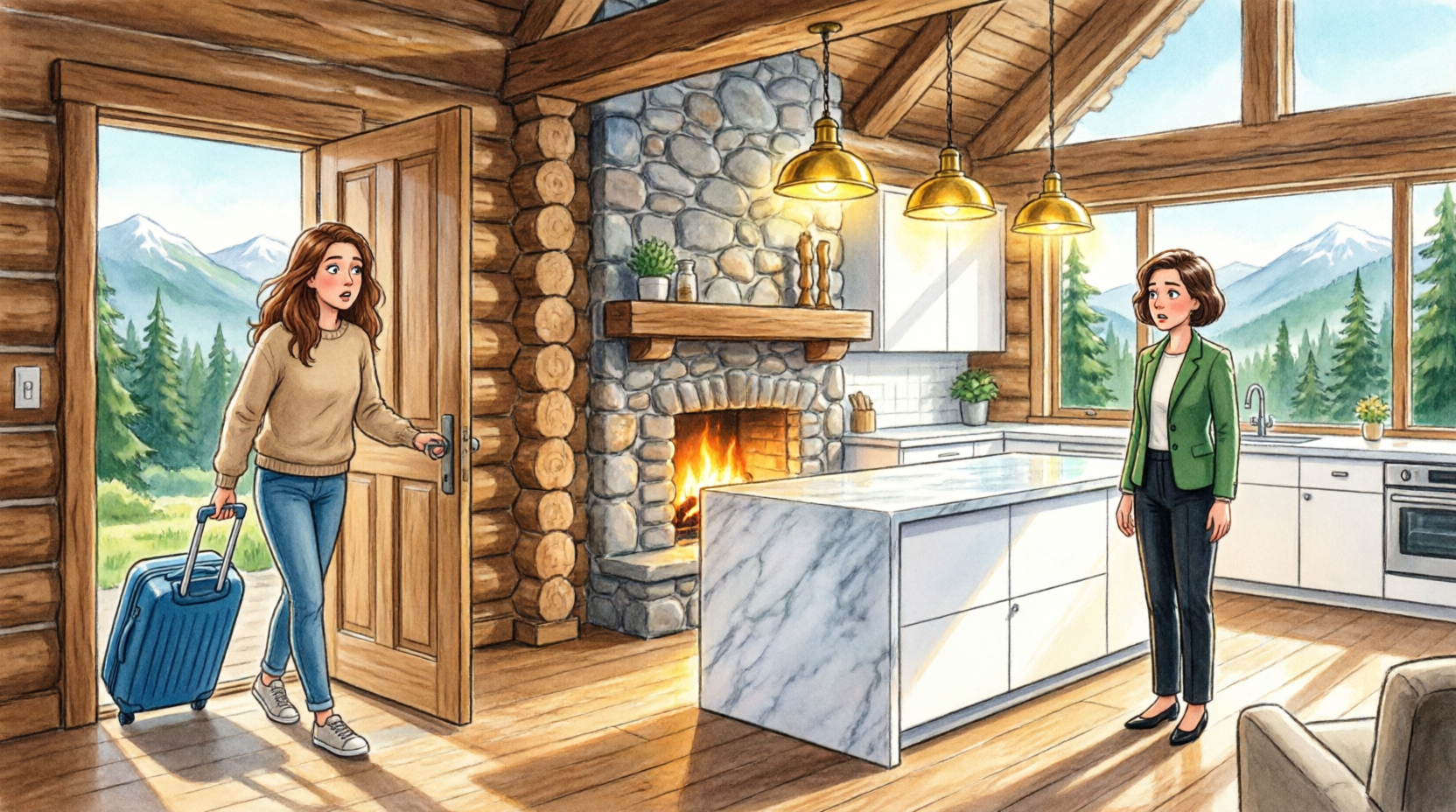
The first thing I noticed was not the pine smell.
That should have been the first thing. For thirteen months, while I lived in a furnished apartment in Berlin above a bakery that opened before dawn and filled the stairwell with the smell of rye bread and coffee, I had missed the pine smell more than I admitted to anyone. I missed it on winter mornings when German rain ticked against the windows and the street below shone black under bicycle tires. I missed it in the office when my team argued about deadlines in a mixture of English and German and I found myself staring at the screensaver on my laptop, a photograph of the Colorado mountains taken from my back deck. I missed it when I woke up at 3:00 a.m. with jet lag and remembered the cabin in that odd, painful way you remember a person you have loved and neglected at the same time.
The pine smell belonged to the cabin. It came from the trees, of course, but also from the old beams, the firewood stacked under the porch roof, the decades of wind that had pushed resin and dust into every crack. It was the smell of my father’s flannel jacket, of wet boots near the door, of Saturday mornings when he and I would drive up from Denver before sunrise with a thermos between us and a cooler full of sandwiches my mother had wrapped in wax paper. It was the smell of a place that had survived family arguments, hailstorms, birthday weekends, two bad winters, one bear breaking into the shed, and the long silence after Dad died.
So when I opened the cabin door that afternoon, suitcase in hand, I expected that smell to hit me first.
It did not.
The first thing I noticed was the countertops.
White quartz.
Not laminate. Not the yellowed, stubborn laminate my father had once called “ugly but loyal.” Not the counter where he had taught me to clean trout with newspaper spread underneath. Not the counter where I had set my first laptop in college while pretending the mountain air would help me write code faster. Not the counter with the burn mark from the time Dad forgot a cast-iron skillet was hot and then spent ten years calling the scar “character.”
White quartz stretched across the kitchen like a magazine spread.
A matte-black faucet curved over a deep farmhouse sink that had definitely not been there when I left. Stainless-steel appliances glinted under recessed lighting. Recessed lighting. Where my old fluorescent box fixture had buzzed and flickered for twenty years like a tired insect, there were now smooth little circles of light set into a ceiling that looked freshly skim-coated and painted.
The honey-oak cabinets were gone.
My father’s cabinets.
Gone.
For a few seconds, I stood in the entryway with my hand still on the doorknob, the Colorado afternoon behind me and someone else’s kitchen in front of me.
My cabin had always been stubbornly old. That was part of its dignity. It sat up in the Rockies west of Idaho Springs, tucked along a gravel road locals called Elk Ridge Road even though the county map gave it some boring number no one used. It had a steep roof, a deep porch, a stone chimney, and windows that rattled when the wind came hard off the ridge. Dad and I had installed those honey-oak cabinets one July when I was sixteen. We had argued for three days about whether the upper cabinet near the stove was level. He said it was fine. I said it leaned left. He said houses leaned after enough winters and it was rude to point it out.
On the inside corner of the cabinet above the coffee mugs, where nobody saw it unless they knew to look, he had carved his initials with a utility knife. R.S. for Robert Stone. He had done it as a joke when Mom accused him of treating the cabin like a monument to himself. He winked at me and said, “Every craftsman signs his masterpiece, kid.”
That cabinet was gone now.
All of it was gone.
The old fridge that hummed like a tractor was gone. The scarred butcher-block cart was gone. The rack where Dad hung cast-iron pans was gone. The cracked ceramic rooster my mother had bought at a yard sale in Golden was gone. Even the ugly square floor tiles had been replaced with wide-plank hardwood that looked expensive enough to make guests speak quietly.
And there, barefoot at the new island that had not existed when I left, sipping white wine from one of my mother’s old glasses as if she were waiting for a photographer from Architectural Digest, sat my sister Amber.
She looked up like I was the surprise.
“Noah!” she said, bright and sharp. “You’re early.”
I did not move.
I had been on planes for fourteen hours. Berlin to Frankfurt, Frankfurt to Denver, then a shuttle to the long-term parking lot, then the drive up I-70 with my body still set to another continent’s clock. My suitcase handle was damp against my palm. My shoulders hurt from the flight. My brain was full of airport static and mountain light.
“I own the place,” I said.
My suitcase hit the new hardwood with a dull thump.
Amber slid off the barstool, smiling in the way she smiled when she had already decided the conversation and was merely waiting for you to agree with it. She was thirty-seven, two years older than me, with the same dark hair as mine but smoother, styled, expensive. She wore a loose cream sweater, gold bracelets, and that effortless expression she had cultivated since high school, the one that told people she had never been wrong, only misunderstood.
“You said you were landing tonight.”
“I said I was landing today.”
“Well.” She lifted her glass slightly. “Surprise.”
I looked around again. “You remodeled my kitchen.”
Her smile widened, as if she had been waiting for me to admire her courage.
“We are living here, so I remodeled it because it was old.”
We.
That word slid into the room before Derek did.
He appeared from the hallway carrying a tape measure, wearing jeans and a gray T-shirt with his construction company logo printed across the chest: HARTLINE CUSTOM BUILD. Derek Hartline had been Amber’s boyfriend for almost four years, long enough to be considered family by people who valued endurance over judgment. He was tall, broad-shouldered, handsome in a sunburned, contractor-commercial sort of way, with a reddish beard trimmed close and the kind of confidence men develop when people have been calling them handy since childhood.
“Hey, man,” he said, as if we had planned to meet there. “Looks good, right?”
I stared at him.
He looked from me to Amber, then back again, his grin tightening slightly.
“Opened the wall,” he said, gesturing toward the living room. “Did all-new plumbing, electrical, new appliances, flooring tie-in. Whole thing. Really modernized it.”
Modernized.
I turned slowly toward the place where the half wall used to separate the kitchen from the living room. It was gone. The living room now opened wide into the kitchen, an airy mountain-retreat concept built for photographs, for strangers drinking wine at the island, for people saying things like “flow” and “natural light.”
Dad had built that half wall because Mom wanted a place for cookbooks. He had measured it twice and still cut one shelf too short. He had sworn, Mom had laughed, and I had sat on the floor holding screws in my palm, thinking there was nothing in the world more permanent than watching your parents make a house together.
“Where is my stuff?” I asked.
Amber blinked, too quickly.
“What stuff?”
“The cabinets. The rooster. The cast iron. The old table by the window. Dad’s things.”
She made a small dismissive motion with her hand. “The old junk? Donated. Some of it was damaged anyway. You’re welcome.”
The room became very still.
Derek looked at the floor.
Amber lifted her glass again, but I noticed her fingers tightened around the stem.
My jaw ached before I realized I was clenching it.
“We talked about you using the cabin,” I said. “Weekends. A few weekends a year. That was the agreement.”
Her face shifted into wounded innocence so quickly I almost admired the muscle memory.
“Mom said it was fine if we stayed longer.”
“Mom does not own the cabin.”
“No, but she is our mother, Noah.”
“That is not a legal category.”
Amber laughed once, lightly, as if I had made a joke by accident. “You’ve been in Berlin making tech money and ignoring everyone. Somebody had to take care of this place.”
I looked at the quartz again.
“Is that what you call this?”
She set her wine down, went to the island, and slid a piece of paper across the counter toward me.
An invoice.
Not a real invoice. A Word document printed crookedly, with uneven margins and a bold title across the top:
NOAH STONE – KITCHEN RENOVATION – $55,000
For a moment, I honestly thought my jet-lagged brain was playing some elaborate trick on me.
I picked it up.
Line items marched down the page in vague, confident language.
Materials.
Labor.
Design fee.
Project management.
Electrical.
Plumbing.
Demo.
Fixtures.
Consulting.
Emergency upgrade fee.
At the bottom, in bold, was the total.
$55,000.
Amber leaned her hip against the new island.
“It will cost you just fifty-five grand,” she said. “Which is honestly a family rate.”
I looked up from the paper.
“Fifty-five thousand dollars.”
She nodded, encouraged by the repetition, mistaking disbelief for negotiation.
“For my kitchen,” I said, “that you tore out without asking.”
Derek raised both hands in a calming gesture. “Look, Noah, I get it. Big surprise. But the place needed work. The electrical was old, the plumbing was a mess, and this increases your property value like crazy. We did you a favor.”
“You removed a structural wall?”
Derek’s smile flickered. “Non-load-bearing.”
“Did you pull permits?”
Amber made a sound of annoyance. “Oh my God, can we not start with permits? You just got home.”
Derek rubbed the back of his neck. “We know what we’re doing.”
That was not an answer.
My eyes returned to the invoice.
“No license numbers,” I said. “No permit fees. No inspection records. No itemized receipts.”
Amber’s cheeks flushed.
“You always do this.”
“Read documents?”
“You make everything hostile.”
“I came home and found a new kitchen in my house.”
“Our family house.”
I looked at her then.
She held my gaze. Chin lifted. Eyes bright with a challenge she had been waiting months, maybe years, to deliver.
The cabin was not our family house. Not anymore.
It had belonged to Dad first. After he died, his will left it to me. Not because he loved Amber less. Not because I asked for it. Because Amber had taken Mom’s house in Denver after Mom moved into the condo in Lakewood. Because Amber had received money from Dad’s retirement account when her first marriage collapsed. Because, as Dad wrote in the letter tucked behind the will, “Noah is the only one who ever loved that old place for what it was, not what it could be worth.”
Amber had not forgiven him for that.
She had not forgiven me either.
“You said I could use it,” she said.
“I said six weekends a year.”
“You weren’t here.”
“That does not transfer ownership.”
“You left.”
“For a work assignment.”
“For a year.”
“Thirteen months.”
“Oh, congratulations. You can count while abandoning everything.”
There it was.
The family version of logic. If you leave, everything you own becomes available for reinterpretation.
Behind her, on the island, her laptop sat open. A notification banner popped up in the corner of the screen before she could close it.
Airbnb Payout Scheduled – Mountain Luxe Retreat – $2,347.90
For half a second, none of us moved.
Then another subject line flashed beneath it.
Re: Quitclaim deed template.
Amber lunged toward the laptop and slapped it shut.
Too late.
I looked at the closed laptop. Then at her.
“Mountain Luxe Retreat,” I said.
Her smile vanished.
Derek whispered, “Amber.”
She shot him a look.
I folded the invoice slowly in half.
“You’ve been renting out my cabin.”
She inhaled through her nose.
“I have been managing bookings while you’re gone.”
“No.”
“And you’re welcome for that too. Do you know what comparable places go for up here now? Do you have any idea what kind of money you were leaving on the table?”
“My table.”
“Don’t be childish.”
“Quitclaim deed template,” I said.
Amber’s eyes hardened.
“It would just be cleaner.”
“For what?”
“Taxes. Business structure. Liability. You’re never here, Noah.”
I let the folded invoice rest between my fingers.
“You want fifty-five thousand dollars,” I said softly, “and my cabin.”
Amber lifted her chin.
“I deserve something for holding this family together.”
That was the sentence she chose.
Not an apology.
Not an explanation.
Not even a clever lie.
I deserve.
I had heard those words in different forms my whole life. From Amber, they often arrived wrapped in family duty. She deserved the bigger bedroom because she was older. She deserved Mom’s help because she had a harder time. She deserved Dad’s truck after he died because she had kids to haul around, though she did not have kids and the truck was not running. She deserved patience, forgiveness, money, attention, understanding, second chances, and all the emotional real estate in whatever room she entered.
Amber did not steal things in her own mind.
She collected what had failed to recognize her value.
For most of my life, I had found it easier to let her.
That is the thing people misunderstand about quiet people. They think quiet means passive. Sometimes it does. Sometimes silence is fear. Sometimes it is exhaustion. Sometimes it is strategy. But there is another kind of silence, the kind that forms after years of watching someone mistake your restraint for weakness.
That was the silence that settled over me in my own remodeled kitchen.
I smiled.
Amber did not recognize it as a warning.
“Okay,” I said.
Derek blinked.
Amber narrowed her eyes. “Okay what?”
“Give me one week.”
“For what?”
“To make sure it’s all fair.”
The word seemed to please her. She relaxed by half an inch.
“You’ll see I’m right,” she said.
“Maybe.”
I picked up my suitcase, turned toward the door, then stopped.
“One thing.”
Amber folded her arms. “What?”
“Do not rent it again.”
She laughed, a sharp little burst. “You can’t just—”
“I can.”
Derek looked away again.
I opened the door.
The pine smell finally reached me then, cold and real from outside, slipping past the fresh paint and new wood and whatever candle Amber had burning on the mantle.
For one breath, it almost hurt.
Then I stepped onto the porch and closed the door behind me.
I drove down the mountain that night with the windows cracked, the cold air needling my face awake. The road twisted through pines and rock, past cabins with yellow windows, past dark slopes where snow still clung in shaded pockets even though it was April. My headlights caught the eyes of a deer standing at the edge of the gravel, and for a moment it stared at me with the calm disapproval of something native to the place.
I was not angry the way Amber expected.
No shouting. No slammed doors. No dramatic accusations sent in all caps. Anger burns hot and fast. It wants an audience. It wants to prove itself. What I felt was cleaner. Colder. A pressure behind the ribs, controlled and bright.
She had taken my place, my father’s work, and tried to invoice me for the privilege of being robbed.
She had turned my family cabin into a short-term rental with a fake luxury name.
She had apparently begun researching how to move ownership.
And she had done all of it because she believed the same thing she had always believed: that I would eventually sigh, calculate the emotional cost of resisting, and pay for peace.
That was the mistake.
I was done buying peace from people who broke into it first.
Back in Denver, my apartment looked exactly as I had left it and nothing like home. I owned it in that modern, urban way people own spaces they use as charging stations for busy lives. One bedroom. Exposed brick. Floor-to-ceiling windows overlooking a street where breweries, dog boutiques, and yoga studios had replaced most signs of the neighborhood I remembered from childhood. Before Berlin, I had lived there comfortably enough. After the cabin, it felt like a hotel room with tax documents.
I set my suitcase near the couch and opened the metal file box I had carried from place to place since Dad died.
People made fun of me for keeping paper.
I worked in software. My life was passwords, encrypted storage, shared drives, version histories, cloud architecture, systems that could move money across continents in milliseconds. But paper has a way of surviving convenience. Paper sits in drawers and waits for people to become honest again.
The folder was labeled Elk Ridge Cabin.
Inside were the deed, Dad’s will, insurance policies, tax statements, maintenance receipts, the well inspection from 2019, the septic repair invoice from 2020, and the agreement I had made Amber sign before I left for Berlin.
She had mocked me for it at the time.
“It’s a cabin,” she had said. “Not a hostage exchange.”
“It’s an agreement.”
“We’re siblings.”
“Then this should be easy.”
She signed digitally because I made her. Six weekends a year. Written notice required. No alterations, improvements, demolition, construction, or repairs beyond routine maintenance without prior written consent from the owner. No subletting. No commercial use. No assignment of access rights. No business activities. No storage of personal property beyond visit periods without permission.
Her name sat at the bottom in neat blue digital ink.
Amber Stone Hartline.
She and Derek were not legally married, but she used his last name when it benefited her and dropped it when it did not.
I opened my laptop next.
That was when the second wave of evidence began falling into place so quickly it almost seemed insulted I had not looked sooner.
Amber had not been subtle.
She had been confident.
There is a difference.
Her Instagram was public because private accounts did not build brands. Over the past year, she had posted the cabin dozens of times.
Weekend reset at our mountain retreat.
Hosting again and grateful for five-star guests.
When your side hustle starts looking like your main hustle.
Mountain Luxe Retreat is open for winter bookings.
DM for off-platform rates.
There were photographs of strangers on my deck. Couples in the hot tub I had bought used from a neighbor in 2018. A group of women drinking champagne in my living room beneath Dad’s mounted trout. A man I had never seen holding a guitar on my porch, wearing one of my old flannel shirts.
My flannel shirt.
I saved every screenshot.
I found the Airbnb listing through a cached search result first, then through a short-term rental aggregate site that had scraped the details before the listing went private. Mountain Luxe Retreat. Four beds. Sleeps eight. Newly renovated luxury kitchen. Perfect for corporate retreats, influencer weekends, romantic escapes, and high-end mountain content creation.
High-end mountain content creation.
I stared at that phrase for a long time.
The listing host was Amber H.
Superhost.
Forty-two reviews.
Average rating: 4.92.
Guests praised the stunning redesign, the gourmet kitchen, the beautiful open floor plan, the responsive host, the thoughtful touches, the feeling of staying in a designer mountain home.
One review mentioned a leak under the sink.
Another mentioned a “gas smell” near the stove that disappeared after opening windows.
Another said the host offered a discount for paying outside the platform on a future stay.
I saved all of it.
Then I searched my email.
There were messages from Amber over the past year that looked harmless alone and damning together.
Can we go up next weekend?
Can Derek leave some tools in the shed?
Do you care if I swap out the faucet? It’s gross.
Mom thinks it’s sad you never use the place.
You should let us take care of it long term.
Have you ever thought about putting the cabin into an LLC?
If something ever happened to you abroad, who would even manage the property?
Quitclaim deeds are not a big deal, right? Just updating paperwork?
I sat back from the laptop.
The city lights reflected in the window.
A year earlier, I would have responded to those messages with annoyance, maybe suspicion, and then I would have been pulled into a release deadline or a Berlin meeting or a call with my team in Singapore. Amber had understood distance better than I had. Distance made people assume things would wait. Meanwhile, she had been moving through the cabin one decision at a time, replacing the physical evidence of our father with the legal fog of her own entitlement.
I did not sleep much that night.
At 6:30 the next morning, I made coffee strong enough to make my hands shake, opened a blank document, and began building a timeline.
Date.
Event.
Evidence.
Potential violation.
Potential witness.
Potential remedy.
It looked less like a family dispute and more like an incident report.
That helped.
Family emotion is a swamp. Paperwork is a road.
By Monday morning, I had a plan.
I did not call Amber.
That would have been satisfying, not useful.
Instead, I started with the one thing she never respected.
Paperwork.
The first call was to the Clear Creek County building department.
A woman named Denise answered in the tone of someone who had already handled three homeowners pretending not to know what a permit was.
“Building and Planning, this is Denise.”
“Good morning,” I said. “My name is Noah Stone. I own a cabin off Elk Ridge Road, parcel number…” I read it from the tax statement. “I’ve been out of the country for a work assignment, and I’m concerned structural and mechanical work may have been completed without permits while I was away.”
The line changed.
Not dramatically. But Denise’s voice became more alert.
“What type of work?”
“Kitchen remodel, plumbing, electrical, possible wall removal, gas line work.”
“Do you know whether the wall was load-bearing?”
“The contractor says no. I have not verified that.”
“Who performed the work?”
“Hartline Custom Build. Derek Hartline.”
A pause. Keyboard typing.
“I’m not seeing any permits under that parcel for the past two years.”
“I was afraid of that.”
“Are you requesting an inspection?”
“Yes.”
“Since you’re the owner, we can open an enforcement inquiry. If work was completed without required permits, you may receive a notice of violation.”
“I understand.”
“Were you aware of or did you authorize this work?”
“No.”
Another pause.
“Put that in writing.”
“I will.”
“Include any agreement limiting access or alterations.”
“I have one.”
Denise exhaled softly. “Good. Send it.”
The second call was to my insurance company.
That one took longer because insurance companies require you to navigate menus designed by people who do not fear judgment in the afterlife. Eventually I reached a representative named Calvin, who began cheerful and ended grave.
“I need to update you on unauthorized changes to the property,” I said. “Unapproved structural, plumbing, electrical, and gas work. Also, it appears the property has been used as a short-term rental without my consent.”
“Short-term rental meaning vacation rental?”
“Yes.”
“Were guests staying there?”
“Yes.”
“Was this disclosed on your policy?”
“No. I did not know it was happening.”
Calvin’s friendliness drained away.
“Mr. Stone, until inspection is completed, we may need to suspend coverage for high-risk activity, including rental use. Your standard homeowners policy does not cover undisclosed commercial lodging.”
“I understand.”
“Do you have documentation that you did not authorize the rental activity?”
“Yes.”
“Please send it immediately.”
The third call was not a call at all.
It was a message to Airbnb through their reporting system, followed by an email to a legal contact I found after enough digging.
I attached the deed showing only my name. The signed access agreement prohibiting subletting and commercial use. Screenshots of the listing. Screenshots of Amber’s posts. A copy of my passport showing I had been abroad during many booking dates. A concise statement:
This property is being listed and rented without the consent of the owner. The host does not own the property and lacks authority to offer it for short-term rental. Please suspend the listing and preserve associated records pending potential legal proceedings.
Concise. Polite. Boring.
Boring is underrated. Boring is how adults in institutions know you are serious.
By noon, I had also contacted a real attorney.
Not because I did not trust myself to understand contracts. I understood enough. But I also understood that family disputes have a way of tempting people into self-representation, and self-representation has a way of turning righteous anger into procedural mistakes.
Her name was Rachel Kim, a property attorney in Denver recommended by a colleague who had once described her as “terrifying in a cardigan.” Her office was in a restored brick building near Capitol Hill, with plants in the lobby and legal magazines no one had touched since 2017.
Rachel was in her forties, small, composed, and direct in a way that made small talk feel like wasting state resources.
She read the rental agreement first.
Then the invoice.
Then the screenshots.
Then she took off her glasses and looked at me.
“Your sister is either very careless or very confident.”
“Both.”
“Did you ever give verbal permission for renovations?”
“No.”
“For rentals?”
“No.”
“For an ownership transfer?”
“No.”
“Did she have access to your mail, identity documents, or financial accounts?”
I hesitated.
“She had access to the cabin. Some old documents were there. Nothing active that I know of.”
“That you know of,” Rachel repeated, writing something down. “Pull your credit report.”
My stomach sank.
“You think—”
“I think people who misuse property sometimes misuse identity. I don’t like being surprised.”
Neither did I.
That night, I pulled the reports.
At first, nothing obvious appeared. No new credit cards I did not recognize. No loans. No mysterious mortgage activity. But there was an inquiry tied to a home improvement financing account under my name and the cabin address. Pending, not finalized. The vendor listed was a national hardware chain.
I stared at it until the words sharpened.
Then I remembered the invoice line item: materials.
I called the bank attached to the inquiry at 8:04 the next morning.
By 9:30, I was speaking with a fraud investigator.
By 10:15, I had confirmed someone had opened an online contractor purchase profile using my name, my cabin address, and Amber’s payment card. Several large orders had been placed for renovation materials. My name appeared as the property owner and account contact.
I did not need to raise my voice.
I did not need to accuse.
I sent my passport stamps, proof of residence abroad, the access agreement, and a statement: I did not authorize any account, purchase profile, transaction, or representation using my name.
The investigator thanked me in a tone that suggested this had moved from family mess into something with forms.
That afternoon, Amber texted.
Mom says you were weird when you came by. Are you seriously mad about the kitchen? You should be grateful.
I looked at the message for a long moment.
Then I set the phone face down.
She sent another twenty minutes later.
We need to talk about the invoice. Derek has crew expenses.
Then:
Noah.
Then:
Don’t ignore me. It’s childish.
I did not respond.
The first crack appeared Thursday.
I was in line for coffee near Union Station when Amber called. Her name flashed on the phone. For years, that name had carried a reflex: answer quickly, manage the mood, keep the peace before she escalated.
This time, I let it ring.
A voicemail appeared.
Her voice came through tight and high.
“Noah, some inspector just showed up at the cabin and says there are no permits on file for the kitchen or the wall Derek took out. He’s talking about fines and possible enforcement action. Call me back.”
I ordered my coffee.
An hour later, another voicemail.
This one was angrier.
“Did you do this? They’re saying we might have to open the walls back up. Derek is furious. This is your house; you need to fix it. Call me back right now.”
By early afternoon, the listing for Mountain Luxe Retreat had disappeared from Airbnb.
I checked twice.
Then I took a screenshot of the error page.
Record everything. That had become my private rule.
Friday morning, I drove back up the mountain.
Spring in Colorado is less a season than a negotiation. In Denver, sunlight had warmed the sidewalks. Up near the cabin, snow still hid in ditches and under the trees. The road was muddy where it was not frozen. My tires kicked gravel against the undercarriage. The sky had that bright, pitiless blue that makes every lie look poorly dressed.
The cabin looked different when I pulled up.
Same roofline. Same stone chimney. Same pines. But now the porch had new furniture, black metal chairs with beige cushions, a sleek propane fire table, and two potted evergreens arranged for symmetry. Someone had painted the front door charcoal. A small metal sign near the entry read MOUNTAIN LUXE.
I stood there staring at it.
Then I unscrewed the sign and set it face down on the porch.
Amber came out before I knocked. She wore leggings, a long cardigan, and the exhausted fury of someone who had expected sympathy and received paperwork.
“What is this?” she demanded.
She thrust a yellow sheet toward me.
Notice of Violation.
Failure to obtain building permits.
Requirement to submit plans.
Potential daily fines.
Inspection required.
Possible removal of non-compliant work.
I read it slowly, though I already knew what it said.
“You didn’t pull permits?” I asked.
Her eyes flashed.
“Don’t do that.”
“Do what?”
“Act calm. I know you did this.”
“I called because I don’t want my cabin burning down.”
“Derek said we didn’t need permits for cosmetic work.”
I looked past her into the open kitchen.
“You removed a wall, ran new electrical, changed plumbing, and touched a gas line.”
“It’s fine.”
“Is it inspected?”
She opened her mouth.
No answer came out.
Derek appeared behind her, red-faced and rigid.
“Your sister is blowing this out of proportion,” he said.
“The county inspector seems to disagree.”
Derek stepped onto the porch, lowering his voice. “Listen, man. A lot of this stuff is flexible up here. Everybody knows everybody. You file after, you true up, no big deal.”
“Great,” I said. “Then true it up.”
His jaw worked.
“It’s not that simple now that you called enforcement.”
“Permits are easier before the work is done.”
Amber jabbed a finger into my chest.
“You sabotaged us.”
I looked down at her finger.
She withdrew it.
“My Airbnb got suspended,” she said. “Because someone claimed I’m not the owner.”
“You aren’t.”
“I manage the property.”
“No.”
“I improved it.”
“No.”
“I live here.”
“That part also ends.”
Her face changed.
There is a moment when entitlement realizes the wall will not move. It does not become humility. Not at first. It becomes outrage.
“You can’t evict your own sister.”
“I can remove an unauthorized occupant from my property.”
“Mom will never forgive you.”
That sentence would have worked on me once.
Not because Mom had real authority over my choices. Because Amber had learned to place Mom in front of her like a shield. Mom, widowed and anxious and easily tired, who wanted everyone at Thanksgiving and no one raising their voice. Mom, who had spent our whole childhood saying, “Just let your sister have this one,” because Amber made conflict expensive and I made compliance quiet.
I thought of Dad’s initials carved into a cabinet that no longer existed.
“Mom can call me herself,” I said.
Amber’s phone buzzed.
She glanced down, and all the color left her face.
“What?” Derek asked.
She ignored him.
“What?” I asked.
“My credit card,” she said.
Derek stiffened.
“The one I put some of the renovation charges on. They froze it for unusual activity.”
“Interesting.”
Her eyes snapped to me.
“What did you do?”
“I reviewed my credit.”
Derek swore under his breath.
Amber shook her head. “It was just easier to use your name on the property profile. The card was mine.”
“You represented yourself as authorized to make purchases under my identity.”
“That is not what happened.”
“That is exactly what happened.”
“You are making it sound criminal.”
“No,” I said. “You did that.”
She looked suddenly smaller, though only for a second.
Then the armor came back.
“I need that fifty-five grand, Noah.”
There it was again.
Need.
Not sorry. Not help me fix this. Not I crossed a line.
I need.
“Derek’s crew needs to be paid,” she said. “We still have our rent in Denver. The cabin mortgage—”
“There is no cabin mortgage.”
She stopped.
I looked at her.
“What mortgage?”
Her mouth opened. Closed.
Derek looked at the trees.
Amber recovered badly.
“I meant expenses. Utilities. Things you don’t think about because other people handle them.”
“One week,” I said.
She stared at me.
“I told you I would make sure things were fair.”
Amber breathed fast through her nose, holding the yellow notice like it was evidence against me rather than against her.
She did not understand yet.
Fair had never meant comfortable.
That weekend, the family woke up.
Not because conscience moved them. Because Amber called Mom.
My mother, Linda Stone, was sixty-six and had perfected the art of sounding frail precisely when she wanted her children to stop resisting her. She had been stronger than most people all her life. She raised two children, worked part-time at a dentist’s office, managed Dad through heart disease and then grief before grief became hers. But after Dad died, she learned that softness could be a lever. She used worry the way other people used anger.
She called me Saturday morning.
“Noah,” she said, sounding already disappointed. “What is going on with your sister?”
I stood in my apartment kitchen, watching coffee drip too slowly.
“What did she tell you?”
“She said you are trying to ruin her.”
“That sounds like Amber.”
“She said you called the county and Airbnb and froze her credit card.”
“I did not freeze her credit card. A bank did.”
“But you started this.”
“No. She started this when she renovated and rented out my cabin without permission.”
There was a long sigh.
“Sweetheart, you were gone for a year.”
“Thirteen months.”
“Don’t be technical with me.”
“Technical matters when someone is trying to take your property.”
“She is not trying to take your property.”
“She had a quitclaim deed template open on her laptop.”
Mom went quiet.
I let the silence work.
Finally, she said, softer, “Maybe she was just looking.”
“At ownership paperwork?”
“She has always felt left out of that cabin.”
“She barely went up there after high school.”
“That doesn’t mean she didn’t care.”
“She cared once property values went up.”
“Noah.”
I closed my eyes.
Here it came.
“She is your sister.”
The old spell.
Four words used to turn boundaries into betrayal.
“I know who she is.”
“Then act like it.”
“I am.”
“She has had a hard time.”
“She has made a hard time.”
“You have money.”
That one landed with a dull, familiar weight.
There it was. The silent arithmetic of our family. I had done well, therefore I needed less. Amber struggled, therefore she deserved more. No one asked why Amber’s emergencies so often began with choices other people had warned her not to make.
“I am not paying her fifty-five thousand dollars for unauthorized work.”
“She improved the place.”
“She destroyed Dad’s cabinets.”
Mom inhaled sharply.
For the first time, she sounded uncertain.
“What?”
“She tore out the honey-oak cabinets. The ones Dad and I installed.”
“Oh.”
“And donated or threw away whatever she called old junk. Including the cabinet with his initials.”
My mother was quiet so long I thought the call had dropped.
“He carved those the summer before your senior year,” she said finally.
“I know.”
“She told me she was just updating appliances.”
“She lied.”
Another silence.
Then, because family denial rarely dies from one wound, Mom rallied.
“Maybe she did not understand how much they meant.”
“She understood they belonged to me.”
“She should not have done that.”
It was the closest my mother came to conceding anything.
“No,” I said. “She should not have.”
“But Noah, do not destroy your sister’s life over cabinets.”
I set my coffee mug down.
“It is not over cabinets. It is over the fact that she crossed every boundary I wrote down, commercialized my property, used my name in purchase accounts, tried to bill me, and started researching ownership transfer.”
Mom began crying softly.
I hated that sound.
Amber weaponized anger. Mom weaponized sadness, though I do not think she knew that was what she did. Her tears made me feel ten years old again, standing in the kitchen after Amber screamed, listening to Mom whisper, “Please just apologize so dinner isn’t ruined.”
“I can’t lose you two,” Mom said.
“You are not losing me.”
“You’re tearing the family apart.”
“No,” I said, surprised by how steady my voice was. “I am refusing to hold it together by letting Amber take whatever she wants.”
Mom sniffed.
“You sound like your father.”
For once, she did not mean it as a compliment.
For once, I took it as one.
By Monday, the performance was over.
Amber stopped pretending she had done me a favor and dropped the big-sister act entirely. Now it was teeth and claws.
She cornered me in the cabin living room after the second inspection. The county had required sections of wall to be opened. The new drywall had been cut into neat rectangular wounds. Behind it, a licensed inspector found electrical splices that made him go very quiet. The gas line to the stove had a fitting he described as “not something I would sleep above.” A plumbing vent had been incorrectly tied in. The removed wall was, according to the structural engineer Rachel made me hire, not fully load-bearing but still part of a lateral support system that required reinforcement.
In other words, Derek had not merely skipped paperwork.
He had guessed.
Inspector reports lay across the new hardwood like confetti. Derek had left before I arrived, claiming he had “other jobs” and could not risk more enforcement tied to his name. His tools were gone from the shed. His truck was gone from the driveway. Only Amber remained, standing in the middle of my expensive, illegal kitchen with mascara smudged beneath her eyes.
“You’re ruining my life,” she said.
I looked around.
“No. I’m documenting what you did to mine.”
“I put everything into this place.”
“You put my property at risk.”
“I believed in you. In us.”
“In us?”
The phrase almost made me laugh.
She gestured around the room.
“This could have been something for the family. A business. Passive income. You don’t understand because money just happens to you.”
I stepped closer to the island.
“Money does not just happen to people who work eighty-hour weeks in three time zones.”
“You always do that.”
“Do what?”
“Act like you earned everything alone.”
“I earned my salary. I inherited the cabin from Dad. Both are true.”
“He should have split it.”
“Maybe. But he didn’t.”
“Because you were his favorite.”
That came out raw.
The old accusation.
It had lived between us since childhood, though never honestly. Amber had always believed Dad liked me more. I had believed Dad understood me more. Those are not always the same thing.
“Dad left you other assets.”
“Money disappears.”
“Especially when spent.”
Her eyes flashed.
“You think you’re so much better than me.”
“No,” I said. “I think you are very comfortable using resentment as permission.”
She flinched. Then her expression hardened again.
“You’re cold.”
“I’m precise.”
“You’re cruel.”
“I’m finished.”
She laughed bitterly.
“With what?”
“With paying emotionally for things you chose.”
For a second, something like panic crossed her face.
Then she reached for a folder on the island and threw papers toward me.
“There. Inspection reports. Contractor estimates. Happy? They say it might be cheaper to rip the whole kitchen out than bring it up to code.”
I looked at the quartz, the backsplash, the matte-black fixtures, the expensive appliances.
It was beautiful.
That annoyed me most of all.
It was beautiful in the way a forged signature can be elegant.
“Then that is your choice,” I said. “You pay to fix it, or we undo it.”
“I don’t have the money.”
“Then you should not have spent it.”
Her mouth trembled.
“Derek said the bookings would cover it.”
“Derek is not here.”
She sank onto the new couch, staring at the reports.
“I can’t believe you would do this to me.”
I picked up the invoice she had once slid toward me and placed it on the island between us.
“I can’t believe you handed me a bill.”
Her eyes lowered.
For a moment, she looked genuinely ashamed.
Then she whispered, “I needed a win.”
That sentence, unlike the others, did not sound rehearsed.
I stood still.
Amber wiped under one eye.
“Do you know what it’s like to be the screwup in the family? To have everybody waiting for you to mess up? You went to college, got the job, moved overseas, bought the apartment, became the responsible one. Dad trusted you. Mom brags about you even when she’s mad at you. And I’m always the one with problems. Bad marriage. Bad jobs. Bad credit. Bad timing.”
I said nothing.
“I saw the cabin sitting there empty,” she continued. “And I thought, for once, I could be the one who saw potential. I could turn it into something. I could make money. I could prove I’m not just Amber who needs help.”
There it was.
The explanation.
Not an excuse.
But a real explanation has its own gravity. It asks you to look at the person beneath the damage.
For one second, I saw her at sixteen, crying in the driveway after Dad criticized her for denting the Subaru. I saw her at twenty-four, moving back into Mom’s house after her marriage collapsed. I saw her at thirty, laughing too loudly at Thanksgiving because she had lost another job and nobody was supposed to know yet.
Then I looked at the wall where Dad’s cabinets used to be.
“You could have asked,” I said.
She laughed once, without humor.
“You would have said no.”
“Yes.”
Her face twisted.
“Exactly.”
“You did not want partnership, Amber. You wanted access without refusal.”
She looked away.
That was the closest we came to understanding each other in that room.
Then my phone buzzed.
Rachel.
I stepped onto the porch to take it.
“The hardware account issue is moving,” she said without hello. “The bank’s fraud unit contacted my office for confirmation that you dispute authorization. They may reverse charges connected to your name. If merchants pursue repayment, they will pursue the actual payment account.”
“Amber’s.”
“Likely.”
I looked through the window at my sister sitting alone beneath recessed lights she had not had permission to install.
“Anything else?”
“Yes. Airbnb responded. Listing suspended. They will preserve records for a limited period. We should send a formal preservation letter.”
“Do it.”
“And Noah?”
“Yes?”
“Do not make side agreements with your sister. Do not accept partial payments informally. Do not threaten her. Do not gloat. Let process do what process does.”
“I know.”
“You know, but you are human. I’m reminding you.”
I almost smiled.
“Thank you.”
When I stepped back inside, Amber was standing at the island, holding her phone.
“They reversed charges,” she said faintly.
I said nothing.
“The bank. They said charges tied to your disputed authorization are being reversed pending investigation. The card is mine. The purchases ship to your property. Derek is not answering.”
She looked up.
“What am I supposed to do?”
That was the first question she had asked that was not an accusation.
“I don’t know.”
It was not kind.
But it was honest.
On Wednesday, the next blow came from a direction she had not expected.
Her employer.
Amber worked in marketing for a boutique agency in Denver that specialized in hospitality, wellness brands, and “experiential lifestyle campaigns,” a phrase I had once asked her to define at Thanksgiving just to irritate her. Over the past year, she had blurred her job with her side hustle so thoroughly that even her Instagram made the overlap obvious. Client contacts tagged at the cabin. “VIP retreat weekends.” Discounts for partners. Posts written during business hours. One story showed her agency laptop open beside a glass of wine on my deck, captioned: when work and mountain life align.
Rachel had advised caution.
“Reporting illegal rental activity to platforms and agencies directly tied to property ownership is one thing,” she said. “Contacting her employer can look vindictive if not handled carefully.”
“I’m not trying to punish her through her job.”
“Then don’t. Unless there is a direct issue involving your property or misuse of your identity.”
There was.
A guest review mentioned receiving the cabin link through Amber’s “work connection.” Another post tagged two of her agency’s clients. One email chain I found in the cabin printer tray included a booking inquiry from a client contact, forwarded from Amber’s work email to her personal account, offering an “off-platform mountain retreat rate.”
I sent one message. Factual. Short.
I own the property being marketed as Mountain Luxe Retreat. It appears my property has been offered to individuals connected to your firm’s client network without my authorization. I am investigating unauthorized short-term rental activity and want to ensure no further use of my property is promoted through your business channels. Attached are examples of public posts and communications involving your firm’s accounts or client contacts.
No adjectives.
No accusations beyond what the evidence showed.
No mention of family.
What happened next belonged to Amber and her employer.
She got the email while I was at the cabin with a licensed contractor, reviewing what had to be opened, reinforced, replaced, or inspected. She came in from the deck holding her phone so tightly her knuckles had gone white.
“They’re letting me go,” she said.
The contractor, a man named Luis Mendoza, looked at me, then at his clipboard, then wisely pretended the floor joists were fascinating.
Amber’s voice had gone thin.
“They said it’s a conflict of interest. Misuse of client relationships. Running a side business during work hours. They’re not giving severance.”
I closed my eyes for one second.
Not out of guilt exactly.
Out of recognition.
Because this was the point where consequences stopped being abstract and became rent, insurance, car payments, groceries, panic at 2:00 a.m.
She lifted her eyes to me.
“That was my health insurance. My car payment. The only thing covering the credit cards. Do you have any idea what you’ve done?”
I thought of Dad’s missing initials. Of strangers sleeping in my bed. Of a quitclaim deed template. Of her finger jabbing my chest while she demanded fifty-five thousand dollars.
“Yes,” I said. “I stopped you from walking off with my life.”
Her face crumpled.
Then anger rescued her from shame.
“You’re a monster.”
Luis cleared his throat and stepped into the hallway.
I lowered my voice.
“No. I’m the person who finally stopped making your choices affordable.”
She stared at me like she did not recognize me.
Maybe she didn’t.
Maybe I had finally become someone new.
Or maybe I had only become someone I should have been years earlier.
That night, Derek called me.
I was eating takeout noodles in my apartment when his name appeared. I almost let it go to voicemail, then changed my mind. There are moments when a person’s desperation becomes informative.
“Noah,” he said. “We need to talk.”
“No, we don’t.”
“Man to man.”
“Definitely not.”
He exhaled hard.
“Look, Amber got carried away.”
“That’s one way to phrase it.”
“She told me you were okay with the remodel.”
I sat back.
“Did she?”
“She said you wanted to modernize but didn’t want to deal with it from overseas.”
“Did you see written authorization?”
Silence.
“Derek.”
“No.”
“Did you pull permits?”
“It was supposed to be mostly cosmetic.”
“You removed a wall.”