PART TWO: THE ARCHITECTURE OF A NEW TABLE
The silence on the other end of the line after I hung up on Patrice was not empty. It was heavy, deliberate, and anchored to something far older than the panic still rattling in my chest. I stood at my kitchen sink, watching the rain trace slow, deliberate paths down the windowpane, and felt the exact weight of the choice I had just made. I did not say yes. I did not say no. I said I would think. Because thinking was the one thing I had never been allowed to do in my family. Thinking required space. Space required boundaries. And boundaries were the only thing standing between me and a lifetime of absorption.
For three days, I let the decision sit. I did not rush it. I did not let guilt steer it. I watched Marlo do her homework without checking her phone every three minutes. I listened to Theo laugh in his room, building a tower of wooden blocks that defied gravity because he finally believed the floor would hold him. I looked at the calendar, at the framed drawing on my refrigerator of three stick figures holding hands beside a yellow house with a sun in the corner and a tiny flag beside the front door because seven-year-olds know that houses feel safer with flags. I remembered the folding table in my sister’s backyard. The plastic spoons. The broth on Megan’s dress. The twenty-three adults who looked away. The weight of a word spoken like it was nothing. Technically. The word adults use when they want permission to be cruel to a child.
On Thursday evening, I called Deanna. I did not ask for permission. I asked for a witness. “I’m letting her come over,” I said. “But not here. Not in the old house. Not with expectations. I need you to know the rules before they arrive.”
Deanna’s voice was steady. “I know. And I know you’ll hold them. I’m your witness. Not your shield. You don’t need a shield anymore.”
I hung up. I walked to the living room. Marlo was on the couch reading a college prep brochure. Theo was on the rug, carefully arranging plastic dinosaurs by height and era. I sat between them. I didn’t say anything. I just let them feel the space. Let them know the ground was solid. Let them know the wind could blow, and the house would hold.
That night, I dialed Patrice. She answered on the first ring. Her voice was careful, stripped of its usual performative warmth, carrying the quiet tension of a woman standing on a fault line she no longer trusted.
“Dinner,” I said. “Sunday. Five o’clock. Just the four of us. Bring a genuine apology, or do not bother getting out of your car. I will not negotiate. I will not soften. I will not pretend.”
She exhaled. It was not a sigh. It was a surrender. “Understood.”
Sunday arrived pale and crisp. The sky was the color of washed linen. The air smelled like damp earth and woodsmoke. I cooked roasted chicken, garlic mashed potatoes, and green beans. I set the table with the good plates. I lit a single candle. I did not do it for her. I did not do it to prove I was forgiving. I did it to prove I could host a meal in my own home without bracing for impact. Without calculating the emotional tax. Without swallowing the truth to keep the peace.
At 4:58 p.m., a car pulled into my driveway.
I watched through the window as Patrice stepped out. She was wearing a formal navy dress—the kind she reserved for church or weddings or funerals. Her posture was rigid, but her hands trembled. She held a bouquet of yellow tulips. My favorite flowers. I had not told her that in years. I had not told her anything in years. She stood on the porch for a full minute, staring at the door, as if gathering the courage to knock on a house she had spent decades treating as an extension of her own.
I opened it.
She stepped inside. The air shifted. Not with tension. With gravity.
Theo was lying on his stomach on the living room rug, deeply engrossed in a cartoon about dinosaurs. When he heard the door close, he looked over his shoulder. He did not jump up. He did not run to her legs. He did not smile. He simply watched her with a cautious, guarded expression. The kind of look a child gives when they have learned that affection can be conditional, and that love sometimes comes with a price tag.
I saw the physical impact of his hesitation strike my mother like a physical blow. Her shoulders dropped. Her breath hitched. The reality of what she had destroyed finally penetrated her armor.
She walked over to the edge of the rug. With agonizing slowness, ignoring the severe arthritis in her knees, she lowered herself down until she was sitting on the floor at his eye level.
“Theo,” she said, her voice cracking instantly. “Grandma needs to tell you something very important.”
Theo sat up. He crossed his legs. He clutched a plastic triceratops to his chest. He did not speak. He just waited.
“What I said about you at the Easter picnic was wrong,” Patrice told him, tears immediately spilling over her mascara. “It was mean. It was careless. It was entirely my fault. You didn’t do a single thing wrong. You are my beautiful grandson, and I love you so much. I am so, so sorry.”
I held my breath. My fingernails dug into my palms. I did not intervene. I did not coach him. I let him decide.
Theo studied her face for five long seconds. He processed her tears. Her words. The absolute vulnerability of an elder begging for forgiveness from a child he had publicly rejected. And then, he smiled.
“It’s okay, Grandma,” my six-year-old son said, his voice light and bright. He held out his plastic toy. “Do you want to see my new Stegosaurus?”
It was a display of pure, unadulterated grace. The kind of effortless, unconditional forgiveness that adults spend their entire lives forgetting how to give. Patrice let out a shattered sob. She pulled him into her arms. She wept into his shoulder. They were real tears this time. Not the theatrical, performative tears she used to win arguments. Not the weaponized tears she used to secure compliance. These were heavy. Violent. Honest. The kind that only fall when a woman finally mourns her own cruelty.
Over dinner, she apologized to me. She did not say I’m sorry you felt that way. She did not say I didn’t mean it. She said, “I used you as a crutch. I used you as a punching bag. I took your money, your time, your silence, and I called it loyalty. I am sorry.”
She told me, to my absolute shock, that Gil had forced her to make an appointment with a family counselor. That she had agreed. That she was terrified of what she would find when she finally stopped running from herself.
Then, she turned to Marlo.
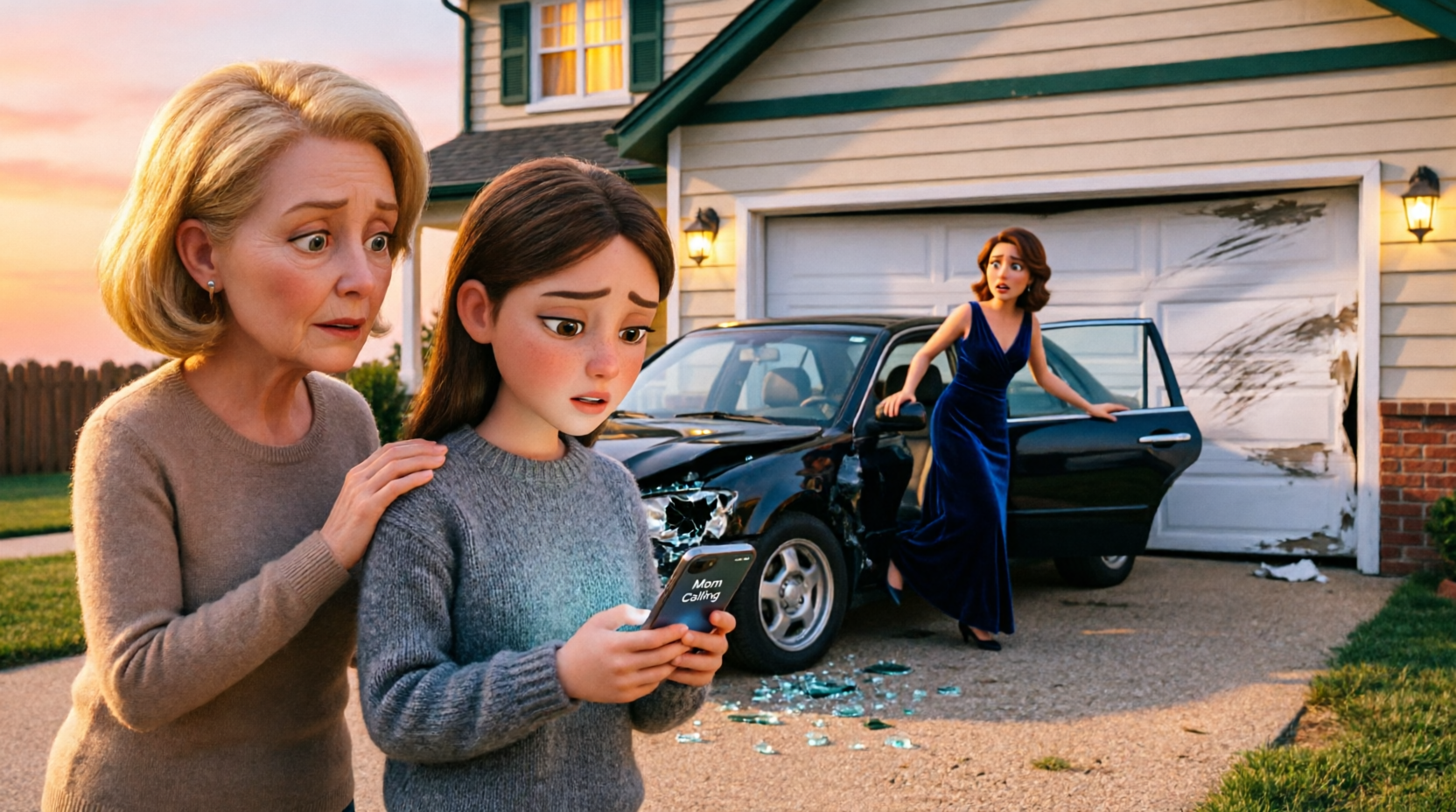
“I owe you the biggest apology of all,” she said softly. “I never should have put you in the middle of adult problems. I shouldn’t have sent those texts. I shouldn’t have tried to make you choose. You were incredibly brave to stand up for your brother. And for your mother. I am sorry I tried to break that.”
Marlo paused with her fork halfway to her mouth. She looked at her grandmother with the calm, calculating gaze of a seasoned veteran. “Thank you, Grandma,” she said evenly. “But just so we are clear… I will do it again if I ever have to.”
For a second, the table held its breath. The candle flickered. The clock ticked. Then, my mother let out a genuine, self-deprecating laugh. “I know you will,” she smiled. “I believe you.”
I am not going to tie this story up with a perfect, cinematic bow. Trust is not a building demolished by dynamite and rebuilt with tweezers. It is a forest burned to ash and allowed to regrow at its own pace. Some trees return quickly. Others take years. Some never do. And that is okay.
The financial well remained permanently dry. I had never sent another dollar. Surprisingly, Gil took a full-time position at a local hardware store, and when he called me now, he excitedly talked about power tools, cedar planks, and the satisfaction of fixing things with his own hands. He sounded lighter. Happier. Freer. Aunt Gail dropped by occasionally with a casserole, avoiding eye contact but trying her best. Uncle Vernon remained mute, but at Thanksgiving, he sat on the floor with Theo and asked him the complicated scientific names of every dinosaur in his toy box. For Vernon, that was the equivalent of a Shakespearean sonnet.
My sister never apologized. She stopped inviting me to gatherings. She posted photos of new vacations, new dinners, new perfectly arranged tables. I watched them from a distance, not with bitterness, but with clarity. Some people choose the performance over the truth. That is their right. It is also their consequence. I no longer needed to be in the frame to know I existed. I no longer needed to be acknowledged to know I was real. I had spent years believing that exclusion meant I was broken. I finally understood it meant I was free.
People ask me how I did it. How I cut off the supply. How I held the line. How I survived the silence that followed. I tell them the truth: I didn’t do it all at once. I did it in increments. In declined calls. In unopened envelopes. In the quiet decision to stop translating other people’s cruelty into my own guilt. I did it by learning that love is not a ledger. That boundaries are not walls. That healing is not a destination. It is a practice. It is waking up and realizing you do not have to brace for impact. It is reading a text message and choosing not to reply. It is buying groceries without calculating who will judge the brand. It is sitting in a room and knowing you do not have to earn your place in it. It is quiet. It is slow. It is entirely yours. It does not ask for permission. It simply takes up space. And space, once claimed, cannot be unclaimed.
On a Tuesday in early December, I stood in the kitchen making hot chocolate. Snow fell outside in slow, deliberate flakes. Marlo was upstairs studying for midterms. Theo was on the rug, drawing a T-Rex with meticulous attention to its teeth. The house was warm. The coffee maker hummed. The world outside kept moving, indifferent to the quiet revolution that had taken place inside these walls. I poured the hot chocolate into three mugs. I didn’t set a fourth. I didn’t need to. For the first time in my life, I was not waiting for permission to exist. I was not auditing my own worth. I was not bracing for impact. I was simply here. In a house that belonged to us. In a life I had finally chosen. And that was enough. It would always be enough.
I carried the mugs to the living room. Set them on the coffee table. Sat beside Theo. Watched him color. Listened to Marlo’s footsteps above us. Felt the snow fall against the glass. And for the first time in thirty-four years, I did not ask myself if I had done enough. I did not wonder if I had failed. I did not measure my worth against the expectations of people who had never learned how to see me. I just sat. And breathed. And let the quiet do what it does best. It holds. It settles. It reminds you that you are still here. And that is all that has ever been required.
But the true test of a new architecture is not how it stands in calm weather. It is how it holds when the wind returns.
It came in February. Not as a crisis. As a request. Patrice called on a rainy Thursday evening. Her voice was steady, but I could hear the effort in it. “Karen,” she said, “your father and I would like to host Easter this year. Not at the old house. We’ve downsized to the apartment near the park. It’s smaller. Fewer stairs. I want to do it right this time. No crowds. No performances. Just the four of us. If you’re willing.” She paused. “If you’re not, I understand. The boundary stands. I just wanted to ask.”
I looked at the calendar. I looked at the rain against the window. I looked at the framed drawing on my refrigerator. I remembered the folding table in my sister’s backyard. The plastic spoons. The broth on Megan’s dress. The twenty-three adults who looked away. The weight of a word spoken like it was nothing.
“I’ll be there,” I said. “But we’re bringing the food. And we’re leaving at two.”
“Understood,” she said. No negotiation. No sigh. Just acceptance.
Easter Sunday arrived pale and crisp. Patrice’s apartment was small, bright, and entirely her own. No borrowed folding tables. No hidden expectations. Just a wooden dining table set for four, with real plates, real silverware, and a vase of yellow tulips in the center. Gil greeted us at the door with a genuine smile, his hands clean, his posture open. He took Marlo’s coat. He knelt to hug Theo. He didn’t perform. He just welcomed.
We ate. We talked. Not about money. Not about obligations. Not about who owed what to whom. We talked about Marlo’s debate tournament. About Theo’s new geology book. About Gil’s woodworking class. About the way the light hit the park trees in early spring. Patrice listened. Really listened. She didn’t interrupt. She didn’t redirect. She didn’t try to steer the conversation toward herself. She just sat in the quiet spaces and let them be.
Halfway through dessert, Theo looked up from his plate. “Grandma,” he said, “do you like dinosaurs too?”
Patrice didn’t laugh. She didn’t sigh. She didn’t tell him he was too old for questions or too loud for dessert. She leaned forward. “I don’t know much about them,” she said honestly. “But I’d love to learn. Could you show me your book later?”
Theo’s face lit up. “Yeah. It’s got a T-Rex that’s bigger than our car.”
“I’d like to see that,” she said.
And just like that, the room exhaled. Not because the past was erased. Because the present was finally honest.
On the drive home, Marlo sat in the backseat, quiet for a long time. Then she said, “It was different.”
“Yes,” I said.
“Do you think it’ll stay that way?”
“I don’t know,” I said. “But it doesn’t have to be perfect to be real. It just has to be chosen. Every time.”
She nodded. She didn’t look away. She didn’t flinch. She just absorbed the truth the way children do when they’re finally given room to grow.
That night, I stood on the balcony of my apartment, wrapped in a thick sweater, watching the city lights blur through the mist. My phone buzzed. A message from Deanna. Day 214. Still standing? I typed back: Still breathing. She replied instantly: Good. That’s the only metric that matters.
I put the phone away. I looked down at my hands. They were no longer clenched. They were open. They had spent decades catching falling plates, wiping spilled broth, holding back tears, signing checks, swallowing words, absorbing blows, making myself small so other people could feel tall. But hands are not meant to catch what isn’t theirs to carry. They are meant to hold what is. To build. To reach. To rest.
I thought of the Easter picnic. Not with bitterness. With clarity. That day had not broken me. It had revealed me. It had shown me exactly where my loyalty had been misplaced, exactly where my silence had become complicity, exactly where my love had been mistaken for permission. And it had given me the exact moment I needed to finally stand up. Not with a shout. With a choice. A quiet, unshakable, irreversible choice to stop funding people who ranked my children like inventory. To stop translating other people’s cruelty into my own guilt. To stop believing that peace required my disappearance.
I am not the family’s shock absorber anymore. I am its architect. I build tables that fit the people who sit at them. I set boundaries that hold. I love without conditions that cost me my dignity. I protect without apologies that erase my truth. I am Karen. I am a mother. I am a daughter who finally learned that blood does not grant ownership. It only grants the opportunity to choose. And I have chosen well.
Inside, Marlo’s door clicked shut. Theo’s steady breathing drifted down the hall. The apartment was quiet. The snow had stopped. The air was still. I did not look back at the folding tables of my past. I did not wait for apologies that would never be perfect. I did not measure my worth against the expectations of people who had spent decades teaching me how to shrink.
I just stood. And breathed. And let the quiet do what it does best. It holds. It settles. It reminds you that you are still here. And that is all that has ever been required.
And for the first time in my life, I finally believed it.