Adrian and I were deeply in love for two years before we got married. For a long time, I believed I had found the kind of love people wait their entire lives for. He used to be gentle in a way that felt rare—he listened when I spoke, remembered the smallest details I mentioned, and held my hand in public as if he was proud of the life we were building.
When he proposed, his voice trembled. I cried so hard I could barely say yes. Our wedding was loud and bright and full of promises. Both families approved. Both mothers cried the “happy” tears. Everyone believed our marriage would be stable, blessed, lasting.
As a wedding gift, my mother gave us a three-story house. It wasn’t symbolic—it was real, solid security built from years of her sacrifice. She had worked with aching hands and sleepless nights, saving instead of spending, denying herself comforts so that I could one day feel safe. The house was registered entirely in my name. Not because she distrusted Adrian—but because she understood something I hadn’t yet learned: love is beautiful, but security is sacred.
After the wedding, I stepped into the roles expected of me—wife, daughter-in-law, the new woman in a family full of traditions. I tried to do everything right. I woke up early, kept the house clean, smiled at gatherings, learned what my mother-in-law preferred and which topics to avoid.
I worked at a bank, and my job demanded more than regular hours. Some months swallowed me whole. I left before sunrise and returned after dark, exhausted but proud that I was contributing to our future.
But my mother-in-law, Lilibeth, saw things differently. To her, a proper wife stayed home. She believed a woman’s world should orbit her husband. My salary didn’t matter. My effort didn’t matter. Every late return home was, in her eyes, a failure.
I didn’t argue. I was raised to respect elders. I swallowed criticism and told myself patience would soften her.
At first, Adrian reassured me. He would squeeze my hand under the table and whisper that his mother was old-fashioned. “Just give her time,” he’d say.
But time didn’t soften him. It changed him.
The change was gradual. He stopped asking about my day. He looked at his phone more than he looked at me. He came home later. When I asked where he’d been, his answers felt rehearsed. Small arguments began—over cabinets, over my work, over how I spoke to his mother. When I tried to talk about the distance between us, he accused me of imagining problems.
I began doubting myself.
Then one evening, everything collapsed.
He came home tense and distant. He sat down like he was preparing for a business meeting.
“We need to talk,” he said.
My stomach dropped.
“I’m sorry,” he continued calmly. “There’s someone else. She’s pregnant.”
The words didn’t feel real. I waited for him to correct himself. He didn’t.
The pain came like cold water over my body. I could barely breathe.
“How long?” I asked.
He shrugged. “It happened. It doesn’t matter.”
It doesn’t matter.
After he went to bed, I stayed on the couch until sunrise. The house felt foreign.
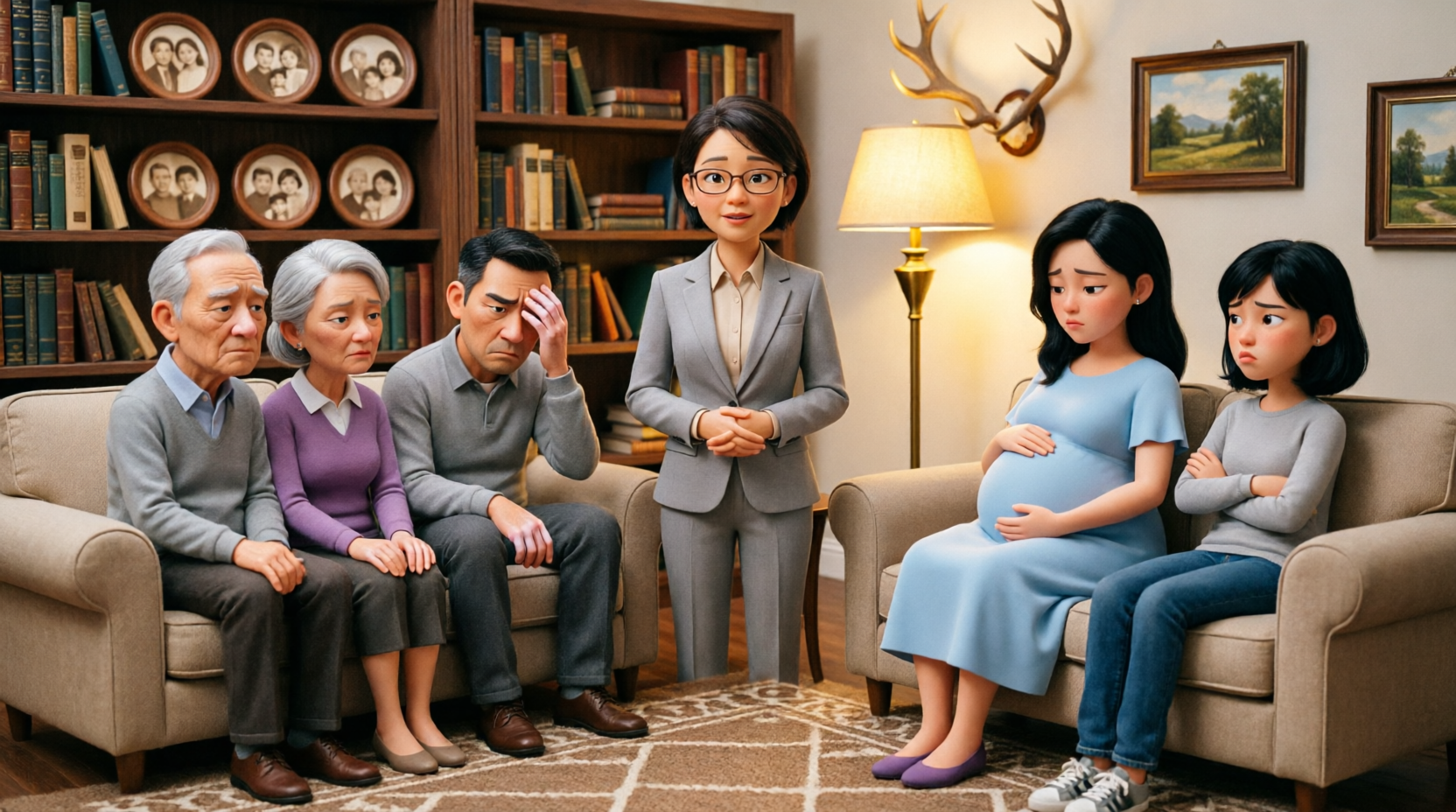
A week later, his entire family came to my house.
And she was with them—the pregnant mistress—sitting comfortably in the living room my mother had sacrificed for. They looked at me like I was the intruder.
Lilibeth spoke first. “What’s done is done. She’s carrying our grandchild. You should step aside.”
Peace, to her, meant my silence.
His sister added, “You don’t even have children yet. Be mature. Agree to a peaceful divorce.”
I looked at them all. Not one of them saw my pain.
Something inside me shifted—not rage, not surrender. Clarity.
I smiled.
“If you’re done deciding my life,” I said calmly, “let me clarify something.”
“This house belongs to me. My mother paid for it. It’s in my name.”
They brushed it off—until I continued.
“Adultery is a criminal offense under Philippine law. So is knowingly being involved with a married man.”
The room changed.
“I went to the hospital yesterday,” I added. “I’m pregnant too.”
Chaos erupted.
Then I delivered the final blow.
“The baby may not be Adrian’s. I won’t confirm paternity until after the divorce.”
Shock froze them.
“I’ve already consulted a lawyer,” I said. “This house is mine. Anyone who disrespects me can leave.”
I opened the door.
“You have five minutes.”
And they left.
Later, Adrian asked me if the baby was really his.
“I’m doing this,” I told him quietly, “because you don’t get to destroy me and still demand my honesty.”
After they were gone, the house felt peaceful.
In the days that followed, the truth unraveled. The mistress had never been pregnant. It was a lie meant to push me out quickly.
I filed for divorce.
As for my own pregnancy—I had used it as a shield. I didn’t know the truth at the time.
Later, when I took a real test, it was negative.
I cried—but not because I felt empty. I cried because I realized I had almost believed I needed a child to matter.
Weeks passed. The divorce finalized.
And standing in my home, sunlight filling the room, I expected to feel only grief.
Instead, I felt free.
Freedom came quietly.
I rearranged furniture. Painted walls. Bought plants. Focused on work. Learned to say no.
Eventually, Adrian’s calls stopped.
When the divorce papers were final, I held them in my hands and understood something clearly:
Love without respect is not love.
Months later, standing on my third-floor balcony with a cup of tea, watching the sunset, I thought about the girl I used to be on my wedding day.
I didn’t hate her. I felt tenderness for her.
But I no longer needed to be her.
I had learned that peace isn’t begged for—it’s claimed.
And I made myself a promise that mattered more than any vow I had ever spoken to a man:
I would never abandon myself again.
For the first time in a long time, I smiled.
And this time, the peace was real.