You think grief will get quieter if you feed it regularly.
That is the lie you live inside for five years, three months, and two days.
Every first of the month, at exactly nine in the morning, your bank sends the same polite little notification to your phone, and you barely need to look anymore. Three hundred dollars. Transfer complete. Recipient: Clara Morales, your late wife’s mother. It is never just money to you. It is ritual. Penance. Devotion disguised as direct deposit.
Your friends call it unhealthy.
You call it loyalty.
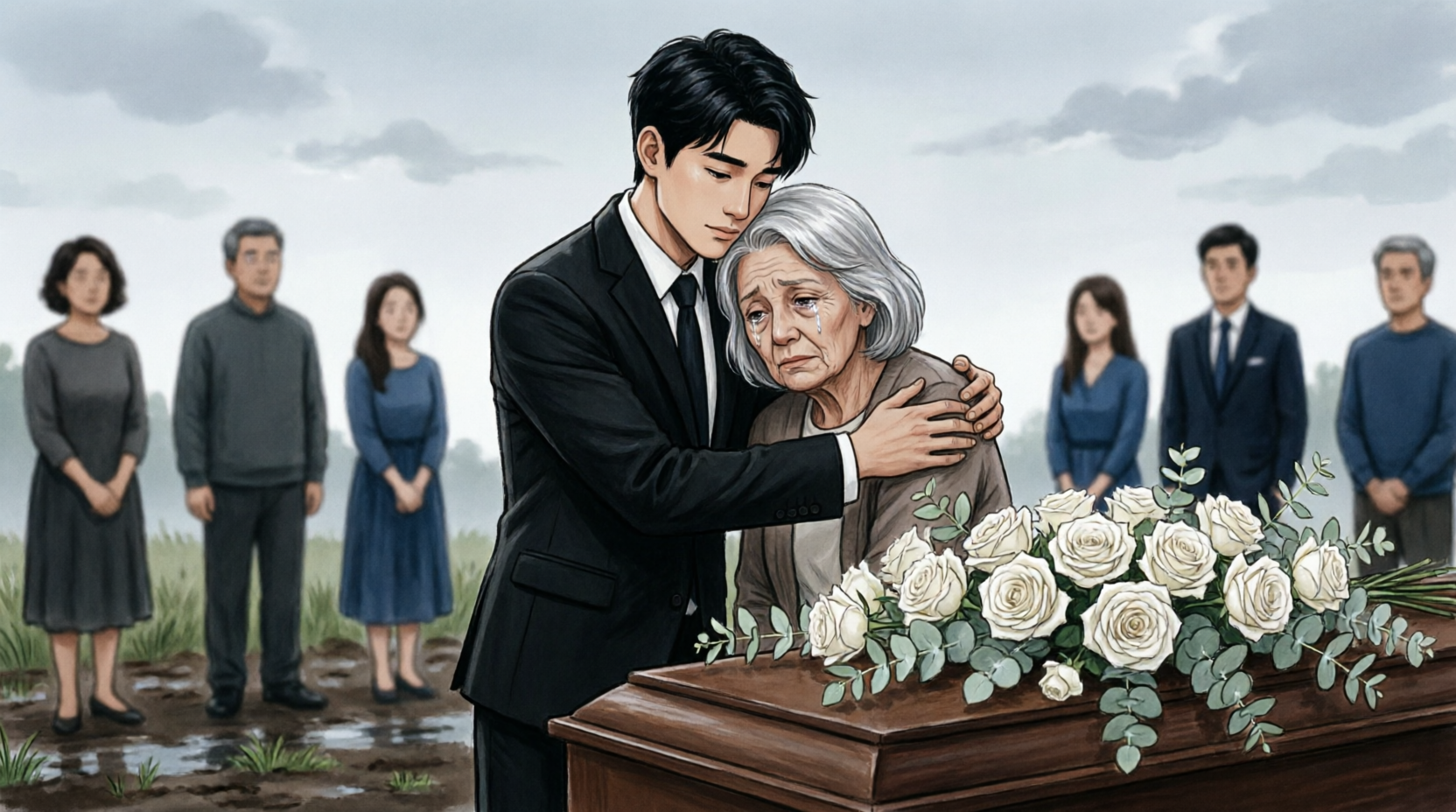
Your wife, Marina, died in a car accident on a coastal highway six hours from your city. At least that is the story that has held your life together long enough for it to become furniture. Police report. Closed casket. Funeral in her hometown church. A mother collapsing into your arms, small and shaking, and telling you she had nothing left. You remember looking at the coffin and thinking that if love alone could force wood open, yours would.
At the graveside, you promised Clara you would take care of her.
Marina always worried about her mother. That was true. Clara was a widow with fragile health and a pension too small for dignity. So while people were still passing tissues and whispering prayers, you bent toward that trembling old woman and said, “You won’t be alone. I’ll send money every month. Whatever you need. It’s what Marina would have wanted.”
For years, you treat that promise like scripture.
You do not remarry.
You do not really date.
You tell yourself you are working too much, healing too slowly, honoring her memory properly.
The truth is uglier and simpler. As long as the money keeps moving, a part of you can pretend your love is still useful. Still current. Still attached to something living in the world. The transfer is not for Clara alone. It is for the version of you who cannot bear to become a man whose wife died and was eventually filed away into anecdote.
Then, one Tuesday morning, your bank ruins the ritual.
There is a problem with the receiving account. Clara’s branch has closed. International transfer routing requires verification. Please update recipient details or contact the account holder.
You call Clara’s landline first.
Out of service.
You call the cell phone you bought her two years ago after she told you, laughing softly, that modern phones made her feel “like a cow learning piano.”
Voicemail.
You leave a message. Then another. Then a third in a tone you try to keep casual and fail completely. By noon, something cold has started uncoiling at the base of your spine. Not quite fear. More like instinct. The body’s private way of saying: something is off, and you know it before you know why.
You look at the vacation days your boss has been nagging you to take. You look at the keys on your counter. You think about the town where Marina grew up, the place you have not visited since the funeral because grief made it feel sacred and unbearable in equal measure.
And for the first time in years, you do something spontaneous with your sorrow.
You decide to go.
You tell yourself it is practical.
You will see Clara in person.
You will fix the bank details.
You will make sure she is all right.
Maybe visit Marina’s grave.
Maybe breathe the same salt air she grew up in and finally let some part of this old mourning loosen its grip.
You pack a small bag and buy the kind of things Clara liked when you were married. Good coffee. Dark chocolates she always pretended were too expensive. Imported sardines in olive oil because Marina once joked her mother could survive the apocalypse with crackers, fish, and stubbornness.
The drive takes most of the day.
Highway.
Gas stations.
Dusty stretches of road that flatten the horizon into one long exhausted line.
Then greener miles.
Then the smell of salt arriving before the water does.
You cry once, somewhere around mile two hundred, because your car remains the one place where no one can see your face collapse. Marina’s memory shows up the way it always does when you are moving forward against your will. Her laugh. The way she tucked hair behind one ear when reading. The vanilla shampoo she used. The absurd seriousness with which she treated bad diner coffee like a personal insult.
By the time you reach the coastal town, the sun is slipping toward evening.
The place is smaller than you remember and somehow more faded. Narrow streets. Low stucco houses in cheerful colors that can’t quite hide the wear. Corner stores with hand-painted signs. A church bell tolling six with enough melancholy to sound like a warning. Nothing about it looks sinister. That makes what comes next worse.
You drive to the address you know by heart.
Las Flores Street, number 42.
Then you stop the car and stare.
Because the house at 42 is not the house you remember.
It is freshly painted yellow. The front gate has been replaced. There are potted succulents on the steps where Clara used to keep cracked ceramic saints. A bicycle leans against the porch rail. Wind chimes. Curtains you have never seen. Life, ordinary and unselfconscious, arranged all over a place your grief has always preserved in sepia.
For a second, you wonder if you have the wrong street.
You check the house number.
No. This is it.
You get out of the car and walk up the path with the grocery bag in one hand and your pulse thudding harder than the situation seems to warrant. Maybe Clara moved in with relatives. Maybe she rented the house. Maybe you missed some message years ago and failed to notice because grief makes you selectively stupid.
You knock.
A man opens the door.
Not old. Not familiar. Mid-forties maybe. Tanned, broad-shouldered, wearing a faded college T-shirt and reading glasses low on his nose. Behind him, somewhere deeper in the house, a child laughs.
You stand there holding coffee and chocolate like an idiot.
“Can I help you?” he asks.
You blink. “I’m… looking for Clara Morales.”
His face shifts.
Not confusion. Recognition of a name paired with something more complicated.
“You’re too late,” he says gently. “Clara passed away almost three years ago.”
The world does not tilt. It hollows.
You hear the words. You even understand them grammatically. But your body rejects them. Three years ago is impossible because three days ago your bank sent money to her account. Three months ago she texted you a simple thank you with a heart emoji she rarely used because she said it felt “young.” Last Christmas she sent a message saying the weather by the sea reminded her of Marina’s childhood and hoped you were eating properly.
Three years ago is not a date. It is an insult.
“What?”
The man opens the door a little wider, perhaps because your face now looks like that of someone who might collapse or swing. “I’m sorry,” he says. “Clara Morales died. Stroke, I think. I bought the house from her niece in probate.”
You stare at him.
“I’ve been sending her money,” you hear yourself say.
He hesitates.
That gets his full attention.
“I don’t know anything about that,” he says carefully. “But Clara hasn’t lived here in a long time.”
You ask where she is buried.
He tells you the town cemetery up on the hill, near the older section. He even offers to draw you a little map when he sees your hands shaking too badly to type. You thank him with a voice that sounds like it belongs to someone much calmer and more distant than you feel.
Then you go back to the car and sit behind the wheel without starting the engine.
The grocery bag is on the passenger seat.
Coffee.
Chocolate.
Sardines.
Offerings for a woman who may have been dead for years while you kept paying into the ghost of a promise.
You grip the steering wheel and try to build a structure from the pieces.
If Clara died three years ago, who received the money after that?
Who answered the texts?
Who kept the story alive?
And why?
By the time you drive to the cemetery, the sky has deepened into that bruised blue hour just before full dark.
The cemetery sits above town, wrapped in old trees and salt wind, with whitewashed walls that glow faintly in the dusk. You follow the paths between graves until you find the Morales family plot. Your chest tightens the moment you see the name.
Clara Morales.
Born 1948.
Died 2023.
The date is real. Cut in stone. No loopholes. No administrative error. No misunderstanding.
You stand there so long the mosquitoes begin taking you for public land.
Then you see something else.
Beside Clara’s grave is Marina’s.
You knew that, of course. You had seen it before. But grief remembers selectively, and the living version of memory is rarely as exact as stone. Tonight, maybe because your mind is already searching for cracks, you notice the inscription more carefully than you ever did at the funeral.
Marina Morales Reyes.
Beloved Daughter.
Beloved Wife.
Taken Too Soon.
Morales Reyes.
You go cold.
Your wife’s last name was Bennett after the wedding. Before that, she used Morales. Marina always said she dropped her father’s surname after her parents separated because he had become “a ghost with child support issues and a trucker’s excuse book.” You had laughed the first time she told you. The story fit her personality, dry and sharp. You never questioned it.
But the grave says Reyes.
You stare at the name until your eyes burn.
Maybe it was a family choice. Maybe Clara wanted her buried with both birth names. Maybe it means nothing. But “Reyes” hooks into you now because something is already wrong enough that everything becomes suspect. You kneel and run your fingers over the letters. Cold stone. Real grooves. No answers.
Then your phone buzzes.
A text.
From Clara’s number.
You drop the phone into the grass.
For one animal second, your body believes in ghosts.
Then you snatch it up.
Need the new routing number. Sorry for the delay. Who is this?
You read it twice. Three times. Four. Not because the message is unclear, but because its stupidity makes the whole situation more enraging. Not an apology. Not explanation. Not panic. Just a transactional question from a person on the other side of a line they assume still belongs to an old woman’s life.
You type with shaking thumbs.
Who is this?
The answer comes two minutes later.
Family. Who’s asking?
You stand in the dark beside two graves and laugh so hard it almost becomes a sob.
Family.
That word has covered more theft than ski masks ever did.
You do not answer. Instead, you drive into town and book the one halfway decent room at the little inn near the marina because going home is no longer an option and sleep, though unlikely, sounds less impossible in a bed than behind a steering wheel.
The woman at the front desk recognizes Marina’s last name the moment you sign the register.
“You’re one of Clara’s?” she asks.
You look up sharply. “What do you mean?”
She shrugs. “People talk. Clara’s family has had a mess of inheritance trouble since she passed.”
Your pulse kicks.
“What kind of trouble?”
She lowers her voice with the relish of a small-town receptionist handed an actual plot. “Her niece moved in to handle the estate before the funeral flowers even wilted. There were arguments. A lawyer came down from Corpus twice. Someone said Clara left money that no one could find. Someone else said there wasn’t any money, just debts. You know how families are.”
You do know how families are.
Especially when death and money begin drinking from the same glass.
Back in your room, you sit on the edge of the bed and put the pieces in a row.
Clara died three years ago.
Someone kept her phone active.
Someone kept receiving your money.
Someone now wants updated bank details.
Marina’s grave bears a surname you never questioned before.
The innkeeper mentions missing money and inheritance disputes.
And somewhere in all of this is a person bold enough to keep milking your grief for $300 a month with the confidence of routine.
You should call the police.
You should call your bank.
A lawyer.
Someone sensible.
Instead, because loss has already made you unreasonable and betrayal makes you worse, you decide to find out who has been wearing Clara’s shadow.
The next morning, you go first to the church.
Not because you are especially religious. Because churches in small towns are information systems pretending to be holy buildings. People confess there, yes, but they also volunteer, gossip, bury, baptize, and remember who visited whom when and why. If Clara’s death changed the town’s family politics, somebody at the parish knows the shape of it.
Father Miguel remembers you.
That unsettles you more than it should. Five years and a wedding ring removed from your hand for months at a time, yet this old priest with tired eyes and a voice like worn leather sees you and says, “Marina’s husband.”
You nod.
He guides you into his office, a little room that smells of paper, incense, and old wood polish. When you tell him why you came, he closes the door fully before sitting down. That is never a good sign.
“Clara died in March of 2023,” he says. “A hard death. Stroke in the kitchen. Her niece found her.”
“Niece?”
“Adriana.” He searches your face. “You don’t know her.”
You shake your head.
“She came back from Houston after many years away,” he says. “Managed the funeral. Managed everything, really.”
The phrasing catches in you.
“Managed?”
Father Miguel sighs. “Clara had become… anxious in her last years. Distrustful. She thought people were watching the house. She believed certain things about Marina.”
You lean forward.
“What things?”
The priest studies you too carefully. “That her daughter wasn’t dead.”
Your heartbeat seems to skip and then return too hard.
“What?”
Father Miguel holds up a hand, not to calm you, but to slow the damage.
“She spoke of seeing Marina in town. Said Marina left notes. Said the accident report had lies in it. At first we thought grief had unsettled her mind. Then age. Then loneliness. Adriana insisted Clara was getting confused.”
You sit back slowly.
“Did you believe her?”
He looks toward the crucifix on the wall, then back at you. “I believed she was frightened. I believed she felt ashamed of something. I never knew whether that shame belonged to reality or memory.”
You ask about Adriana.
The priest tells you she is Clara’s sister’s daughter. Grew up nearby, left young, returned only when Clara got sick. Smart. Charming. “Practical,” he says in the way older men do when practicality in women has left a wake of injuries.
“Where is she now?”
“In Clara’s old apartment above the bait shop for a while, then who knows. She was helping sort the estate last I heard. There were arguments with some lawyer from San Antonio and a great deal of talk about paperwork.”
Lawyer.
Paperwork.
Missing money.
You thank him and stand to leave, but before you do, Father Miguel says something else.
“Clara asked me, two weeks before she died, whether a person can confess fraud if the fraud was done to protect a child.”
You stop at the door.
“What did you say?”
“I said protection purchased with lies usually collects interest.”
Outside, the town looks ordinary again. Fishing boats. A bakery setting out sweet bread. Teenagers in school polos smoking behind a cinderblock wall like every generation invented rebellion first. It infuriates you, this ordinariness. Somewhere inside these streets is a truth large enough to reshape your marriage retroactively, and the world still insists on being sunny.
You find the bait shop by the marina.
Upstairs, there is indeed a small apartment with a narrow balcony and peeling blue paint. An older woman sweeping the stairs tells you Adriana moved out “months ago, maybe more” after a fight with some out-of-town man over boxes. She thinks Adriana works at a waterfront bar some nights or maybe a rental office now. Her certainty changes every third sentence, but one detail sticks.
“Always had that old lady’s phone,” the woman says. “Said she was keeping it active for legal reasons.”
There it is.
You almost feel relief hearing something concrete.
Adriana.
A name. A body. A thief with practical reasons.
You spend the afternoon asking questions in the careful tone people use when pretending they are not hunting something sharp. At the marina café, a dishwasher points you to a bar two streets over. At the bar, the lunch manager says Adriana covers Thursday nights, maybe Friday too. It is only Wednesday.
So now you have time.
Time is dangerous when memory is already loose.
You drive back to the cemetery because grief, once stirred, does not like being left unfinished. This time you look longer at Marina’s grave. At the surname. At the dates. At the wording.
Taken Too Soon.
No accident details. No mention of beloved daughter of specific parents, which is common enough in small-town grave language. No photograph embedded in the stone the way you saw on neighboring markers. In fact, the whole grave feels slightly impersonal compared to Clara’s, as if assembled quickly from templates rather than intimately from knowledge.
You should have noticed this years ago.
But years ago you were barely functioning. People handed you a funeral, and you crawled through it because grief is often just bureaucracy with a pulse.
You drive next to the sheriff’s office and request a copy of the accident report.
The deputy at the desk is polite and bored until he sees the name.
“Marina Morales Reyes,” he repeats. “That’s old.”
“How old?”
He checks the system and frowns. “File was archived physically. Might take a day or two.”
You give him your information, then ask whether there was an autopsy.
He glances back at the screen. “No note of one in the summary.”
“Closed casket?”
“Yeah.”
“Positive identification?”
He scrolls longer this time.
Then his expression changes slightly.
“There’s a supplemental notation,” he says. “Identification based on personal effects and family confirmation.”
Your mouth goes dry.
No dental record.
No fingerprint verification.
No autopsy.
A crash severe enough to require a closed casket, and identification based on belongings and a grieving mother.
You walk out into the heat feeling as though the sun has become an interrogation lamp.
By evening, you have built two theories.
The first is simple and ugly.
Adriana stole Clara’s phone after Clara died and kept taking your money. The weird surname on the grave is an oversight or a family preference. Clara’s claims that Marina was alive were grief-driven confusion. The fraud is financial, not existential.
The second theory is insane.
And once it arrives, you cannot get it out of your system.
What if Clara was not confused?
What if Marina did not die?
What if the accident became a doorway, and you have spent five years sending money into a lie built not just to exploit you, but to erase a woman you loved?
You do not sleep much.
At 11:47 p.m., your phone lights again from Clara’s number.
If you’re the bank guy, I can meet tomorrow. Don’t call this number late.
You type back before caution can intervene.
Not the bank guy. I’m Roberto.
Three dots appear instantly.
Then disappear.
Then appear again.
Finally:
Who?
The word is so contemptuous it steadies you. Whoever is on the other end believes grief has a shelf life. Believes your place in this story has expired enough that your name no longer matters.
You reply:
Marina’s husband.
This time there is no typing bubble.
Nothing.
You stare at the screen until it goes dark.
The next day, everything starts moving.
At 9:00 a.m., the sheriff’s office calls. The archived accident packet is ready for review. At 9:40, Father Miguel leaves a voicemail saying, “There is something else you should see if you have not left town.” And at 10:15, the front desk at your inn tells you a woman came by asking whether you were staying there. She did not leave a name.
You go to the sheriff first.
The file is thinner than it should be. Too thin for a fatal collision. Photos are missing from the copy because of age and damage, the deputy says. But the essentials are there. Single-vehicle crash on Highway 17. Guardrail impact near mile marker 204. Fire damage. Driver presumed deceased. Weather clear. No witnesses.
Presumed.
You point at the word.
The deputy shrugs. “That’s standard sometimes in older reports when recovery conditions are bad.”
You turn pages.
Tow record.
Personal effects list.
One gold wedding band.
Burned leather handbag.
Wallet containing ID in the name of Marina M. Reyes.
Charred notebook.
No remains specifically inventoried in the photocopy.
Then something stranger.
The reporting officer’s name has been crossed out and replaced by handwritten initials, as if the original needed correction. You ask about it. The deputy says the retired sheriff from that period, Hank Liddell, still lives outside town.
Of course he does.
You drive to Liddell’s ranch house around noon.
He is seventy if a day, suspicious by profession, and not pleased to see a stranger arriving with old death in his hands. But when you say Marina’s name, his face changes in the way faces do when old unease resurfaces before manners can mask it.
“That case should’ve never sat right with me,” he says finally, leaning against his porch rail. “Didn’t sit right then. Sits worse now.”
Your pulse starts beating in your throat.
“Why?”
He spits into the dust.
“Car was hers. Bag was hers. Ring matched marriage records. Mother identified effects and insisted there was no point in further delay because she wanted her daughter buried fast. But the body…” He pauses. “Truth is, son, there wasn’t enough left to satisfy me as identification without a coroner review. County pushed speed. Family pushed speed. I signed off because that road had killed three people already that summer and everyone wanted it done.”
You say the sentence carefully, because once spoken, it can never be taken back.
“So you’re telling me no one proved it was Marina in that car.”
He meets your eyes.
“I’m telling you nobody proved it enough for me to sleep great after.”
You leave his place with your hands shaking again.
By now, the simple explanation is still possible, but it is being outnumbered by the crueler one. Too many quick burials. Too many assumptions. Too many practical people managing the truth on behalf of the grieving.
Father Miguel is waiting when you return to the church.
He hands you a sealed envelope.
“Clara left this with me,” he says, “with instructions to give it to you if you ever came asking the right questions.”
The paper feels thin enough to tear under the weight of your pulse.
Inside is a letter written in shaky blue ink.
Roberto,
If you are reading this, then either Adriana has been found out or God finally grew tired of me lying to a good man.
Marina did not die the way we told you.
You stop breathing.
The rest of the letter blurs once before you force your eyes to work.
The accident happened.
There was a fire.
There was blood.
But Marina got out alive.
She came to Clara’s house days later, injured, terrified, and not alone. A man was with her. Not a lover, Clara writes. A man named Gabriel who had been helping her. Clara says Marina begged her not to contact you. Said people were looking for her. Said the accident was not an accident, and if Roberto knew she lived, he would be in danger too.
You grip the page harder.
Clara writes that Marina had found out something at the accounting firm where she worked. Money laundering. False vendors. A real estate development scheme tied to shell companies and local officials. Gabriel was an investigator connected to a federal task force. Marina had copied records. The crash happened after she agreed to meet someone to turn evidence over. She believed someone wanted her dead.
So they let the town think she was.
Clara admits she agreed to the lie because Marina was injured, terrified, and convinced hiding was the only way to survive. “I told myself it would be temporary,” the letter says. “Then it became a year. Then more. Then I no longer knew whether I was protecting her or protecting the sin of helping her disappear.”
Your whole body feels electric and numb at once.
Marina alive.
Marina choosing not to tell you.
Marina in danger.
Marina letting you bury a coffin and mourn a ghost while she went somewhere else under someone else’s protection.
Then the worst line in the letter:
She wanted to contact you many times. I stopped her twice. I told her your love would bring you looking. I told her if bad men were still watching, you would die for loyalty. I do not know if I saved you or stole your life.
You sit in Father Miguel’s office with the letter trembling in your hands.
“When was this written?” you ask.
“Two weeks before Clara died,” he says quietly.
“Did she know where Marina was?”
A long pause.
“I think she knew where Marina had last been. I do not know if she knew where she was then.”
You read the rest.
Clara names Adriana. Says she found out about the monthly money long ago and resented that Clara “kept taking charity for a lie.” Says Adriana called it restitution. Clara called it theft. Their relationship fractured over it. Clara feared Adriana would continue after her death because “she has learned to treat grief like unattended cash.”
At the end of the letter is an address.
Not current, perhaps. Not promised. But a lead.
Santa Fe, New Mexico.
A women’s cooperative legal clinic.
Attention: Elena Voss.
Not Marina.
Elena.
You stare at the false name until it begins feeling like a second funeral.
Before you can process further, your phone buzzes again.
From Clara’s number.
Meet me at the old pier at 6. Come alone if you want answers.
Adriana, then.
Or someone working with her.
You show the message to Father Miguel.
He says exactly what any priest with common sense and too much small-town knowledge should say. “Do not go alone.”
You call the sheriff. Not the front desk this time. Hank Liddell, retired though he is, gives you the name of the current detective willing to indulge the crazy widower whose dead wife may not be dead. Detective Lena Ortiz listens in a tone suggesting she has heard worse stories and lived to mock them later. When you mention ongoing bank fraud, false identity use, and a possible connection to a faked death tied to an old corruption case, her interest sharpens.
By 5:30, you are sitting in your car two blocks from the old pier wired with a hidden microphone you did not agree to enthusiastically but accepted because righteous men in stories often die of their own dramatic independence.
The pier is half-rotten, mostly used by teenagers, fishermen, and people making bad choices because the view helps them believe their choices are poetry. The sea is rough tonight. Wind snapping. Boards creaking. Perfect conditions for cheap betrayal.
Adriana is already there.
You know it is her before she turns because she looks like the kind of woman who would call theft practicality and mean it. Mid-thirties. Pretty in a hard-edged way. White linen blouse. Dark jeans. A cigarette she never lights. Clara’s eyes, sharper and meaner.
“You came,” she says.
“You stole from me.”
She laughs.
No denial. That enrages you more than any excuse could.
“For three years?” you ask. “You kept taking money sent to a dead woman?”
She shrugs. “You were grieving. I was poor. It was practically a scholarship for emotional incompetence.”
The cruelty of it hits so cleanly you almost admire its efficiency.
“Why ask for new bank details?”
“Because the old account froze, obviously.”
Wind slaps your shirt against your body. Beneath the boards, black water knocks at barnacled posts.
“You knew Clara was dead. You kept her phone active. You answered her messages.”
“I answered enough to keep the faucet on.”
You step closer. “Where is Marina?”
For the first time, her face changes.
Not guilt. Not exactly. More like irritation that the conversation has skipped ahead of the part she wanted to savor.
“So she left you a letter after all.”
You go cold. “You knew.”
“She was going to.” Adriana flicks ash into the wind though the cigarette was never lit. “She was always weak about you.”
Weak.
The word lands so violently you feel your teeth clench.
“Where is she?”
Adriana smiles thinly. “You still think this is romantic.”
“What does that mean?”
“It means men like you hear ‘she’s alive’ and imagine reunion music.” She tilts her head. “You really want to know? Fine. She loved you. She also chose not to come back.”
The sentence cuts and hangs there.
You force yourself not to lunge at her. “Why?”
“Because by the time the danger cooled, she was someone else.” Adriana’s eyes glint. “And because she found out something she was too ashamed to tell you.”
You stare.
She takes her time.
Cruel people understand timing as well as comedians do. It is all in the pause.
“She was pregnant when the accident happened.”
The world narrows to a pinpoint.
“What?”
“Not yours.”
You actually stop hearing the sea for a second.
Adriana watches the damage bloom and seems to take nourishment from it.
“Gabriel,” she says. “The investigator. That was not just some rescuer in a movie. They’d been involved for months before the crash. She found the money laundering because she was helping him. She left your marriage emotionally before she ever left it physically.”
You want to reject it outright. But the problem with devastating lies is that they borrow the posture of truth. Marina had been distant those last months. Stressed. Working late. Taking calls in the other room. You told yourself grief had simply edited those memories too kindly afterward.
“You’re lying.”
“Maybe.” She smiles. “Maybe not. But tell me, Roberto, if she loved you so much, why didn’t she contact you? Why let you bury an empty future and keep sending money to a woman she knew was deceiving you?”
Because Clara stopped her twice.
Because danger.
Because shame.
Because life is uglier than promises.
Your mind is spinning too fast to sort motives from poison.
“Where is she?” you ask again.
Adriana’s gaze slips past you for half a second.
That is all the warning you get.
Detective Ortiz and two deputies step from the shadows near the parking lot while another moves in from the far end of the pier. Adriana curses and whips around, but there is nowhere to go except through them or into the sea.
“For fraud, theft, and identity misuse, you’re done,” Ortiz says.
Adriana laughs once. “You think this is the big story?”
Then she looks back at you with something almost like pity.
“She’s in Santa Fe,” she says. “Or she was. Under the name Elena Voss. Go ask her yourself why she stayed dead.”
They cuff her while she keeps talking.
“She had the baby,” Adriana calls over the wind. “Little girl. Looks like her. Maybe that’ll help when you’re deciding whether to forgive the corpse for cheating.”
Ortiz shoves her toward the car.
You stand there on the pier shaking so hard the microphone wire rustles against your ribs.
Santa Fe.
Elena Voss.
A child.
Possibly lies.
Possibly truth.
Definitely enough to blow your old life into confetti.
The next morning you leave for New Mexico.
Not home. Not yet. There is no home now, only before and after.
The drive west feels unreal, as if geography has become punishment. Desert opening wider and wider under a sky too clean for what is happening inside you. Every hour brings new versions of the same thoughts.
If Adriana lied, why include details that might be verified?
If she told the truth, what do you do with loving a dead woman who made herself dead on purpose?
If Marina had a child… was she protecting that child, or hiding behind her?
And what exactly counts as betrayal when survival is involved?
By the time you reach Santa Fe, you are too exhausted to perform hope properly.
The legal clinic in Clara’s letter exists.
Old adobe building.
Modest brass plaque.
Community law, advocacy, trauma support. The kind of place powerful men rarely enter except under subpoena.
You walk in at 9:15 on a Monday morning with Clara’s letter in your bag and five years of badly preserved grief in your bloodstream. The woman at reception asks if you have an appointment. You say you need to speak to Elena Voss. She says there is no one by that name on staff.
Of course there isn’t.
You almost laugh.
Then you show Clara’s letter.
The receptionist reads only the name and something in her face changes. She asks you to wait.
Ten minutes later, a woman appears at the end of the hallway.
For one terrible, impossible second, time does not move.
Marina.
Older, thinner, hair shorter, face sharpened by years you did not witness, but Marina. Not a ghost. Not a memory. Not a stone inscription. Flesh. Breath. Shock flooding her features so violently she has to catch the doorframe to steady herself.
You stand.
No greeting arrives first.
Just silence, raw and bright and crowded with all the funerals this moment has now invalidated.
Her eyes fill instantly.
“Roberto,” she whispers.
It is her voice.
That almost undoes you more than her face.
You thought if this moment ever came you would run to her or scream or demand explanations big enough to fill five years. Instead you stand ten feet away and look at the woman you buried and realize resurrection, in real life, is not triumph. It is emotional arson.
“You’re alive,” you say.
She nods, crying now. No dignity left. No strategy. Just the brutal collapse of being seen by the person she wounded most by surviving.
You laugh once, a broken sound.
“That’s one way to put it.”
She tries to come closer. You step back.
That lands.
Good.
You need at least one honest thing to happen in the first minute.
“There’s a child,” you say, because the sentence has been clawing at your throat since the pier.
Her face changes again, and in that answer you get more truth than language could have given as quickly.
“Yes,” she says.
You close your eyes.
Not to breathe. To not fall over.
When you open them, a little girl is standing at the end of the hallway behind her mother, half hidden by the wall. Eight, maybe nine. Dark hair in a loose braid. Wide, solemn eyes. Marina turns and sees her then, startled, probably having forgotten the child was coloring in the back office when the receptionist came.
The little girl looks at you and says, “Mama?”
There it is.
Every possibility condensed into one small human witness.
Marina bends quickly. “Honey, go with Ms. Renee for a few minutes, okay?”
The girl obeys reluctantly, still studying you with the strange seriousness children reserve for adults they can tell matter before they know why.
You follow Marina into a private office because public collapse is apparently still not on the menu.
Once the door closes, everything inside you that has been braced for days finally erupts.
“You let me bury you.”
Her sob catches halfway out.
“I know.”
“You let me mourn you.”
“I know.”
“You let me send money every month to your mother, and after she died, your cousin stole from me for years while I was still…” Your voice breaks from sheer overload of outrage. “Do you have any idea what that did to me?”
She is crying openly now, but you are past being softened by tears.
“I tried to tell you,” she says. “I tried so many times.”
“You should have.”
“Yes.”
“Not through notes. Not through priests. Not through a dead mother’s apology letter. You should have called me.”
“I know.”
The repeated agreement should calm you. Instead it infuriates you more because it leaves nowhere easy to direct the damage. She is not denying. She is not self-righteous. She is simply standing there taking the truth of what she did like someone who has lived beside it long enough to stop defending it.
“Then tell me why,” you say.
And because the truth is not small enough for one sentence, she tells you everything.
The accounting firm where she worked handled books for a regional development consortium. She found discrepancies. Duplicate vendor shells. Cash movements that made no sense. She flagged them internally and was told to stop asking questions. Instead she told Gabriel, a federal investigator she had been seeing for two months by then. Yes, seeing. No, not after the accident. Before. An affair born partly from fear, partly from how emotionally absent you and she had become in the last year of your marriage, a fact that wounds because it is not untrue and not enough excuse.
She says she had planned to tell you.
That line makes you laugh bitterly because every betrayal on earth claims a future confession.
The crash happened the night she was supposed to hand documents over.
Brake failure, maybe.
Run off the road, maybe.
No one ever proved it.
Gabriel got her out before the fire spread. He believed the people tied to the laundering would not stop at intimidation once they realized documents were copied. He had already seen two witnesses disappear in other cases. Going public too soon would not protect her, he said. It would only expose everyone around her.
Including you.
So they let the crash become a death.
“Not permanently,” she says through tears. “At first it was supposed to be weeks. Then the case widened. Then Gabriel got reassigned. Then Clara got scared. Then I found out I was pregnant.”
There it is.
Not yours.
You feel it like metal sliding under skin.
“With him?”
She nods once, looking like she hates her own body for being the answer.
You turn away because the room is too small for that truth facing you directly. Out the office window, Santa Fe glows absurdly beautiful in the midday sun. Adobe walls, dry air, blue sky. Somewhere out there is a life she built while you were preserving her memory like a museum employee on payroll.
“Where is he?” you ask.
“Dead.”
You turn back sharply.
She wipes her face with the heel of her hand like someone exhausted by being tragic. “Three months after we relocated. Carjacking, they said. Maybe true. Maybe not. I’ll never know. After that, I had Clara and a case number and a child on the way and no legal identity worth trusting.”
You stare.
She laughs once, bitter and hollow. “I know how it sounds. A soap opera. A coward’s manifesto. Pick whatever word makes it easier to hate me.”
“Hate you?” You shake your head. “I don’t even know what category this is.”
“Neither do I.”
That, unfortunately, feels true.
You ask about the child.
Her name is Lucia.
She is eight.
She likes astronomy, hates strawberries, and thinks New Mexico thunderstorms are signs the sky is arguing with itself.
Marina says these things not to win you over, but because once a parent starts speaking of a child, facts rush out with the helplessness of love.
You ask why she never told Clara to stop taking the money.
Marina’s face folds in on itself. “I didn’t know she kept accepting it after the first year. She told me you insisted. Then later she said you had moved on and the money was mostly for her medical bills. I wanted to believe the smallest lie available.”
“And after Clara died?”
“I didn’t know Adriana kept the phone until last year,” she says. “By then I was… I was ashamed. Every month that passed made contacting you feel more monstrous.”
The word is fair.
You are angry enough to leave.
You are wrecked enough to stay seated.
For over an hour, you ask questions and receive answers that fix nothing.
Yes, she loved you once. Deeply.
Yes, she betrayed you before the crash.
Yes, she still thought of you.
Yes, she read your old emails in secret for years from an account she never deactivated because she could not bear full disappearance.
No, she did not expect forgiveness.
No, she did not know Clara left a letter.
Yes, she told Lucia her father had died before she was born.
No, she did not tell the girl about you because you were not a detail that could survive being half-explained.
At some point, you realize the reunion fantasy people build around lost love is one of the stupidest genres on earth.
Because this is not romance returning.
This is archaeology.
This is forensics.
This is opening a tomb and finding not one truth inside, but ten, each sharp enough to cut through a different year of your life.
Finally, when your voice is hoarse and her eyes are swollen and there are no clean facts left, she says the sentence that matters most.
“I am sorry.”
You believe her.
That is inconvenient. That is unjust. That is still true.
Belief is not forgiveness, though. Sometimes it just means the knife went in honestly.
You leave without touching her.
Outside, Santa Fe air hits your face like paper. Dry, thin, impossible. You walk until your body remembers how to move without collapsing and end up at a plaza bench watching tourists photograph a cathedral while your whole emotional history lies in pieces behind your ribs.
That night, you do not go back.
Not to Marina.
Not to your old life.
Not home, whatever that means now.
You stay in a motel on the edge of town and stare at the ceiling until 3:00 a.m. There is no version of this where you are noble. You think ugly things. Petty things. You imagine telling Lucia everything just to make Marina feel one fraction of your own disorientation. You imagine never speaking to her again. You imagine taking legal action against Adriana and maybe against Marina too, because fraud and emotional devastation must count for something somewhere.
Then you imagine the little girl in the hallway saying “Mama?” and understand how thoroughly children complicate adult revenge.
The next morning, Marina calls once.
You do not answer.
She texts:
I’m not asking for anything. But Lucia deserves the truth about where I came from. If you ever want to tell your side, I’ll let you.
That sentence lingers.
Not because it is manipulative. Because it is the first thing she has said that is not about guilt or survival or the architecture of lies. It is about story. About a child who deserves more than one parent’s version of history.
You stay two more days.
Not for reconciliation.
For information.
You meet the federal attorney who handled the laundering case after Gabriel died. She confirms enough to make the core of Marina’s story real. Witness protection was informal at first, then folded into broader relocation assistance because the case touched local officials and two deaths were never satisfactorily resolved. She does not excuse what Marina did to you. That helps more than you expect.
“Protection explains,” the attorney says. “It doesn’t sanctify.”
You appreciate the sentence enough to write it down.
Back in the coastal town, Adriana is arraigned for fraud, identity theft, and financial abuse of a deceased person’s assets. She gives a statement blaming everyone else. You are not surprised. Clara’s letter, combined with the bank records and the phone evidence, finishes her.
Clara, you realize, spent her final years drowning in the consequences of trying to protect everyone through concealment and managing instead to harm all of them differently.
You attend her burial mass again in your mind after that. Her shaking hands. Her grief. Her need. Maybe all of it was real. Maybe all of it was also carrying knowledge of a daughter still breathing somewhere under another name. The human capacity to suffer sincerely while lying monstrously is one of the least discussed and most important facts in the world.
Months pass.
That is how the story actually moves after revelation. Not with thunderclaps. With paperwork. Therapy appointments. Calls you ignore, then return. Nights where you dream of Marina twice, once alive and once in the coffin you now know was symbol more than certainty. Mornings where the bank notification no longer comes and your phone feels strangely accusatory in its silence.
You eventually tell Jorge.
He says, “That’s not a wife, that’s a witness relocation trauma tornado.”
You laugh so hard you nearly choke on beer.
Then you cry in the parking lot afterward because humor is just grief in a jacket sometimes.
You begin therapy because there are now too many separate betrayals to house alone.
Your therapist, a woman in her sixties who never lets you romanticize your own suffering too much, says, “You have been widowed and abandoned by the same person. That creates unusual weather.”
That sentence becomes a handrail.
You go back to work.
You sleep more.
You stop talking about Marina as dead because the language matters, and false words rot the mouth after long enough.
Eventually, you return to Santa Fe.
Not because you have forgiven her. Because unfinished truths itch.
This time you meet Lucia properly.
Marina has told her enough that she is not shocked to see you. Only curious. The girl studies you over hot chocolate at a café and asks, with alarming directness, “Were you my mom’s old husband?”
You blink. “That’s one way to put it.”
She nods, satisfied by precision. “She said you were kind.”
The sentence guts you in a place anger had not managed to reach.
Kind.
A man can survive being betrayed. Sometimes what undoes him is learning he remained beloved in someone else’s memory while being excluded from their life.
Lucia asks if you knew her grandmother Clara.
You tell her yes.
That Clara loved coffee and hated weak excuses.
That she once made the best coconut cake you ever tasted and then denied it when anyone praised her because modesty was one of her more theatrical habits.
That Marina got her laugh from her.
The girl smiles.
Across the table, Marina watches with tears in her eyes she does not wipe away.
That becomes, unexpectedly, the beginning.
Not reunion.
Not romance.
Not even friendship, exactly.
Just truth, spoken in installments without the old disguises.
Over the next year, you and Marina build something awkward and unsellable. Co-witnesses to the implosion of your own myth. You talk sometimes by phone. You meet Lucia twice more. You tell the girl stories of Marina before danger and secrecy and betrayal bent her into somebody else’s geometry. Marina tells you things you never knew about the investigation, about Gabriel, about her shame, about Clara’s fear. None of it heals cleanly. But some things stop festering once aired.
You do not get back together.
That part matters.
Because love is not always the right destination after catastrophe, no matter how much history or longing tries to lure you there. Some bridges are burned by survival itself. Some betrayals can be understood without being reversed. Some people remain important without remaining yours.
Three years later, Lucia writes you a letter for a school assignment about “an adult who taught me something important.”
She writes that you taught her people can tell the truth even when it makes them look foolish, and that being hurt does not always turn people cruel if they work at it hard enough.
You keep that letter in your desk.
Not because it absolves anything.
Because it proves that some tenderness can grow even in soil salted by lies.
As for Marina, she lives. Really lives. Works now at the clinic under her legal restored name after the case finally closed and the last appeals died. She has silver beginning at one temple she pretends not to notice. She laughs more carefully than she used to. The first time you hear it again across a sunny courtyard while Lucia argues passionately about constellations, you realize grief has been replaced by something stranger.
Not peace.
Not longing.
Recognition, maybe.
Recognition that the dead woman you loved never existed exactly as you preserved her anyway. The real Marina was more frightened, more flawed, braver in some ways, smaller in others, and far more expensive emotionally than memory had allowed. Losing the myth hurts. But myths are poor company in the long run.
One autumn, years after the bank transfer stopped, you drive again to the coastal town.
This time not to search.
To visit.
Clara’s grave is cleaner now. Someone has been leaving small white shells beside it. Marina’s grave, the false one, still stands nearby because exhuming symbols is harder than closing cases. You kneel between them and set down a cup of coffee on Clara’s side and a vanilla candle on Marina’s stone because irony, apparently, remains the only language your life fully trusts.
You say nothing for a while.
Then you laugh quietly and tell the wind, “Well. That was a mess.”
It feels right to make the dead share the joke.
When you finally stand to leave, you realize the monthly ritual that governed five years of your life is gone. No bank notification. No sacred transfer. No artificial proof that love still has a task to perform. For a long time you thought ending that ritual would empty you.
Instead, it frees your hands.
In the end, the shock was not only that your wife’s mother had been dead for years while someone stole your money.
It was that grief had made you so loyal to the version of the story that hurt least, you stopped checking whether it was true.
It was that your wife did not die when you thought she did, but your marriage did, and no funeral ever announced it properly.
It was that a little monthly offering meant to honor love had become the drip-feed funding of a family’s old cowardice and one cousin’s ugly opportunism.
And it was this too:
Sometimes closure does not come from burying the dead.
Sometimes it comes from discovering they lived, that they failed you, that they were more human and less holy than memory allowed, and that you can survive knowing it.
You sent three hundred dollars a month to keep love alive.
What you got back, years later, was something harsher and more useful.
The truth.

