My name is Noah Bennett.
At school, people knew me as the kid no one dared to challenge. My father was a high-profile politician. My mother owned a luxury wellness brand. I wore designer clothes, had the newest phone before anyone else, and lived in a mansion that felt more like a museum than a home.
I had everything—except attention.
And I took that emptiness out on someone else.
Her name was Emily Carter.
Emily was the scholarship student. Her uniform was worn and slightly oversized, like it had belonged to someone else before her. She kept her head down, avoided eye contact, and carried her lunch in a crumpled brown paper bag stained with oil marks.
Every day during recess, I repeated the same cruel routine.
I’d snatch her lunch, jump onto a bench, and announce loudly, “Let’s see what the charity case brought today!”
Emily never fought back. She just stood there, eyes glassy, waiting for it to be over. I’d toss her food—sometimes just plain rice, sometimes a soft, overripe fruit—straight into the trash while others laughed.
Then I’d walk off and buy whatever I wanted from the cafeteria with my unlimited card.
One dull, overcast Tuesday, I decided to go further.
I grabbed her bag. It felt almost weightless.
“What’s this, Emily?” I mocked. “Nothing left at home?”
She reached for it, panic in her voice. “Please… not today.”
That only made me push harder.
I turned the bag upside down in front of everyone.
No real food fell out.
Just a small, dry piece of bread… and a folded note.
I laughed at first.
“Careful,” I said. “That thing could break your teeth.”
I picked up the note, unfolding it slowly, ready to turn it into another joke. I started reading it out loud—mocking at first… then slower… until my voice nearly disappeared.
I couldn’t finish the last line.
The laughter around me died instantly.
Emily covered her face, crying quietly, like she wanted to vanish.
I looked down at the bread on the ground.
That wasn’t just food.
That was her mother’s sacrifice.
And suddenly, I thought about my own lunch—sitting untouched nearby in a leather case. Inside were expensive sandwiches, imported drinks, desserts I barely noticed. Prepared by someone my mother paid, not by someone who loved me.
My mother hadn’t asked me about my day in weeks.
My stomach was always full.
But something inside me felt empty.
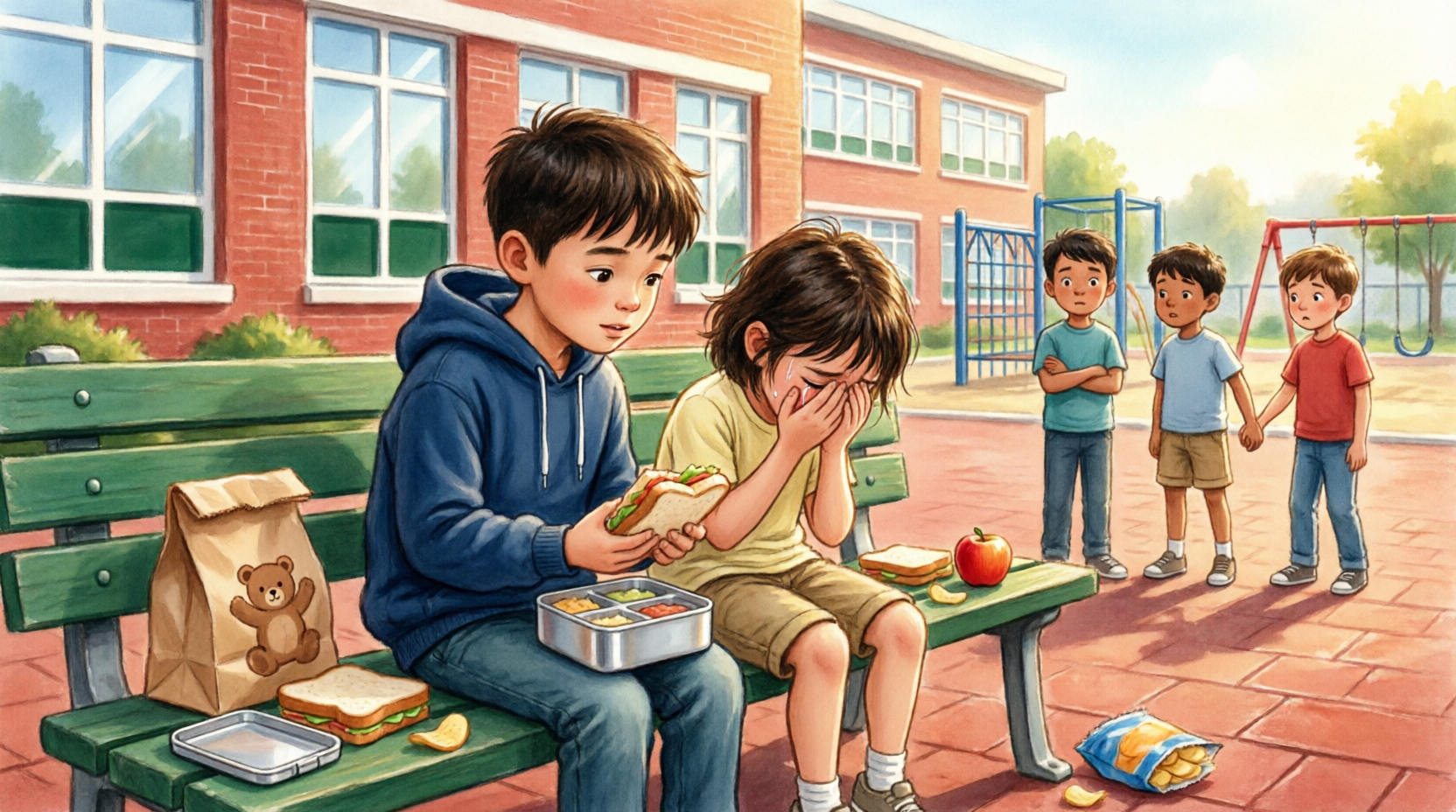
I knelt down, slowly. Carefully, like it mattered, I picked up the bread and brushed it clean. I placed it back into Emily’s hands, along with the note.
Then I set my own lunch in her lap.
“Switch with me,” I said quietly. “Please.”
The bell rang, but no one moved.
That day, I didn’t eat pizza.
I tasted something else entirely—shame.
And I made a promise to myself: as long as I had more than enough, Emily’s mother would never have to go hungry again.
But change doesn’t happen in a single moment.
The next day, people expected me to keep bullying her. When someone shoved Emily in the hallway, I stepped in.
“Do it again,” I said calmly, “and you deal with me.”
No one laughed that time.
I stopped hanging out with the kids who cheered when I hurt others. At first, they mocked me. Then they ignored me.
I didn’t care.
I started sitting with Emily every day.
She barely spoke at first. Trust doesn’t come back easily when you’re the one who broke it. But I kept showing up. Sharing my food. Listening instead of talking.
One afternoon, I followed her home—not to scare her, but to understand.
Her house was small, worn down. Paint peeling, windows cracked. When her mother opened the door, she looked tired… but gentle.
The moment she saw me, her expression changed. She knew exactly who I was.
“I’m sorry,” I said immediately. “For everything.”
She didn’t raise her voice.
“I just want my daughter to feel safe at school,” she said softly.
I nodded. “She will.”
That night, I told my parents everything.
My father was furious—but not for the reason I expected. He talked about influence, lawsuits, control.
I stopped him.
“This isn’t about power,” I said. “It’s about fixing what I broke.”
For once, he listened.
We helped quietly. No publicity. No attention. Grocery support, school resources, extra tutoring.
Emily didn’t change overnight. But slowly, she lifted her head more. She smiled.
Years passed.
We graduated.
Emily earned a full academic scholarship to college. I got in too—but this time, it wasn’t just because of privilege. I had finally learned effort.
On graduation day, she hugged me.
“You didn’t have to change,” she said. “But you did.”
I shook my head. “You changed me first.”
Last week, I got a letter.
Inside was a photo of Emily wearing a lab coat. She’s studying biomedical science now.
The note said:
Your help mattered. But your choice mattered more. Thank you for becoming someone better.
I still think about that piece of bread.
Because it taught me something I’ll never forget:
Having everything means nothing… if you don’t have a heart to share it.