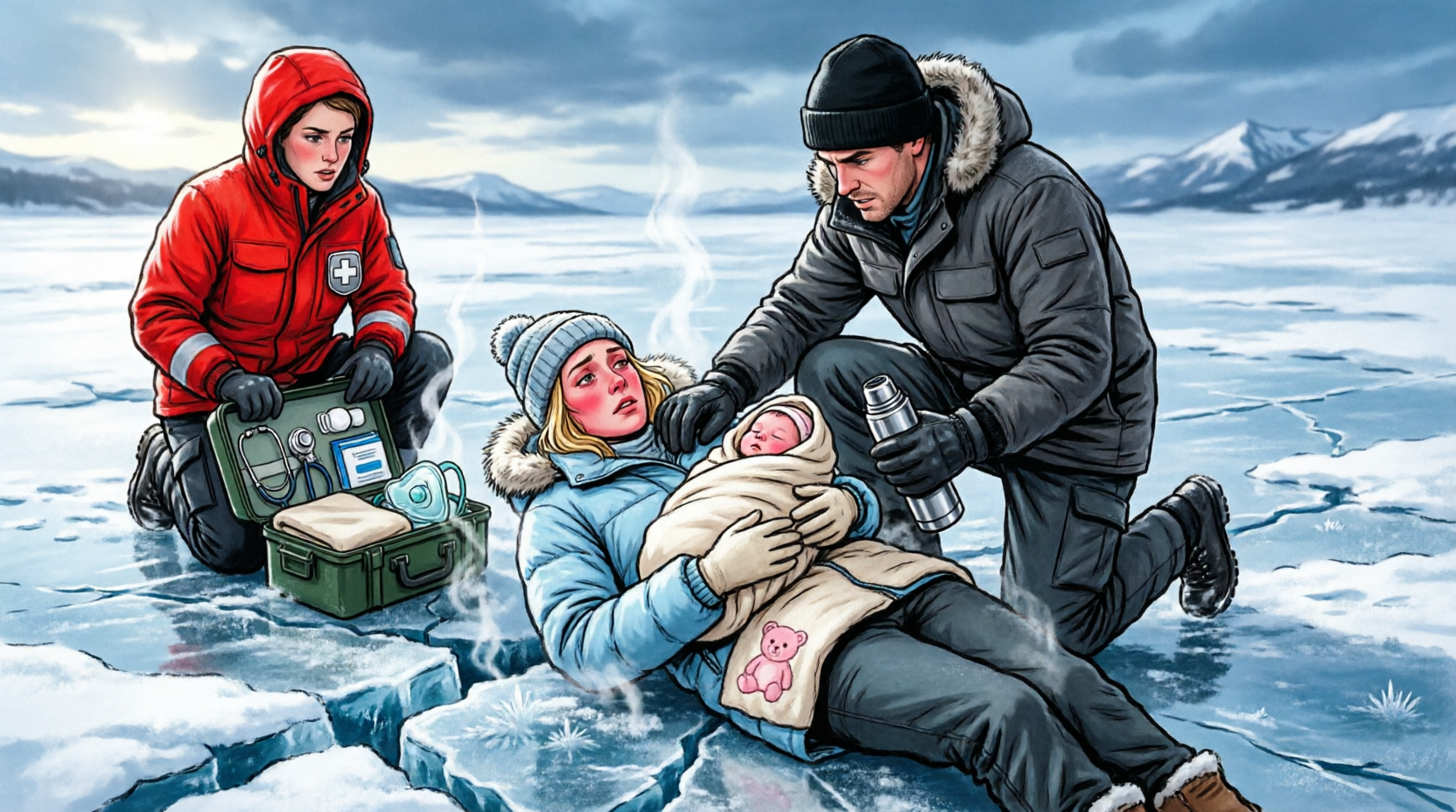
Because the man who had vowed to love her had chosen money over her life.
Grace put both hands around her belly, her numb fingers barely obeying her. “Listen to me,” she whispered to the babies inside her. “You do not get to leave me. You hear me? We’re getting out of here together.”
Another contraction ripped through her so powerfully she cried out.
When it eased, she glanced at the watch on her wrist and squinted through the blur in her vision. Time had gone strange. Elastic. Impossible. She no longer knew whether she had been inside for forty minutes or four hours.
She only knew the cold was winning.
And she refused to let it.
Far beyond the locked freezer, in the sleeping maze of the industrial complex, the night carried on as if nothing had happened.
Three buildings away, Connor Hayes was still at his desk.
At thirty-eight, Connor had made himself into the kind of man magazine covers liked. Billionaire founder. Tech visionary. Ruthless negotiator with immaculate suits, sharp instincts, and a habit of turning betrayal into leverage.
But beneath the polished headlines, there was an older story.
Seven years earlier, Derek Bennett had nearly destroyed him.
Back then, Connor had been a brilliant graduate student with a software architecture blueprint that should have made him rich. Derek had been his so-called friend, the charming operator who understood investors, handshakes, and how to look honest while sharpening the knife under the table.
Connor built the platform.
Derek stole it.
Forgery, false accusations, legal sabotage. By the time Connor clawed his way back to daylight, he had lost three years, most of his savings, and whatever remained of his faith in human decency.
He rebuilt anyway.
Men like Connor did not collapse. They calcified.
By 11:47 p.m., he was finally leaving his office when he noticed a silver sedan in the shared parking lot with its hazard lights still blinking weakly into the dark.
He stopped.
At first it was instinct. Nothing more.
Then he saw the purse on the passenger seat.
The phone in the cup holder.
The faint shape of a maternity sweater folded in the back.
Connor walked closer, breath fogging in the November air. Michigan cold was one thing. It had teeth, but it still belonged to the living world. The abandoned car felt like something else.
He tried the handle.
Locked.
A parking decal on the windshield caught the security light.
Bennett Pharmaceuticals.
Connor went still.
Then he saw a half-empty takeout cup in the center console and a folded prenatal appointment card tucked under a receipt.
He did not know Grace Bennett personally, but he knew Derek’s name, and every nerve in Connor’s body went tight with old warning.
A pregnant woman’s car.
Abandoned for hours.
Phone left behind.
In Derek Bennett’s lot.
The math of dread assembled itself instantly.
Connor pulled out his phone and called building security.
Part 2
By the time the guard met him in the Bennett Pharmaceuticals lobby, Connor’s instincts were no longer whispering. They were roaring.
The night guard, a tired man named Tom, kept glancing between Connor and the monitor bank like he hoped this would somehow become somebody else’s problem.
“Sir, maybe she got a ride home,” Tom said. “Could’ve forgotten her phone.”
“Then why are the hazards still on?” Connor asked.
Tom didn’t answer.
Connor leaned one hand on the desk. “Check access logs.”
Tom hesitated just long enough to be annoying, then pulled up the building record system. His eyes moved across the screen.
“Derek Bennett badge swipe, 8:50 p.m. Storage corridor C. Then…” He frowned. “No recorded exit until 6:58 a.m.”
Connor’s pulse thudded once, hard.
“Storage corridor C?”
Tom swallowed. “Industrial cold storage.”
Connor stared at him. “Open it.”
Tom blinked. “I can’t just unlock secure storage because someone left a car in the lot.”
Connor pulled out his wallet, set five crisp hundred-dollar bills on the counter, and spoke with the kind of deadly quiet money sometimes learned.
“If I am wrong, you keep that and we both go home embarrassed. If I am right and you waste another minute arguing, somebody dies.”
Tom looked at the cash. Then at Connor’s face.
Whatever he saw there made him stand.
The corridor to storage bay C seemed too long, too bright, too ordinary.
Tom’s hand shook on the keycard.
“Negative fifty,” he muttered. “Nobody survives that.”
Connor didn’t answer.
The lock clicked.
The door gave with a hydraulic groan, and a violent plume of white cold rolled out.
For one second Connor could see nothing.
Then the fog shifted.
And the sight inside froze something human and ancient in him.
A woman sat slumped against the far wall in a pool of blood and frost, her head tilted awkwardly, skin ghost-white, lips violet. Her dress was soaked, her bare arms mottled with cold damage. In her chest, under what looked like a cardigan wrapped desperately around two tiny bodies, something moved.
Connor was already on his knees before thought returned.
He touched Grace’s neck.
Pulse.
Weak, thready, but there.
One of the babies made a sound so small it was less a cry than a cracked whisper against death.
Both infants were still attached by their cords.
Connor stared at them, unable for one impossible instant to comprehend what he was seeing.
She had given birth in here.
Alone.
And they were alive.
“Call 911!” he shouted.
Tom ran.
Grace’s eyes fluttered. She tried to focus on his face and failed.
“Please,” she breathed. “Don’t let them die.”
Connor slid out of his suit jacket and wrapped the first infant with hands that, for once in his life, were not steady. He stripped off the thermal layer under his dress shirt too and tucked it around the second baby.
“I’ve got them,” he said, though his voice came out rough. “I’ve got all of you.”
Her cracked lips moved.
“My husband,” she whispered. “He locked me in.”
Rage moved through Connor so fast and pure it felt electrical.
Derek.
Of course it was Derek.
The same polished thief. The same parasite in a better suit.
Only this time he had escalated from fraud to murder.
Connor lifted one infant gently from Grace’s chest long enough for paramedics to slide thermal blankets around all three of them when they arrived. The medics moved with sharp, practiced urgency, but even they looked stunned.
“She was in here how long?”
Tom answered from the doorway, voice shaking. “Badge log says about ten hours.”
One paramedic swore under his breath.
Grace tried to keep her eyes open as they loaded her onto the stretcher, but her body was shutting down now that help had arrived. It was as if survival had been a fist clenched all night, and rescue allowed the hand to finally open.
“Babies,” she murmured.
Connor walked beside her as they rushed through the corridor.
“They’re alive,” he said. “Stay with me. What are their names?”
She blinked slowly.
“I… I didn’t… we hadn’t…”
A tear slipped from the corner of her eye and froze near her temple before a medic wiped it away.
Then, through a mouth barely able to form words, she whispered, “Emma. Noah.”
The ambulance doors slammed.
Connor followed in his car.
At the hospital, the night became fluorescent and brutal.
Doctors swarmed.
Nurses shouted numbers.
Machines sang in panicked beeps.
Grace disappeared behind curtains and double doors. The twins went straight to neonatal intensive care, tiny bodies swallowed by wires, tubes, and specialized hands.
Connor stood in the waiting area with his shirt half-buttoned under an open coat someone had thrown at him and realized he had blood on one cuff that was not his.
He sat.
Then stood again.
Then paced.
He had seen corporate sabotage, public humiliation, and courtroom cruelty. He had watched men ruin each other over money with silk voices and dead eyes.
But this was something deeper and uglier.
A husband had locked his pregnant wife in a freezer to collect insurance money.
And she, somehow, had beaten the cold long enough to bring two children into the world with nobody but pain to help her.
Connor did not believe in miracles in the soft, sentimental sense.
But he believed in survivors.
At 3:12 a.m., a doctor in dark blue scrubs approached him.
“You’re the one who found her?”
“Yes.”
“She and both babies are alive.” The doctor exhaled, as if still slightly astonished by the sentence. “Critical, but alive. The mother has severe hypothermia, frostbite, probable nerve damage, and postpartum complications. The twins were born premature and exposed to extreme cold. By every expectation, we should be having a different conversation.”
Connor closed his eyes for one second.
The doctor continued. “The police will need your statement.”
“They’ll get it.”
And Derek, Connor thought, will get everything else.
Grace woke forty-eight hours later to white light and pain.
The first thing she heard was the soft, relentless rhythm of machines. The second was the sound of someone saying her name carefully, as if it might break.
“Grace?”
She fought her way upward through layers of fog and found an older woman with kind gray eyes sitting beside her bed.
“I’m Dr. Vivian Matthews,” the woman said. “You’re safe.”
Safe.
The word barely made sense.
Grace tried to move and gasped.
“Easy,” Dr. Matthews said gently. “You’ve been through severe trauma.”
“My babies.”
“In the NICU. Alive. Fighting hard.”
Grace turned her face toward the pillow and cried without sound.
Not because everything was fixed.
Not because the pain was over.
But because Emma and Noah had taken breaths. Because the impossible had not ended in silence.
When she could finally speak again, her voice came out scraped raw.
“Did they arrest Derek?”
Dr. Matthews’ expression sharpened. “Yes. Attempted murder. Three counts.”
Grace stared at the ceiling.
There should have been triumph.
Instead there was exhaustion so deep it felt geological.
She had no room left inside her for victory yet.
The next hours came in fragments.
Detective Laura Friedman, sharp-eyed and unsentimental, taking her statement.
A nurse adjusting her IV.
The unbearable truth that three toes on her left foot could not be saved.
The knowledge that her hands might never fully recover.
The sight of her own bruised body reflected faintly in the darkened window after sunset, transformed into a map of violence she had survived.
Then Rachel arrived.
Grace had not realized how completely Derek had narrowed her world until she saw her best friend from college burst into the room with red eyes and shaking hands and understood, with a fresh wave of grief, just how many people she had lost while trying to be the wife Derek demanded.
Rachel crossed the room in two long steps and hugged her with exquisite care.
“Oh my God,” Rachel whispered. “Oh my God, Grace.”
Grace held on like a drowning woman grabbing wood.
“He tried to kill us.”
Rachel’s whole body shook. “I know.”
There was a knock on the door.
Connor Hayes stood there in a charcoal suit, a man who looked composed from a distance and dangerous up close.
Grace recognized him immediately from the last blurred seconds before darkness had taken her.
The man from the freezer.
The man Derek hated.
“You saved us,” she said.
Connor walked in slowly, as if approaching a frightened animal.
“You saved them,” he answered. “You kept them alive. I just opened a door.”
The words hit her harder than she expected.
Nobody in a long time had spoken to her like she was the one who mattered.
Connor glanced at Rachel, then back at Grace. “I also know Derek Bennett. Better than most people do.”
Dr. Matthews rose quietly and left them space.
Connor told Grace the story in clean, unvarnished lines. The stolen company. The forged documents. The years Connor had spent rebuilding after Derek’s betrayal. The evidence he still had. The pattern of deception. The financial motive behind the attempted murder. Derek’s gambling debts. The recent increase in Grace’s life insurance policy.
The more he spoke, the sicker Grace felt.
This had not been a sudden snap.
It had been architecture.
Cold, careful, patient evil.
“How long?” she asked.
Connor’s face hardened. “Long enough to research multiple ways to kill you. The freezer was only the one he chose.”
Grace closed her eyes.
In the dark beneath her lids she saw every almost-accident now rearranged into meaning.
The stumble on the stairs.
The brake issue in her car.
The food poisoning only she had gotten.
The nights he stood too close behind her near railings.
The new insurance forms he had told her were “routine updates.”
She had not been paranoid enough.
Rachel took one of her hands carefully. “This is not your fault.”
Grace laughed once, bitter and thin. “Isn’t it? I stayed.”
Connor’s answer came fast and certain.
“You stayed because abusers build their prisons gradually. They train you to doubt your own instincts. They isolate you until leaving feels harder than enduring. That is his crime, not your shame.”
Something in Grace went quiet then.
Not healed.
Not fixed.
Just still enough to listen.
Part 3
The trial consumed winter.
By then Grace had been discharged from the hospital and moved into a small rented house in Birmingham, Michigan, with a fenced yard, warm floors, and locks she checked every night until she could force herself to stop at three times instead of five.
Emma and Noah came home from the NICU six weeks later, fragile as breath and loud as life itself.
Emma had a furious cry and a stubborn grip.
Noah studied the world in solemn silence before suddenly breaking into smiles that felt like sunrise.
They were miracles in sleepers.
They were also proof.
Every time Grace looked at them, she remembered the freezer floor and the cold air turning white around their first cries. But she also remembered something stronger.
She had not died.
Neither had they.
And Derek Bennett, for all his planning, had failed.
The media did what media does when horror comes dressed in wealth.
Some outlets called Grace a hero.
Others called the case tragic and complicated, as if attempted murder were a weather event.
Derek’s defense team pushed hard. They painted him as a misunderstood husband under financial strain. They implied Grace was unstable, overly emotional, confused by trauma, eager to profit from sympathy.
His mother, Marjorie Bennett, went on television in pearl earrings and righteousness, describing her son as a “good Christian man” and Grace as “fragile, dramatic, and prone to exaggeration.”
Grace watched one interview with the sound off while holding Noah against her chest and thought, with surprising calm, I will never beg to be believed by people invested in my silence.
Connor paid for the best legal team in the state.
When Grace protested, he only said, “Derek doesn’t get to win because his lies are expensive.”
It was infuriatingly difficult to argue with that.
He never acted like a savior. Never made himself the center. Never used generosity like a leash. He brought paperwork when paperwork was needed, dinner when dinner was forgotten, quiet company when the nights got jagged and sleep felt dangerous.
Rachel became family by default and by choice. She stocked Grace’s fridge, held babies during legal calls, and cursed Derek with the creative fury of a woman who loved without refinement.
Dr. Matthews agreed to testify.
Detective Friedman dug like a woman born to unearth rot.
And then, piece by piece, the truth built itself into something courtroom-solid.
Derek had researched hypothermia death windows.
Derek had tested the freezer lock repeatedly in the previous months.
Derek had increased Grace’s policy.
Derek had searched for divorce costs and child support estimates, then searched for staged household accidents, carbon monoxide exposure, and fatal pregnancy complications.
Murder, apparently, had looked cheaper than leaving.
When the trial finally began in February, Grace wore a navy suit and a pair of sensible closed shoes over feet that still ached when the weather changed.
Derek turned in his chair when she entered the courtroom.
For a second, all the years folded over each other. The charming smile. The soft voice. The hand at the base of her spine steering her through parties and dinners and doctor’s offices as if he loved her.
Then she saw only what was real.
A man who had stood outside a steel door while his pregnant wife begged to live.
She did not look away.
The prosecution opened with facts.
The defense opened with performance.
That was Derek’s last refuge now: theater.
Security footage played.
Badge logs were entered.
Paramedics testified.
Dr. Matthews described the frostbite, hypothermia, premature delivery, and medical improbability of survival.
“In thirty years of emergency medicine,” she said, looking directly at the jury, “I have never seen a mother endure what Mrs. Bennett endured and keep two premature infants alive under those conditions. The fact that all three survived is extraordinary. The fact that they were placed in those conditions was intentional.”
Connor testified next.
The defense hated him on sight.
Too calm.
Too credible.
Too impossible to paint as hysterical.
He explained why he checked the car. Explained Derek’s prior fraud. Explained the paper trail, the debts, the motive.
On cross-examination, Derek’s lawyer tried to make Connor sound obsessed.
“Mr. Hayes, isn’t it true you’ve held a grudge against my client for years?”
Connor folded his hands and answered in that smooth voice that made investors hand over millions.
“I don’t hold grudges. I keep records.”
A laugh rippled through the gallery before the judge shut it down.
Grace testified on the fourth day.
She had feared this part more than almost anything.
Not because she could not tell the truth.
Because she could.
And truth, when spoken aloud in full, has a way of reopening wounds that were only beginning to scar.
The prosecutor walked her through the night.
The call from Derek.
The empty building.
The freezer.
The intercom.
The words about insurance.
The labor.
The birth.
The endless cold.
Grace kept her voice steady. She did not dramatize. She did not perform. She simply told the room what happened.
Sometimes plain truth enters a courtroom like an axe.
When the prosecutor asked, “What did you think while giving birth in that freezer?” Grace looked at the jury and answered honestly.
“That my babies deserved at least one person who wouldn’t give up on them.”
Several jurors cried.
The defense attorney came at her hard.
He asked why she stayed in the marriage if Derek was abusive.
He asked whether pregnancy hormones affected memory.
He asked about past anxiety, past stress, past tears.
He implied she had financial motives.
He suggested she had misunderstood Derek’s words over the intercom.
Grace let him finish each question.
Then she answered with the composure of a woman who had already survived worse than cross-examination.
“I stayed because I was being psychologically abused and isolated.”
“No, hormones did not make me imagine giving birth on a freezer floor.”
“The only financial motive in this case belonged to the man who insured my life and locked the door.”
And when he finally asked, almost triumphantly, “Mrs. Bennett, can you prove my client intended for you to die?”
Grace looked at Derek across the room.
Then back at the attorney.
“He left an eight-month-pregnant woman in negative fifty degrees without a phone, without help, and without opening the door when she begged for her life. What else would you call that?”
The room went so still it felt carved from stone.
The defense called Derek’s mother. She lied beautifully.
They called colleagues who talked about his professionalism.
Old neighbors who praised his manners.
Friends who said he adored children.
Then they brought in a woman named Miranda Stevens.
Pretty. Controlled. Former girlfriend from years ago.
At first she seemed like a disaster for Grace.
Miranda described Derek as kind, attentive, thoughtful. Then, in a voice pitched just right for credibility, she claimed Grace had always been jealous and unstable.
Grace felt Rachel go rigid beside her.
Connor didn’t move at all.
The prosecutor rose for cross.
“Ms. Stevens, were you compensated for appearing here today?”
Miranda froze.
“No,” the defense said instantly.
The prosecutor didn’t even look at him.
“Ms. Stevens?”
Miranda’s eyes filled.
Then the whole lie cracked open.
“Yes,” she whispered.
The courtroom erupted.
The judge hammered for order.
Miranda started crying so hard she could barely breathe.
“He paid me,” she said. “I’m sorry. I’m so sorry. I can’t do this.”
The defense attorney objected, but it was too late. The truth had found blood.
Miranda turned toward the jury with the wild relief of someone finally setting down a weight she had carried too long.
“Seven years ago, when I tried to leave him, Derek locked me in a basement apartment for three days. He took my phone. He told me nobody would believe me. I was too scared to report it. When his lawyer contacted me about this case, I thought… I thought maybe I owed him for helping me back then. But he was just doing it again. He always does it again.”
Grace stopped breathing for a second.
Connor closed his eyes briefly, not in surprise, but in recognition. Of course. Men like Derek do not invent evil for one woman only. They rehearse it across a lifetime.
Miranda’s testimony demolished the defense.
By the time closing arguments arrived, even Derek’s lawyer sounded like a man trying to sell umbrellas underwater.
The jury deliberated for six hours.
Six hours in which Grace paced, sat, stood, fed Emma, pumped milk in a courthouse family room, called Rachel twice from ten feet away for no reason she could explain, and stared at Connor until he finally said, gently, “Whatever happens, you’re already free.”
She wanted to believe that.
But not yet.
Not until a verdict made the danger smaller.
Not until Derek lost the last illusion of power over her.
When the jury came back, Grace felt every beat of her heart like a hammer to the ribs.
The foreperson stood.
On the charge of attempted murder of Grace Bennett: guilty.
Grace’s knees nearly buckled.
On the charge of attempted murder of Emma Bennett: guilty.
Rachel grabbed her arm.
On the charge of attempted murder of Noah Bennett: guilty.
The sound Grace made then wasn’t a sob exactly. It was something deeper and older. The sound a body makes when terror finally finds a place to leave through.
Derek showed almost nothing.
No tears.
No collapse.
No apology.
Only a dead, furious stillness.
It suited him better than charm ever had.
He was sentenced to three consecutive life terms.
No chance at parole.
No contact with the children.
No access to the family he had tried to turn into profit.
After the trial, life did not turn soft all at once.
Trauma is rude that way.
Justice is not the same thing as peace.
Grace still checked locks.
Still woke sweating from dreams of steel doors and white breath.
Still flinched when plans changed suddenly.
Still sat on the floor some nights with both babies asleep on her lap and cried from the weight of having survived.
But healing began to arrive in tiny domestic ways.
Emma’s first laugh.
Noah’s sleepy fist wrapped around her finger.
Coffee on the porch after a night with only one nightmare instead of three.
Rachel showing up with bagels and gossip.
Dr. Matthews texting reminders that progress did not have to be dramatic to be real.
Connor stayed.
Not with speeches.
Not with pressure.
Just with constancy.
He brought Thai takeout because Rachel had once mentioned it was Grace’s favorite.
He assembled cribs without acting noble about it.
He sat in her kitchen after the twins fell asleep and talked to her about everything except trauma when trauma had become too greedy.
One night in early summer, after the trial and the sentencing and the final paperwork severing Derek’s rights, Grace stood barefoot in her small backyard while fireflies flickered over the fence line and asked the question she had been carrying for months.
“Why are you really here?”
Connor looked at her over the rim of his glass.
“Because one man spent years teaching me to expect the worst from people,” he said. “Then I found you on a freezer floor still fighting for your children, and I remembered that goodness exists too. I don’t want to miss it again.”
“That’s not a normal answer.”
“No,” he said. “It’s not a normal story.”
She laughed.
The sound surprised both of them.
Then she looked down at her scarred hands, at the faint tremor that still visited when she was tired.
“I’m not ready to be rescued.”
Connor’s expression changed, quiet and immediate.
“Good,” he said. “I’m not trying to rescue you.”
The words moved through her like warm water through frozen pipes.
“What are you trying to do?”
He set his glass down.
“Stand beside you. For as long as you want me there.”
Grace looked at him for a long time.
Then she nodded once.
“Slow,” she said.
Connor smiled, small and genuine. “Slow I can do.”
And he did.
So slow it felt almost sacred.
Months of dinners and conversations and patient affection.
Months in which he became part of the twins’ routine before he ever became part of Grace’s heart.
Months where trust returned not like lightning, but like dawn. Quiet. Earned. Unstoppable once it started.
Emma reached for him first.
Noah followed a week later.
Grace watched Connor on the living room rug building a crooked block tower while both children crawled over his legs and realized, with something like awe, that safety had a body language all its own.
It did not crowd.
It did not command.
It did not keep score.
It stayed.
A year after the trial, on the twins’ first birthday, Connor asked Grace to marry him in the backyard under a cheap string of lights Rachel insisted made everything look magical.
He did not kneel until he saw that she was smiling.
And he did not ask like a man claiming something.
He asked like a man offering a life.
“I know you don’t need me,” he said. “That’s one of my favorite things about you. But I love you. I love Emma and Noah. And if you want this too, I’d like to spend the rest of my life being part of your family.”
Grace did not answer right away.
She had promised herself she would never again say yes out of fear, pressure, debt, gratitude, or the hunger to be saved.
So she sat with it.
Talked to her therapist.
Talked to Rachel.
Talked to her own bruised and rebuilding heart.
And when she said yes, months later, it was with the clean certainty of a free woman making a free choice.
Their wedding was small.
No ballroom.
No society pages.
No performance.
Grace wore a soft yellow dress because Derek had once told her yellow made her look washed out, and she had learned to distrust his taste in everything.
Emma toddled down the aisle carrying petals badly.
Noah tried to eat three of them.
Rachel cried before the ceremony even started.
Dr. Matthews cried during the vows.
Connor cried when Grace took his hand and did not let go.
In her vows, Grace said, “You found me in the darkest place of my life. But you never asked me to stay there so you could keep saving me. You waited while I learned how to walk out on my own. That is love. That is why I choose you.”
There are kisses that ignite.
And there are kisses that heal.
Theirs did both.
Years passed.
Connor adopted Emma and Noah legally. They called him Dad long before paperwork caught up.
Grace rebuilt her marketing career from home, then from a bright office downtown with a glass door that had her own name on it.
She and Connor donated to shelters, funded legal aid for abuse survivors, and helped create emergency escape grants for women who needed to disappear before they became headlines.
Miranda volunteered with one of the programs.
Rachel became Emma’s favorite emergency contact and Noah’s preferred source of contraband candy.
Grace spoke publicly, eventually, about coercive control and invisible abuse and why survivors so often stayed. She spoke with the authority of someone who had lived it and the mercy of someone who understood how complicated leaving really was.
At one conference, after she stepped off stage, an older woman in a wool coat took her hand and whispered, “I thought because he never hit me, maybe it wasn’t abuse.”
Grace squeezed her fingers gently.
“It still counts,” she said. “And so do you.”
That night she came home late to chaos.
Juice spilled on the kitchen floor.
Crayon on one wall.
Emma arguing with Noah about who loved the dog more.
Connor pretending he had the situation under control while clearly losing the war.
It was loud.
Messy.
Glorious.
Grace stood in the doorway and felt a strange, fierce gratitude rise in her chest.
This.
This ordinary, exhausted, sticky, beautiful life.
This was the revenge people misunderstood.
Not bitterness.
Not spectacle.
Not obsession.
Irrelevance.
Derek Bennett had become irrelevant.
He was a locked door in a past chapter.
She was the house built after.
Later, after the children were asleep and the dishes were done and the porch had filled with the soft chorus of summer insects, Connor asked the question he had asked her a hundred times in different seasons of their life.
“What are you thinking?”
Grace leaned back in the chair and looked out at the dark yard, at the warm rectangle of light from the kitchen window, at the home they had made from splinters.
“That he thought he was writing the end of my story,” she said. “But all he really did was force me to take the pen back.”
Connor smiled.
“And what did you write?”
Grace thought of a freezer floor and two tiny cries against the cold.
Thought of a courtroom and guilty verdicts.
Thought of yellow dresses and backyard lights and sticky-handed children yelling for their father.
Thought of all the women who had heard her speak and decided, because of that, to choose themselves.
Then she answered.
“Something worth surviving for.”
Inside, Emma called out in her sleep.
Grace rose instinctively and went to check on her. Connor came with her, as he always did.
In the children’s room, Emma and Noah lay tangled in blankets, flushed with healthy sleep, unaware of how close the world had once come to losing them.
Grace adjusted Emma’s covers. Brushed Noah’s hair back from his forehead. Stood there for one long second with her hand on the doorknob and her whole heart alive in her chest.
“You’re safe,” she whispered.
It was not a wish.
It was a promise.
And for the first time in a very long time, promises meant something again.