PART TWO: THE ARCHITECTURE OF A RECKONING
The question hung in the lemon-polish quiet of Mrs. Henderson’s kitchen like a struck match. Did she find it?
I did not answer immediately. I let the silence stretch. I let it press against the windowpanes, let it settle over my son’s sleeping face, let it do what silence does best when weaponized by people who have spent years assuming compliance is permanent. Mrs. Henderson did not flinch. She simply closed the laptop, adjusted the bridge of her reading glasses, and looked at me with the quiet, unblinking focus of a woman who had spent forty years watching liars trip over their own footprints.
“They know,” she said, her voice low, stripped of theatrics, heavy with the weight of experience. “Not everything. Just enough to panic. And panic is where the truth leaks.”
I looked down at the car seat beside my ankle. My son’s chest rose and fell in that fragile, rhythmic way that made the hollow in my ribs ache. Eight months of screenshots. Eight months of hidden transfers. Eight months of swallowing the slow erosion of my own life while Mark’s family built a vault on my silence. And now, the dam had cracked. I did not feel fear. I felt the cold, clean clarity of an auditor who had finally been handed the complete ledger. The kind of clarity that arrives not with a shout, but with the quiet click of a lock turning into place.
Mrs. Henderson stood. She moved to the desk, pulled a fresh legal pad, and began drafting. “First, we secure the chain of custody. Every screenshot, every bank statement, every forged signature, every timestamped text. We will notarize them. We will log them. We will make sure that if they try to delete, alter, or deny, the paper trail speaks louder than their panic.” She handed me a flash drive. “Plug this into your laptop. It is a secure, encrypted vault. We are moving everything off the cloud and into a local, air-gapped backup. They will not touch what they cannot access.”
I did as she instructed. My hands moved with mechanical precision. I dragged folders. I verified hashes. I encrypted partitions. I watched progress bars crawl across the screen while the radiator hissed and my son made soft, sleeping sounds against his car seat strap. This was not revenge. This was preservation. And preservation, in my former life, was the only thing that ever held up in court.
At 10:14 a.m., the fraud division called back. The representative’s voice was procedural, stripped of sympathy but heavy with authority. “The joint operating account is frozen pending investigation. All outgoing transfers are suspended. Any new authorizations require dual verification and written consent from both account holders. You will receive a confirmation email within the hour. Do not engage with the other party. Do not sign anything. Let the system work.”
I thanked her. I hung up. I printed the confirmation. I filed it beside the folder. I watched the paper slide into the manila sleeve and felt something in my chest unclench. Not relief. Recognition. The system was moving. Slowly. Methodically. Exactly as it was designed to when evidence was clean and narrative was stripped of performance.
At 11:32 a.m., the texts started. Not from Mark. From his sister, Clara. Emily, please. You’re overreacting. Mark is stressed. The LLC is just a temporary holding structure. We’ll fix it. Just unfreeze the account before his parents notice. Then his father: You’re making a scene over nothing. Come home. Serve breakfast. We’ll talk like adults. Then Mark: You’re destroying us. You’ll regret this.
I did not reply. I took screenshots. I logged the timestamps. I forwarded them to Mrs. Henderson. I powered down my phone. Not out of fear. Out of discipline. In my former life, I learned that panic leaves fingerprints. Silence leaves space for the truth to settle. And truth, once given room to breathe, does not require defense. It only requires documentation.
At 1:18 p.m., a process server arrived at Mrs. Henderson’s door. He wore a dark coat, carried a sealed envelope, and moved with the quiet efficiency of someone who delivered consequences for a living. He handed it to me. I opened it inside. A formal emergency motion for temporary financial preservation and protective custody. Signed. Dated. Filed with the county clerk. A judge’s docket number. A hearing scheduled for seventy-two hours out. I read every line. I initialed every page. I signed the final authorization. The ink dried fast. The paper felt heavy. Not with dread. With gravity.
Mrs. Henderson placed a hand on my shoulder. Not to comfort. To anchor. “You are not running anymore,” she said. “You are positioning. And positioning is how you win.”
I nodded. I packed my son into the carrier. I buckled him into the SUV. I drove to the temporary residence she had arranged: a ground-floor apartment on a quiet street, paid for in cash, leased under a shell LLC, furnished with everything a child might need to feel grounded without remembering why he was there. A small bed. Soft blankets. A nightlight. A notebook. A pen. A window that faced east. When we arrived, the air smelled like lemon cleaner and fresh linen. I set the folder on the dining table. I checked the locks. I verified the camera feeds. I sat on the edge of the couch and waited for the next wave.
It came at 4:02 p.m.
A forensic accountant named David Chen arrived. He specialized in marital asset diversion, shell company tracing, and coercive wealth extraction. He sat at the dining table, opened his laptop, and began mapping the flow. Corporate payroll → Vance & Co. Consulting, LLC → Commercial lease → Cash withdrawals → Untraceable recipient.
“It is not just hidden,” he said, his voice flat, precise. “It is laundered. They are using your marriage as a cover. Using your silence as collateral. Using your joint account as a funnel.” He pulled up a second screen. A property record. Dated six months prior. Purchased in cash. Title registered to the LLC. “They did not just take your money,” he said. “They bought a vault with it.”
I stared at the screen. The numbers did not lie. They did not soften. They did not apologize. They simply existed. And existence, when documented correctly, is the only thing that survives a courtroom.
At 6:15 p.m., Mark’s lawyer called. I let it ring. I let it go to voicemail. I played it back later. This is a misunderstanding. We are prepared to negotiate. Emily needs to understand that escalating this will only hurt the child.
I deleted it. I did not need negotiation. I needed documentation. I needed procedure. I needed the system to do what it was designed to do: separate fact from fiction, and protect the vulnerable from the convenient.
At 7:48 p.m., I sat at the kitchen table. I opened a fresh ledger. I turned to the first page. My hand moved slowly. Precise. Unshaken.
Day Two. Accounts frozen. Evidence secured. Chain of custody established. Emergency motion filed. Forensic tracing initiated. Family escalation documented. Silence replaced by structure.
I closed the book. Set it beside the window. Turned off the lamp. The room fell into shadow. Outside, a dog barked twice. The rain began its steady rhythm against the glass. I did not dream of the kitchen at 4:30 a.m. I did not dream of the word Divorce. I did not dream of the forged initials. I dreamed of a ledger finally balancing. And for the first time in years, I let myself believe that truth was not a negotiation. It was a fact. And facts, once documented, cannot be unmade.
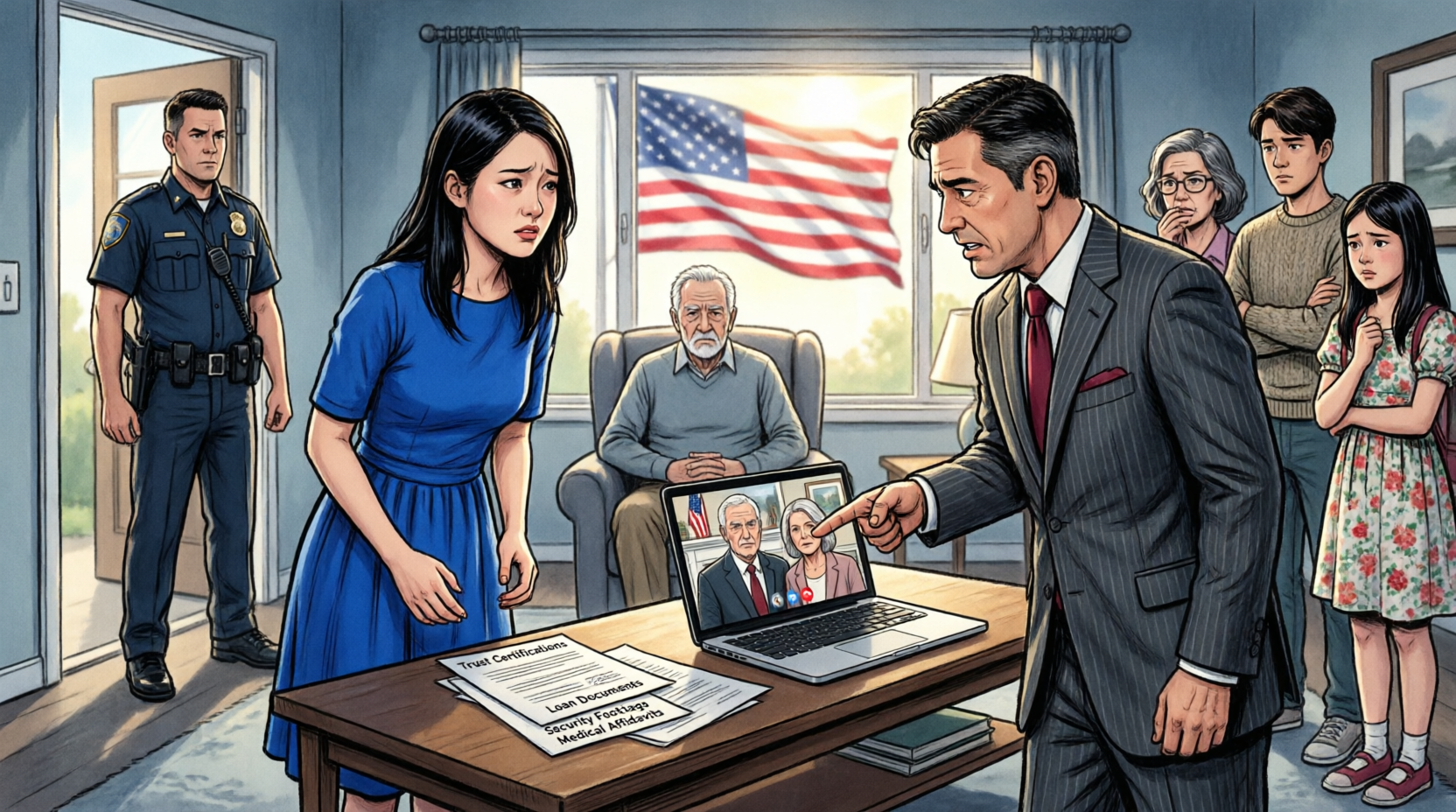
Morning brought paperwork. Phone calls. The first wave of retaliation.
Clara did not accept erasure quietly. Women who build their power on other people’s silence do not break when confronted. They recalibrate. They weaponize procedure. They turn victims into aggressors by reframing the timeline.
At 9:14 a.m., a text arrived from an unknown number. You’re making a mistake. Mark will be fine. The family will handle this. Drop the charges or lose everything you’ve ever claimed to care about.
I did not reply. I took a screenshot. Logged the timestamp. Forwarded it to David. Then I powered down the phone. Not out of fear. Out of discipline. In trauma recovery, you do not argue with a symptom. You isolate the cause. Clara’s messages were symptoms. The cause was control. And control dies when it’s documented.
At 10:32 a.m., a process server arrived. He carried a sealed envelope, wore a dark coat, and moved with the quiet efficiency of someone who had delivered bad news to a hundred families before mine. I opened it inside. A formal subpoena. Signed by the county clerk. Requiring my appearance before the financial review board in seven days to testify regarding the unauthorized business line, the custodial trust, and the coordinated obstruction.
I placed it in a clear evidence sleeve. Logged the time. Photographed it. Filed it beside the hospital discharge summary.
At 1:15 p.m., David returned with a family law attorney named Elena Rostova. She specialized in coercive financial control, asset preservation, and emergency custody motions. She sat at the small kitchen table, opened her laptop, and laid out the first tranche of discovery.
“Mark’s shell entity, Vance & Co. Consulting, was established in 2023,” she said, her voice flat, precise. “It holds three properties, a business line, and a secondary vehicle fleet. Clara was listed as the sole member. But the primary funding source was your joint account. The toll data, the garage logs, the security footage—they all trace back to Mark’s authorization. He didn’t just hide money. He orchestrated the diversion. He believed the system would swallow you because you were quiet, because you were compliant, because you had spent three years absorbing the cost of their comfort. He miscalculated. You stopped absorbing.”
I looked at the printed logs. The timestamps. The wire transfers. The garage entry records. The evidence was not emotional. It was architectural. And architecture does not care about family. It cares about load-bearing walls.
“What happens next?” I asked.
“Indictment drops in fourteen days,” she said. “Arraignment follows. Mark will plead not guilty. He’ll claim ignorance. He’ll claim stress. He’ll claim you were unstable. He’ll try to reframe the timeline. He’ll try to turn survival into sabotage. Don’t engage. Document. Let the evidence speak.”
“I will,” I said.
She closed her laptop. Stood. Adjusted her coat. “The system is moving. Let it move. You focus on healing.”
The physical recovery was slow. Fractured ribs do not heal in days. They heal in layers. In quiet mornings where breathing is measured. In physical therapy sessions where movement is relearned. In nights where pain medication pulls at the edges of sleep but does not erase it. I followed the protocol. I attended the sessions. I tracked my progress in the notebook. Day Four. Walked to the window without stopping. Day Seven. Sat through a full meal. Day Twelve. Slept through the night. Day Nineteen. First day without checking the locks three times.
The emotional recovery was slower. It did not follow a schedule. It arrived in fragments. In the sudden memory of Mark’s voice saying Divorce while I held our son. In the sound of his mother’s voice asking Did she find it? In the quiet realization that love is not a ledger, but I had spent three years balancing it anyway.
I did not rush it. I did not force it. I let it happen.
The grand jury hearing arrived on a Tuesday in early spring. I wore a dark coat, a simple blouse, and shoes that did not pinch. Elena sat beside me. David sat in the back row. The courtroom was quiet. Not tense. Just still. Like a room that has already decided what it will hold.
The prosecutor laid out the evidence. The traffic camera still. The toll transponder data. The garage security footage. The phone records. The text messages. The forensic accounting report. The medical documentation. The victim impact statement. It was not dramatic. It was precise. And precision is what breaks performative narratives.
When it was my turn to speak, I did not raise my voice. I did not cry. I did not beg for justice. I simply stated the facts.
“I was excluded from a dinner I helped finance,” I said. “My husband chose a dinner table over my life. He tried to pull me out of a hospital bed because his wife expected perfection. He lied. He covered it up. He believed I would absorb the cost. I stopped absorbing. That is all.”
The prosecutor thanked me. The judge nodded. The grand jury returned in two hours.
True Bill.
Mark was indicted on six counts. Clara was indicted on four. The charges included hit-and-run, failure to render aid, obstruction of justice, conspiracy, financial fraud, and attempted coercion. The gavel fell. It did not echo. It settled.
The trial was not a spectacle. It was a procedure. Witnesses testified. Evidence was entered. Lawyers argued. The judge ruled. Mark’s defense team tried to reframe him as a stressed son making a terrible mistake. They claimed panic. They claimed poor judgment. They claimed I was exaggerating the severity. They played the victim card. It did not work. The footage showed everything. The texts confirmed intent. The financial logs proved coordination. The system does not reward performance. It rewards documentation.
Clara’s defense was worse. She claimed ignorance. She claimed Mark acted alone. She claimed she was a grieving mother protecting her family’s reputation. She cried on camera. She wore tailored black. She spoke in measured, rehearsed sentences. It was a masterpiece of deflection. And it would have worked, if the evidence had not already spoken.
The jury deliberated for three hours.
Guilty on all counts.
Mark was sentenced to forty-two months in state prison. No parole eligibility for twenty-four. Restitution ordered. Medical bills. Therapy costs. Lost wages. A civil judgment that would follow him long after the walls closed behind him.
Clara was sentenced to thirty-six months. Her estate was seized. Her country club membership was revoked. Her business accounts were frozen. Her donations, her charity galas, her carefully curated public image—all of it dissolved under the weight of verified fraud. Women who build their power on other people’s silence do not fall loudly. They unravel quietly. One phone call at a time. One declined invitation. One friend who suddenly remembers they are “too busy” for tea. One board member who votes against her. One son who no longer answers calls.
I did not need to watch her collapse. I only needed to know the ledger balanced. And it did.
I moved into a small house on the edge of the city. Not a fortress. Not a stage. Just a house. Wooden floors that creaked when I walked. A kitchen with windows that faced east, letting the morning light fall across the counter in slow, predictable strips. A garden I was still learning how to tend. I kept the good teacup. I kept the notebook. I kept the quiet.
People ask what healing looks like. They expect tears. They expect dramatic confrontations. They expect a moment where the abuser breaks down and the victim forgives. But healing is not a performance. It is a practice. It is waking up and realizing you do not have to brace for impact. It is reading a text message and choosing not to reply. It is buying groceries without calculating who will judge the brand. It is sitting in a room and knowing you do not have to earn your place in it. It is quiet. It is slow. It is entirely yours. It does not ask for permission. It simply takes up space. And space, once claimed, cannot be unclaimed.
On a Tuesday in late spring, I sat on the porch with a mug of black tea. The streetlights had just come on. A neighbor walked past with a dog. The dog barked twice. I did not tense. I watched the animal trot away. I listened to the wind move through the trees. I thought of the hospital bed. The cold floor. The grip on my wrist. The words: My mother’s birthday dinner matters more. I thought of how long I had carried those words like a stone in my pocket. How I had worn them down with silence. How I had finally set them down. How I had learned that cruelty is not stress. It is choice. And choice, once documented, cannot be rewritten.
The house behind me was warm. The tea in my cup was steeping. The future was not a question I needed to answer anymore. It was just a road I was walking. And for the first time in fifteen years, I was not paying for the privilege of existing. I was simply living.
I closed my eyes. Listened to the quiet. Let it settle into my bones. And when I opened them again, the sky was clear. The air was still. And I was exactly where I was supposed to be.
Not waiting. Not shrinking. Not paying.
Just breathing.
And that, finally, was the whole story.