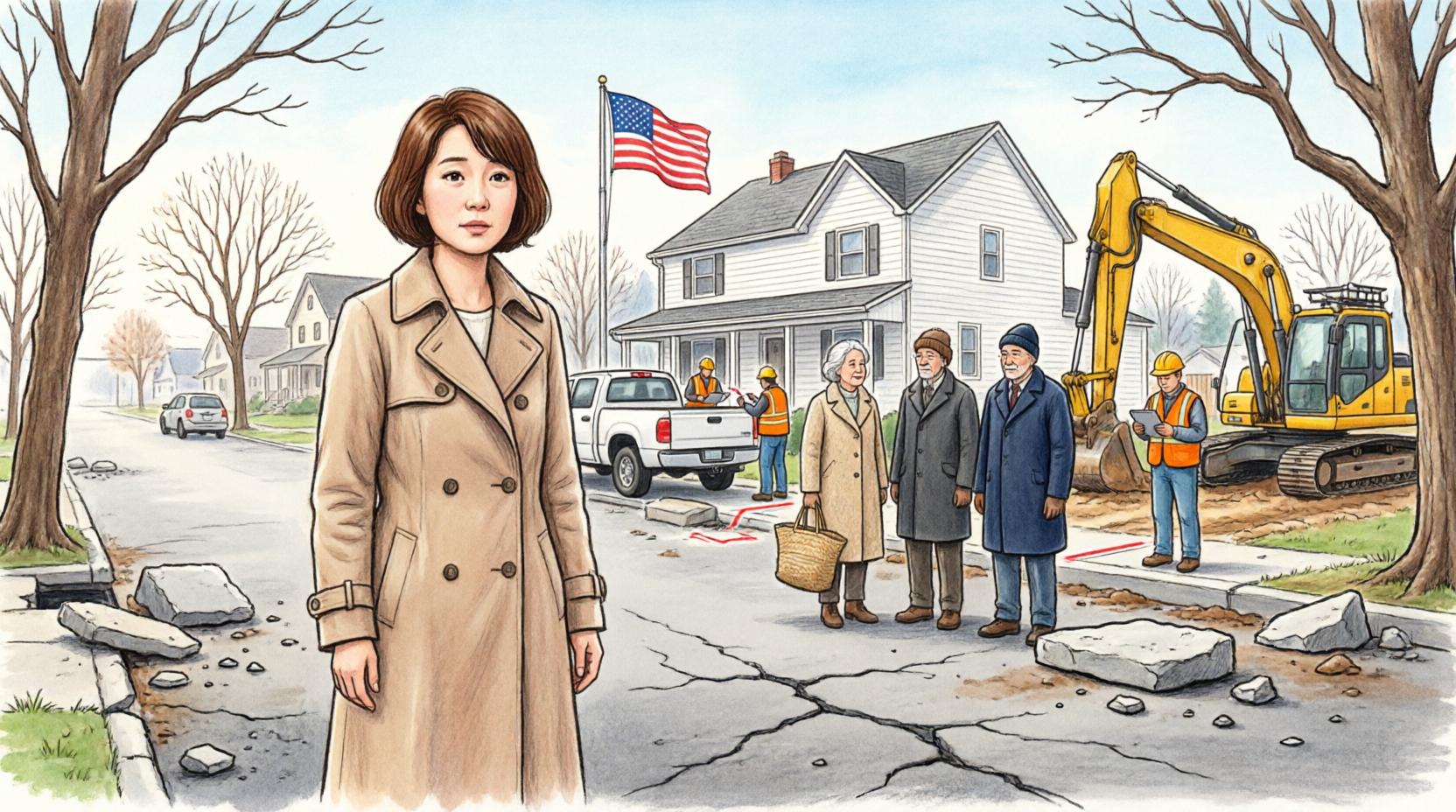
My husband called me and said, “I demolished your house.”
I laughed, because by then I understood something he did not. That house was never going to make him rich.
That is not where this story started, though. It started months earlier, with grief moving into my bones so quietly I did not realize until it was living there.
My name is Amy Jackson. I am 52 years old. I have a son, Eric, and a daughter, Judy. Both are grown. Both live on their own. Both are decent people, which is a blessing I did not appreciate enough until I found myself surrounded by people who were not.
For most of my life, I thought I had something ordinary and steady. I was not glamorous. I did not have a dramatic marriage. I was not one of those women whose friends whispered, from the very beginning, that she was making a mistake. I married Scott when I was 30. He was stable, employed, polite in public, and good enough at playing the role of a dependable man that I did not question what sat underneath.
We built a life the way most people do in quiet American suburbs. School pickups. Soccer games. Birthday sheet cakes from the grocery store. Tax season. Flu season. Nights when one kid had a fever and the other had a science project due the next morning. We lived in a corporate townhouse tied to Scott’s employer, a regional construction supplier that offered housing to senior employees. It was not our dream home, but it was practical. Low rent. Good commute. Enough room for the four of us.
Scott was an only child, and his parents made it clear from the first year of our marriage that they considered our life temporary until we eventually folded ourselves into theirs. They were the kind of people who said rude things with a smile and then acted offended if anyone reacted honestly. His mother liked to call herself direct. His father liked to call himself traditional. What they really were was selfish.
Still, for years, life moved in a straight line. The children grew. The mortgage was never ours to worry about because of the company housing. We talked sometimes about buying our own place, but Scott always said there was no point when his parents had a perfectly good house and expected us to live with them eventually anyway. I did not love that idea, but I did not fight hard enough either. At the time, I thought compromise was the same thing as peace.
I know better now.
My parents lived forty minutes away in the house my brother and I grew up in. It was a modest split-level with cedar siding that had faded silver over the years, a deep front yard, and a narrow back deck my father rebuilt twice with his own hands. There was a dogwood near the driveway and a line of lilacs along the back fence. The kitchen had yellowed vinyl flooring that my mother always meant to replace but never did. The upstairs bathroom door stuck in humid weather. The basement smelled like cardboard and old winters.
It was not a fancy house.
It was home.
My father worked in an office for most of his life. My mother did too. We were not poor, but every dollar had a job. My brother moved far away for work years ago, and I stayed close. That meant I was the one who dropped by with groceries, the one who checked the furnace filter, the one who noticed when my father began looking older in a way that had nothing to do with gray hair.
Then one winter afternoon, he died.
It happened fast. A crash on an icy road. A state trooper at the hospital. A doctor whose mouth kept moving while my mind stalled out somewhere between had an accident and we did everything we could.
My father was 68.
He was supposed to have more time.
My mother folded in on herself after that. Not theatrically. Not loudly. She just began disappearing by inches. She would sit at the kitchen table with a mug of tea growing cold in her hands and stare at the chair across from her as if she were waiting for him to come back from the garage. She stopped finishing meals. Then she stopped starting them. She said food felt heavy in her throat. My brother and I assumed it was grief. That seemed reasonable. How could it not?
Three weeks later, her jeans hung loose on her hips. Her cheekbones had sharpened. She looked like someone the wind could move.
I took her to the hospital.
The oncologist was kind in the calm, brutal way doctors get when they have had to deliver too much bad news for too many years. Advanced cancer. Inoperable. Treatment could buy time. Not much. Maybe a year if everything went well.
I sat in the parking garage afterward with both hands on the steering wheel and did not start the car for twenty minutes. I remember the way fluorescent lights bounced off concrete. I remember the sound of a shopping cart rattling somewhere two levels below me. I remember thinking, absurdly, that I had not even had time to finish grieving one parent before life came for the other.
My brother wanted to come back. He really did. But he had a job across the country, a mortgage, teenagers in school, and a wife caring for her own aging father. We talked for hours. We cried. We worked through options like practical adults, which was really just another name for heartbroken children doing math.
In the end, there was no real choice.
I was the one who could stay.
That night I told Scott I wanted to move into my mother’s house for a while.
He looked at me as if I had announced I was adopting a tiger.
“We just got through your dad’s funeral,” he said. “Now you want me dragged into another year of your family’s problems?”
There was a weariness in his voice that sounded rehearsed, as if my grief had inconvenienced him on a scheduling level.
I remember blinking at him because I truly had not expected resistance, not like that.
“She’s sick, Scott.”
“I know she’s sick.”
“She can’t be alone.”
“So take her to appointments.”
“It’s more than appointments.”
“Does it have to become our whole life?”
I stood there in our small kitchen, staring at the man I had built twenty-two years with, and realized he was discussing my mother the way people discuss a plumbing issue they are hoping to put off until next quarter.
“If it’s easier,” I said carefully, “I can stay there most nights and come back here when I can.”
He laughed once, short and disbelieving.
“And who exactly is going to cook? Clean? Do laundry? Me?”
That was Scott in one line. Not worried about me. Not sad for my mother. Not even trying to pretend. Just a man startled by the possibility that his own socks might become his responsibility.
I wanted to tell him to go to hell.
Instead I did what women like me have been trained to do for generations. I softened my own pain so the room would stay calm.
“I’ll handle what I can.”
He leaned back in his chair, arms crossed.
“Fine. But I’m not helping with any of it. You understand me? Don’t come crying to me about medications or hospice or any of that. I am not getting involved.”
I should have heard the future in that sentence.
I thanked him.
I hate that I thanked him.
But when you are standing at the edge of losing your mother, you stop spending energy where you should. You conserve it for the person dying. Everything else becomes background noise you hope you can survive until later.
So we moved.
My mother cried the first night she realized I was really staying.
“You shouldn’t have to do this,” she said from the recliner in the den, a throw blanket over her knees even though the heat was on. “You have your own life.”
“I am doing my own life,” I told her. “You are my life.”
That made her cry harder, and then I did too.
The next year became a blur of casseroles, pill organizers, insurance calls, plastic cups of ginger ale, and the slow humiliations illness brings to proud people. I learned how to time nausea medication. I learned which soups she could tolerate. I learned that on good mornings she liked the blinds open, but on bad ones even the sound of dishes hurt. I learned how to make the bed with a body still in it. I learned how to smile in front of her and then sit in the garage afterward with both hands over my mouth so she would not hear me breaking apart.
Scott came and went like a resentful tenant. He complained about the extra driving. He complained that the shower pressure was bad. He complained that the house smelled like medicine. He complained that my mother watched too much local news in the afternoons. When he got home from work, he wanted dinner waiting, the television remote within reach, and an atmosphere free of sadness. As if grief were something impolite I was tracking in on my shoes.
His parents were worse.
They visited twice in the first three months and managed to make both visits feel like inspections.
His mother walked through my mother’s house once with the expression of a woman touring a motel she had been forced to book at the last minute.
“Well,” she said, touching the edge of a lace curtain between two fingers, “I suppose it is roomy.”
His father stood in the kitchen, looked around at the appliances, and said, “You two could never stay here long term. No resale value.”
My mother was sitting ten feet away.
I remember tightening my jaw so hard my molars hurt.
Scott said nothing.
That became the pattern. Cruelty. Silence. My labor stretching to cover everybody else’s comfort.
At night, when my mother finally slept, I would sit at the kitchen table with a legal pad and write down medication times, billing due dates, grocery lists, questions for the oncologist, hospice numbers I was not ready to call, and once, in the margin without thinking, the sentence I am alone in my marriage.
I tore that sheet off and threw it away.
But it was true.
The last winter of my mother’s life was the hardest. She deteriorated in steps. One week she could still manage the stairs with help. Three weeks later she could not. Her voice thinned. Her hands became bird-light and cold even under blankets. She apologized for things that needed no apology.
“Sorry I’m so much trouble.”
“Sorry I don’t look like myself.”
“Sorry you have to see me this way.”
I would sit on the edge of her bed and say, “You are not trouble. You are my mother. Stop apologizing for needing me.”
Once, very late, after a bad pain day, she held my wrist and said, “Don’t let anyone make you small just because you know how to endure.”
At the time, I thought she was delirious from medication.
Later, I realized she had never been clearer.
She died five days after being admitted to the hospital for what we all knew, but no one wanted to name out loud, was the end.
I was with her.
My brother made it in time to say goodbye.
So did my children.
Scott was there too, technically. But some people can be present in a room and absent in every way that matters.
At the funeral home, while I was choosing a casket and trying not to think about the fact that my mother loved blue and everything in the sample room was beige or pink, Scott stood in a corner with his parents, laughing over something on his father’s phone. My brother handled most of the arrangements because my hands would not stop shaking long enough to sign forms cleanly. Eric made calls. Judy organized food. My sister-in-law answered the same three questions from distant relatives for six straight hours with saintly patience.
Scott did not do one useful thing.
Not one.
At the visitation, I asked him to sit with the family.
He said, “I’m fine in the back. I’m not blood.”
I remember staring at him, exhausted enough that anger felt slow.
“You’re my husband.”
Before he could answer, his mother stepped in.
“He’s your husband, yes, but he’s not your mother’s son. You should sit with the family. He should stay with the relatives. That is more appropriate.”
Appropriate.
There are words so cold they make your skin feel thin. That was one of them.
Maybe in some families, in some towns, that arrangement would have passed without comment. In mine, it did not. People noticed. They whispered. One elderly cousin pulled me aside near the coffee station and asked, gently, whether Scott and I were having trouble. I had to smile through my own mother’s funeral and say, “No, nothing like that,” because that was somehow still easier than telling the truth.
After we buried my mother, everyone came back to the house. The casseroles were lined up on the counter. There were paper plates, slow-cooker meatballs, deli trays, and that strange unreal quiet that follows a funeral when the whole day has been full of voices and suddenly the grief is yours again.
I brought tea to Scott’s parents because that is the kind of woman I was then.
His mother took the cup, sipped, and said with a little laugh, “Well. First your father, now your mother. At least that’s the end of it.”
For a second, I thought maybe I had misheard her.
Then I heard Scott’s father add, “Funerals are expensive. People don’t think about what a burden all this is on everybody else.”
Everybody else.
As if my parents had died at them.
I put the tray down so carefully that later I remembered that more than their words, the way my hands had gone steady when everything inside me went hot.
I walked into the hall because I could not trust my face. That is where I heard them talking in the den.
“It must’ve been a pain living with outsiders,” Scott’s father said.
Scott laughed.
“Honestly? It was. Amy always gets emotional and expects everyone else to rearrange their lives around it.”
His mother said, “A husband shouldn’t have to follow every little demand of his wife. If something doesn’t suit you, you refuse.”
And Scott said, “Exactly.”
That was the moment something in me stopped begging for fairness.
Up until then, I had still been trying to explain Scott to myself. He is stressed. He is awkward with illness. He does not know how to help. He is being thoughtless, not cruel.
No.
He was cruel.
There is a difference between weakness and contempt. I finally saw which one I had married.
A few minutes later, his mother walked back into the living room carrying my mother’s purse.
“Can I keep this?” she asked.
Even now, writing that sentence, I feel the same stunned disbelief I felt then.
My mother’s body had not even been gone from the house twenty-four hours.
“Excuse me?” I said.
She turned the purse over in her hands, inspecting the leather.
“Well, your mother won’t need it anymore. Scott said maybe I should just take a little keepsake.”
I took the purse from her.
“No.”
Her face changed instantly, not with shame, but with outrage that I had contradicted her.
“What do you mean, no?”
“We are not sorting through my mother’s belongings today.”
She drew herself up.
“So I’m an outsider now?”
It happened before I could stop it.
“You said at the funeral that even Scott was an outsider to my mother. So which is it? He’s an outsider, but you get to shop through her things?”
The room went still.
Scott’s father barked at me to apologize. Scott stepped forward, red-faced, not because of what his mother had tried to do, but because I had embarrassed her.
Everyone came in from the kitchen. My brother. Judy. Eric. My sister-in-law. For a split second I worried they had only heard the end and would think I had snapped for no reason. But once I explained, nobody sided with Scott’s parents. Not even remotely.
Eric said, “Grandma and Grandpa need to stop talking to Mom like that.”
Judy, who usually avoids open conflict, stood beside me with her jaw set and said nothing at all, which was more condemning than if she had yelled.
Scott left with his parents in a storm of injured pride.
He did not come home for days.
And I did not call him.
That silence should have been the beginning of the end.
Instead, when he finally came back, he did something I did not expect.
He brought travel vouchers.
He stood in the kitchen with an envelope in his hand and all the emotional range of a man trying to return a defective appliance.
“It’s been rough,” he said. “Take the kids. Go somewhere. Get away for a little while.”
I looked at him, honestly confused.
He shrugged.
“Judy mentioned maybe you needed a break. So. There.”
He handed me the envelope.
Inside were vouchers for a resort spa in the mountains, good for several nights. Enough for me and the kids.
I cried.
I am almost embarrassed to admit that now. But exhaustion makes fools of decent people. When you have been starved of tenderness long enough, even a dry crust of it feels like a feast. I thought maybe grief had cracked something open in him. Maybe he was ashamed of how the funeral went. Maybe he was trying, clumsily, to find his way back to me.
The children were suspicious in the amused, half-joking way adult children are when they know their parents too well.
“Dad suggested this?” Judy asked.
Eric laughed.
“That’s weird. Good weird, I guess. But weird.”
I defended him.
I said maybe people show remorse badly. I said maybe he had thought about me in his own way. I said too many things that sound pathetic only after the truth arrives.
Before the spa trip, I visited both children. Judy had a tiny apartment with a sink that backed up if you ran the disposal too long. Eric shared a rental house with a college friend and lived like a man who believed dishes became clean if you stared at them hard enough. I cooked for both of them. I stocked their freezers. I folded towels. I listened to Judy talk about work politics and Eric talk about a woman he had started dating seriously. For the first time in over a year, I got to be simply their mother again instead of a daughter waiting for death.
The spa trip itself was beautiful in the quietest way. Steam rising over mineral pools. Pine trees black against morning mist. Judy sleeping late for once. Eric teasing the two of us over breakfast. One afternoon we sat in Adirondack chairs wrapped in hotel robes and talked about my parents until the conversation stopped hurting and started warming us. I thought, maybe this is the beginning of something softer. Maybe I can come home and start over.
I did not know that while I was soaking in hot springs with my children, my husband was arranging to erase the last house on earth where I had ever been fully loved.
I came back on a gray afternoon.
The first thing I noticed was the sky looked wrong over the neighborhood.
Then I realized it was not the sky.
It was space.
Too much of it.
I slowed the car before I had even turned fully onto my mother’s street. My hands tightened on the wheel. My eyes kept rejecting what they were seeing. The dogwood tree near the driveway was snapped in half. The front steps were rubble. The roofline was gone.
And then I understood.
The house was gone.
Not damaged.
Not boarded up.
Gone.
The lot was a wound of churned mud, broken lumber, insulation, bent pipes, and crushed memories. Pieces of my life were everywhere. I saw blue bathroom tile in a heap of debris. I saw the metal skeleton of my mother’s kitchen table shoved sideways under splintered beams. I saw one cabinet door with the brass knob still attached. I saw part of the hallway banister my father had refinished when I was twelve.
I could not breathe for a second.
Then I heard clapping.
Scott stepped out from beside a pickup truck with the expression of a man proud of having solved a problem. His parents came with him. All three of them were smiling.
That was the part that turned my shock into something almost electric.
If they had been frightened, ashamed, defensive—anything human—I might have fallen apart.
But they were pleased.
They were pleased with themselves.
“Well?” Scott called, spreading his arms toward the ruined lot. “Finally free of that burden.”
His father added, “No point hanging onto old junk.”
His mother smiled at me with a bright, expectant greed that made my skin crawl.
“Now hurry up and bring the inheritance over. No reason to drag this out.”
I got out of the car because my legs moved before my mind did.
“What are you talking about?”
Scott walked closer, speaking slowly, as if I were being difficult on purpose.
“Your mother’s gone. The house was falling apart. This solves everything. We’re done pretending. My parents are moving in with us. We’ll use the inheritance properly.”
“With us where?”
“At my house.”
I actually stared at him.
My house.
He was standing on my mother’s demolished lot, talking about my house, as if destruction itself were ownership.
“And what exactly did you think you were doing?” I asked.
Scott’s smile sharpened.
“Making a decision you were too emotional to make.”
His father crossed his arms.
“You should be thanking us. That old place wasn’t worth saving.”
His mother said, “At least now you won’t cling to it. You’ll move forward. With family.”
It was too much. The greed. The certainty. The way they had all clearly spent days imagining my estate money sliding neatly into their hands. Something in me flipped, and I laughed.
Not because anything was funny.
Because they had just destroyed the wrong fantasy.
Scott looked offended.
“Why are you laughing?”
I laughed harder. I could not help it. Here were three grown adults standing in front of wreckage they had caused, waiting to be rewarded for it, and they did not even know enough to understand how badly they had miscalculated.
“There is no inheritance,” I said finally.
All three of them went blank.
“What?”
“There is no inheritance for you to take.”
Scott’s father barked, “Don’t play games.”
“I’m not playing anything. My brother and I discussed my mother’s estate months ago, while she was still alive and lucid enough to make her wishes known. I told him I wanted none of the liquid assets. He took the cash and stocks. The house was supposed to come to me eventually because he lives across the country and couldn’t manage it, but probate wasn’t even finished. The property belonged to my mother’s estate when you demolished it.”
Silence.
Then Scott said, “You’re lying.”
I almost admired the reflex. It is easier for stupid people to accuse reality than to update their beliefs.
“I’m not.”
His mother’s face drained.
“So where is the money?”
“With my brother.”
His father stepped toward me.
“Then get it from him.”
That was the moment my laughter disappeared.
I looked at the mud. At the snapped lilacs. At the debris pile that had been the kitchen where my mother used to hum while washing grapes. At the crushed frame of the porch swing my father had hung the summer after I left for college. I felt something cold and solid settle into place.
“No,” I said. “What I’m getting is a lawyer.”
Scott tried to recover first. He scoffed.
“Oh, come on. Don’t be dramatic.”
Dramatic.
He had just illegally demolished a house, and I was the dramatic one.
I looked at him with such clear disgust that he actually faltered.
“You destroyed property that was not yours. You destroyed part of my mother’s estate before it cleared probate. You trespassed, damaged estate assets, and removed personal belongings. You want my legal opinion?”
I had no legal opinion yet, but I liked the way his face changed when I said it like that.
“Be very dramatic, Scott. You have earned it.”
Then I got back in my car and drove away before the shaking started.
I did not go to a hotel. I did not go back to Judy’s immediately. I parked in the lot behind a pharmacy two towns over and finally let myself sob so hard my chest hurt. It was not just the house. It was what the act meant. He had used my absence, my grief, and the one gentle gesture I thought he had made to stage the perfect betrayal. He had smiled while he did it.
When I could breathe again, I called a lawyer.
A real one.
Not a friend of a friend. Not a man in a strip mall. A probate and property attorney recommended by my brother’s colleague. Her office was in a brick building downtown over a coffee shop. Her name was Linda Mercer, and she had the kind of sharp, calm face that made me believe bad men lost sleep after meeting her.
She listened without interrupting. Really listened. I cannot explain how startling that felt after so long with Scott.
When I finished, she folded her hands and said, “Let me make sure I understand. Your mother’s estate still held title at the time of demolition?”
“Yes.”
“Were permits pulled?”
“I don’t know.”
“Was a licensed contractor used?”
“I don’t know that either.”
“Did you authorize any demolition?”
“No.”
She nodded once.
“Then let’s begin with the fact that your husband and his father are either remarkably arrogant or remarkably stupid.”
That was the first time I felt even a flicker of relief.
By the next afternoon, Linda had more answers than I thought possible.
No permit had been issued.
No licensed demolition company had been hired.
Scott’s father had borrowed equipment through a former coworker, recruited two buddies from his old demolition crew, and spent three days taking the house down while I was away. A neighbor’s security camera caught enough to establish who was on site. Another neighbor had filmed part of it from her back porch because she thought maybe the city had condemned the house and she was confused why there was no official vehicle present.
Linda played the footage for me in her office.
There was my husband in work gloves, standing on the front lawn giving directions while an excavator clawed through my parents’ roof.
I watched my entire marriage leave my body in one clean movement.
“Can they be charged?” I asked.
“Yes,” she said. “Property destruction, unlawful demolition, possible theft depending on what they removed, and civil liability for the value of the estate asset destroyed. Your brother will need to be looped in because the house belonged to the estate, but if he assigns his interest in the damage claim to you in exchange for the liquid assets he already received, this becomes straightforward.”
Straightforward.
There is no sweeter word in a lawyer’s mouth when your life has become chaos.
My brother signed whatever Linda put in front of him within forty-eight hours.
“Amy,” he told me on the phone, voice thick with a rage I had not heard from him since we were teenagers, “I would hand you the whole estate if that helps bury him. Just say the word.”
I did not want to bury Scott.
I wanted him to see exactly what he was.
Linda sent a formal demand. Apology. Preservation of remaining personal property. Compensation for unlawful demolition and estate damages. Notice that if they did not respond, we would file both civil claims and a police report.
Scott called me the day he got the letter.
He was furious in the blustering way cowards are when a situation first becomes real.
“What is this certified letter nonsense?” he snapped.
“Nonsense?” I said. “That would be the legal term for you destroying property that wasn’t yours.”
“Oh, for God’s sake, Amy. Nobody was going to live there.”
“That is not your decision.”
“It was a dump.”
“It was my mother’s house.”
“You should be thanking me. I solved the problem.”
I said nothing for a second, because some statements are so monstrous they deserve a clean silence around them.
He filled it, of course.
“Now stop being emotional and bring the inheritance over. We can still do this the easy way.”
I almost smiled.
That man still thought the argument was about access to money.
“No,” I said. “The easy way was you not demolishing my mother’s home behind my back.”
He changed tactics.
“Amy, listen. I thought—”
“I know exactly what you thought.”
“You don’t understand.”
“Then help me. Explain the part where you tricked me into taking a trip with our children so you and your father could tear down a house in secret.”
He was quiet.
When he spoke again, his voice had thinned.
“I didn’t think you’d get this angry.”
That was the first truly honest thing he had said to me in months.
He did not think I would get angry.
He did not think I had that right.
He thought I would cry, be stunned, maybe shout a little, and then collapse back into the obedient shape I had held for years. He thought endurance meant weakness. A lot of men make that mistake once.
The unlucky ones make it with the wrong woman.
He started calling daily after that. Then texting. The texts were almost worse.
We need to be rational.
Dad thought it was best.
You know how Mom gets.
I was under pressure.
You’re making this bigger than it is.
Can’t we talk like adults?
It fascinated me, in a grim way, how quickly people who behave monstrously begin begging for calm the minute consequences show up.
I ignored him.
Then Judy found the app.
She was on the couch at her apartment one Saturday morning, half-watching a show, scrolling through local marketplace listings when she called out, “Mom, this looks like Grandma’s apron.”
I looked over without interest at first.
Then I took the phone from her.
My stomach dropped.
It was the apron all right. A blue cotton apron with tiny white strawberries on it and a crooked pocket I had sewn myself because my mother said store-bought ones never sat right on her. Underneath that listing were others. A ceramic mixing bowl with a hairline crack near the rim. A recipe tin covered in faded cherries. A lamp from the guest room. My mother’s hand mirror. Her sewing basket. Her winter casserole dishes. Nearly fifty listings, all under a seller account created two weeks earlier, with no reviews, no sales history, and photos taken in what looked unmistakably like Scott’s parents’ den.
It felt like being robbed twice.
Not just the house.
Now the pieces of my mother were being monetized, one ten-dollar listing at a time.
I called Scott immediately.
“What’s the marketplace account?” I asked.
He sounded annoyed right away, which told me everything.
“What account?”
“Do not do this. Someone is selling my mother’s things. Nearly fifty listings. Cancel them.”
“Amy, I don’t know what you’re talking about.”
That lie was so lazy it almost insulted me more than the theft.
“I’m coming over,” I said, and hung up.
Judy came with me.
Scott answered the door at his parents’ house looking like a man who had hoped the problem might evaporate if he ignored it long enough.
“Where are my mother’s belongings?” I asked.
“I told you, I don’t know—”
“Dad,” Judy cut in, and there was something in her voice that made him flinch. “Stop lying.”
His parents heard us and came out.
His mother actually smiled when she saw Judy.
“Oh, sweetheart, what a surprise.”
Judy stepped forward, phone in hand.
“Grandma, tell Dad to tell the truth. Somebody is selling Great-Grandma’s things.”
Scott’s mother looked from Judy to me to the phone screen.
Then she laughed.
Not nervously. Not defensively.
Brightly.
“As if Scott would do all that work,” she said. “I’m the one selling them.”
I have never in my life been more certain that prison exists for a reason.
She kept talking, cheerfully oblivious to the fact that she was admitting theft.
“It takes forever, you know. You have to clean the items, take photos in decent light, answer ridiculous questions from strangers. But it’s been fun. A hobby.”
Judy started crying.
Not loudly. Just the stunned tears of someone watching an older relative reveal herself as smaller than she ever imagined.
“Those are Mom’s things,” she said. “How could you?”
Scott’s mother shrugged.
“What’s the big deal? I kept some pieces. Sold some. Used some. Better than letting it all rot in boxes.”
My whole body went cold.
“Take down every listing,” I said.
She rolled her eyes.
“Oh, Amy, don’t be so dramatic. I’m the only grandmother your children have left. Judy should want me active and busy.”
That sentence is still one of the ugliest I have ever heard, not because of the words themselves, but because of how cleanly they exposed her mind. Other people’s grief existed only as a resource to her. Something to redirect toward her comfort.
I knew then that talking was useless.
I took Judy by the arm and said, “We’re leaving.”
We drove straight to the police station.
I had not yet filed criminal charges over the demolition because Linda was still strategizing how best to sequence the civil and probate issues. But stolen personal property was immediate. Clear. Easy for law enforcement to understand. An officer took the report. Another helped us document the listings before they disappeared. Because the account was active and the items identifiable, the platform froze the seller account that same day pending investigation.
On the drive back, I called Scott one more time.
“I filed a police report,” I said.
He sounded panicked.
“What? Over family stuff?”
“Over theft.”
“We’re family.”
“No. We are people who share a legal problem.”
He started begging then. Not well. Not convincingly. But begging all the same.
“Withdraw it. Please. Mom didn’t mean anything by it.”
There is a specific disgust that comes when a man asks you to protect the woman who stole from your dead mother.
“I will not withdraw anything.”
I almost hung up. Then I remembered the way his father had looked the last time I saw him—thin, waxy, dark under the eyes in a way that had nothing to do with age.
“Your father looks sick,” I said. “Has he seen a doctor?”
He was so surprised by the question he forgot to lie for a second.
“What?”
“I said he looks sick. Tell him to go get checked.”
I hung up.
The next day, his father called me furious.
Not grateful. Furious.
He accused me of trying to label him frail so I could ship him off to a hospital and free myself from responsibility. He said he was not weak, not dying, not like my parents. He actually used that comparison. He spat out the phrase short-lived like it was a moral failure instead of a tragedy.
I apologized for overstepping and ended the call because there are moments when replying honestly would make you less human, not more.
A week later he went to the hospital anyway.
Terminal cancer.
Scott called me in a panic that made my skin prickle.
“Dad’s got cancer,” he said. “Terminal. What am I supposed to do?”
I thought of my mother in the recliner. My father’s casket. The purse in his mother’s hands. The excavator tooth through my childhood roof. And then I thought, no. I will not perform kindness for people who confuse it with permission.
“What did he tell me?” I asked. “He said he wasn’t frail or short-lived like my parents. So I guess he should follow his own advice.”
“You’re being heartless.”
“No,” I said. “I’m being accurate.”
He told me I had changed.
That part, at least, was true.
His father died not long afterward.
I did not attend the funeral.
Eric did, because Eric was still trying to be the sort of man who honored family even when family made that difficult. Judy stayed with me. We sat in her kitchen drinking coffee we kept reheating and not finishing. When Eric came back, he looked older than he had that morning.
“Grandpa left a will,” he said.
Of course he had. Men who spend their lives insisting they are indestructible are often the ones who plan hardest for after their deaths.
The house, it turned out, went to Eric. Not to Scott. Not to Scott’s mother. To Eric.
At first I told him to disclaim it.
“Let it go,” I said. “That house is a burden. Taxes, repairs, your grandmother living in it—none of it is worth the fight.”
Eric shook his head.
“No.”
He did not say much more then, but I could see something working in him. Not rashness. Not greed. Calculation. Moral calculation, which is a different thing.
Around this same time, my civil case against Scott and the estate-damage claim gained momentum. The neighbor videos were devastating. The lack of permits was indisputable. The theft report over my mother’s belongings gave Linda leverage we had not even expected. There were hearings. Statements. Letters between attorneys packed with restrained legal fury. For the first time in our marriage, Scott had to answer direct questions under circumstances where his usual vagueness counted against him.
Linda deposed him in a conference room so cold I kept my cardigan on the whole time.
She asked, “Did Mrs. Jackson authorize demolition of the property?”
He said, “I believed she would want it done.”
Linda said, “That is not the question I asked.”
His lawyer shifted in his chair.
Scott said, “No.”
She asked, “Did the estate authorize demolition?”
“No.”
“Did you own the property?”
“No.”
“Did you remove personal belongings from the home before demolition?”
“I don’t remember.”
Linda slid photographs of the marketplace listings across the table.
He remembered very quickly after that.
The children never had to testify, thank God, but both gave affidavits. Judy about discovering the stolen items. Eric about conversations with his father before the demolition, things he had said half-jokingly, not knowing his son was listening more carefully than he realized. Remarks about wiping the slate clean. About Amy finally learning who made decisions. About old houses being the best kind of leverage because sentimental people do whatever you want once you threaten the past.
That phrase haunted me for days.
The past.
Scott had not just wanted money. He had wanted leverage. He had wanted to make me so disoriented, so cut off from the physical place that held my history, that I would accept any arrangement he offered next.
Men like that do not understand something essential.
Home is not wood and drywall alone.
It is memory, yes. It is labor. It is witness. It is the place where someone called you by your childhood nickname and meant love, not contempt. You can tear down a structure. You cannot inherit what you destroyed inside another person and expect her to thank you for the freedom.
Eric asked me to meet him one Thursday afternoon outside his grandfather’s house.
When I arrived, there were survey stakes in the yard.
I got out of the car slowly.
“Eric,” I said, “what are you doing?”
He leaned against his truck, hands in his pockets. For a moment he looked very much like the little boy who used to stand in baseball cleats on my back porch asking for orange slices. Then he turned, and there was something hard and adult in his face.
“I had the place inspected,” he said. “The foundation is bad. The roof’s a mess. Mold in the basement. Deferred maintenance everywhere. Grandpa left me a problem, not a gift.”
“So sell it.”
“I am.”
I did not understand until he pointed.
A demolition company truck was backing in.
My pulse jumped.
“Eric—”
He looked at me.
“Mom, do you know what Dad said to me three months ago? He said sometimes you have to make a clean break before sentimental people make everything harder.”
I closed my eyes.
Of course he had said that.
“I am making a clean break,” Eric said. “Legally. With permits. With notice. With an actual licensed company. Grandma had sixty days after probate transfer to figure something else out. Dad had plenty of time. They both ignored me because they thought I would never go through with it.”
I looked toward the house. Scott’s mother was visible through the front window, pacing. Scott stepped onto the porch, saw me, and his face twisted as if my presence made what was happening more humiliating.
Maybe it did.
“What is this?” he shouted, coming down the steps.
“It’s my property,” Eric said. “I can do what I want with it.”
Scott stopped short.
There it was. The mirror. The same sentence, thrown back in his face with legal authority and younger eyes.
“Eric, don’t do this,” he said. “Be reasonable.”
“Reasonable?” Eric laughed without humor. “You tore down Mom’s childhood home while she was away grieving. You let Grandma sell Great-Grandma’s things online. And now you’re asking me for reasonable?”
Scott’s mother came outside then, furious and frightened.
“You ungrateful boy. This is your family home.”
“No,” Eric said. “It was Grandpa’s. Now it’s mine. And I don’t want it.”
She looked at me as if I had orchestrated the whole thing.
Maybe I had, in the deepest sense, by finally telling the truth and refusing to absorb the consequences quietly.
The demolition crew waited because they were professionals and this had clearly become emotional.
Eric held up a packet.
“Everything is legal. Title transferred. Notice served. Utilities disconnected. Salvage items removed. If you want to keep yelling, yell. But the house comes down today.”
Scott walked toward him, not violent, but with that bullying chest-first posture men use when they think size can do the work their character cannot.
Eric did not move.
He was taller than his father now.
The silence between them was almost physical.
Then Eric said, very quietly, “Did you apologize to Mom?”
Scott’s mouth opened.
Eric asked again. “Did you apologize to Mom?”
No answer.
He turned to his grandmother. “Did you?”
She started to say something about misunderstanding and family conflict and overreaction, all those vague coward words people use when they want absolution without confession.
Eric cut her off.
“That’s what I thought.”
Then he stepped aside and signaled the crew.
The machinery started.
Scott’s mother made a sound I have no polite word for. Not quite a scream. Not quite a sob. More the raw noise of entitlement meeting reality at full speed.
Scott shouted for them to stop. The foreman did not even look at him. He took direction from the legal owner. That was Eric.
Part of the porch came down first.
Then the side wall.
Dust rose.
Boards cracked.
Scott’s mother sank to her knees in the driveway.
Scott stood frozen beside her, staring as if he had forgotten that actions are not magical when they come from your own side. He had believed demolition was power. He had never considered it might one day become consequence.
I wish I could say I felt triumph.
What I felt was release.
Not joy. Not revenge exactly. Something cleaner.
Balance.
The universe rarely delivers it so neatly, which is why when it does, you stand very still and let it happen.
After that, everything moved faster.
Scott settled.
Not because he became honorable. Men like him do not wake up moral. He settled because Linda had him cornered. The videos. The police report. The estate records. The marketplace listings. The lack of permits. The salvage of my mother’s belongings found in his mother’s house. The deposition transcript where he admitted, in his own voice, that he did not own the property and did not have authority to destroy it.
He signed the settlement agreement in a conference room without looking at me.
Compensation for the estate damage. Return of all identifiable property taken from my mother’s house. Payment terms tied in part to funds released through his father’s estate after Eric’s separate property decisions were complete. Interim spousal support until the divorce finalized. Storage and appraisal fees. Attorney’s fees. Enough to make the check sting every time he thought about it.
Linda slid the final document toward me after he signed.
“You did well,” she said.
I looked at the signature line and thought, no.
I survived well.
That is not quite the same thing.
The divorce itself was almost anticlimactic after everything else. No dramatic confession. No courthouse hallway collapse. No last-minute plea big enough to matter. Scott tried, once, in the parking lot outside mediation.
He caught up to me beside my car and said, “Amy, I never meant for any of this to get so out of hand.”
I looked at him for a long moment.
He looked tired. Smaller. There was gray at his temples I do not remember from a year earlier. He might have been pitiable if I had not seen who he was so clearly by then.
“You didn’t mean for consequences to get out of hand,” I said. “That’s different.”
His face changed. Not with remorse. With the sting of being understood exactly.
He asked whether there was any chance we could repair things.
Repair.
As if he had cracked a window instead of taking an excavator to the center of my life.
“No,” I said. “You taught me something useful, though.”
“What?”
“That love without respect is just unpaid labor.”
Then I got in my car and left.
Judy framed the recipe card from my mother’s handwritten peach cobbler recipe after we got it back. Eric found the blue apron in a sealed evidence bag and brought it to me himself. I washed it by hand and cried into the sink when the water ran clear. My brother flew in for a weekend and the three of us drove past the old lot where my family home had stood. It had already been cleared and graded. Fresh dirt. No house. No lilacs. No dogwood. Just sky.
I expected it to break me all over again.
It did not.
What broke me had been the betrayal.
The land was just land now.
And land, unlike people, can hold anything you build next.
For a while I stayed with Judy. She was gentle without being suffocating about it, which is a rare skill. We developed a rhythm. She worked. I cooked more than she needed. We watched crime dramas in the evenings and yelled at the television whenever someone made an obviously terrible decision. Sometimes that helped more than therapy. Sometimes I went to therapy too.
Eric got engaged during that year.
Her name is Claire. She has a practical face, kind eyes, and the sort of quiet competence that makes a room feel steadier the moment she enters it. The first time she came to dinner after everything, she brought flowers and did not say she was sorry for what happened, which I appreciated. She said instead, “Eric tells me your mother made the best peach cobbler in three counties. I’m hoping you’ll teach me.”
That is how good women speak to one another. Not by circling wounds with pity, but by building a bridge across them and inviting you to walk.
When Eric and Claire started talking about building a place of their own, the sale of the cleared lot from my parents’ former house helped. I won’t romanticize that. It hurt to sign those documents. But it also felt right in a way I cannot fully explain. That land had held one family. Then it held wreckage. Then, through the strangest route imaginable, it helped begin another.
One evening Eric sat across from me at Judy’s kitchen table and said, “Mom, when the house is done, come live with us.”
I laughed at first.
“I am not moving in to become everybody’s extra responsibility.”
“You wouldn’t be.”
“I know how this story goes. I’ve lived it from the wrong side.”
Claire, who had been drying dishes, turned and said, “Then you know exactly what not to become.”
I looked at her, and she smiled.
Not performative. Not strategic. Just warm.
And that was that.
I moved in after they married.
Not into some dramatic mansion built from revenge money. Into a clean, light-filled house with a broad kitchen island, a small downstairs bedroom for me, and a back porch that catches evening sun. There are basil pots near the steps. Eric insists on grilling year-round like the Midwestern man he is. Claire leaves mystery novels facedown all over the house. Judy comes over whenever she can and never leaves without leftovers.
We laugh.
A lot.
Sometimes, late at night, when the house is quiet, I think about the woman I was standing in my mother’s kitchen thanking Scott for allowing me to care for my dying mother. I want to go back through time, take her face in both hands, and say, Stop apologizing. Stop calling it peace when you are the only one paying for it. Stop mistaking endurance for duty. Stop handing your softness to people who use it like a crowbar.
But life does not work that way.
You do not get to warn your former self.
You only get to become someone your future self can live with.
As for Scott and his mother, they ended up back in corporate housing after the inherited house came down and the settlement took what it took. I hear things now and then. Small-town information travels in side channels: wives of former colleagues, people who shop at the same stores, a friend of a friend who still works in Scott’s old office building. Enough to know that life narrowed for them. Enough to know his mother hates the apartment. Enough to know Scott’s name triggers that particular hush people use when a man has publicly failed in a way he cannot spin.
I do not savor that the way I once thought I might.
What I savor is quieter.
A door that closes gently behind me in a house where nobody dreads my presence.
A grandson, someday maybe, who will not learn cruelty at the dinner table.
My mother’s apron hanging in my closet.
My father’s hammer in Eric’s garage.
The sound of Claire in the kitchen asking if I think the roast needs another twenty minutes.
The knowledge that I did not let what they did define the shape of my ending.
That matters to me more than revenge.
People love stories where justice arrives with fireworks. Mine did not. Mine arrived in documents, in witness statements, in police reports, in a marketplace account getting frozen at 2:14 on a Thursday, in a son standing straight in front of a demolition crew, in a lawyer with sharp eyes saying the word straightforward, in a daughter silently handing me tissues because she knew I was finally safe enough to cry.
That is justice too.
Just less cinematic.
And maybe more satisfying.
I used to think the worst thing that could happen to a woman was losing her home.
Now I know the worse thing is living in one where your dignity is always negotiable.
I lost a house.
I lost a marriage.
I lost the version of myself that believed love could be earned by making myself smaller.
Good.
Some things should be demolished.
What grew after was better built.
And this time, nobody gets to tell me where I belong.

