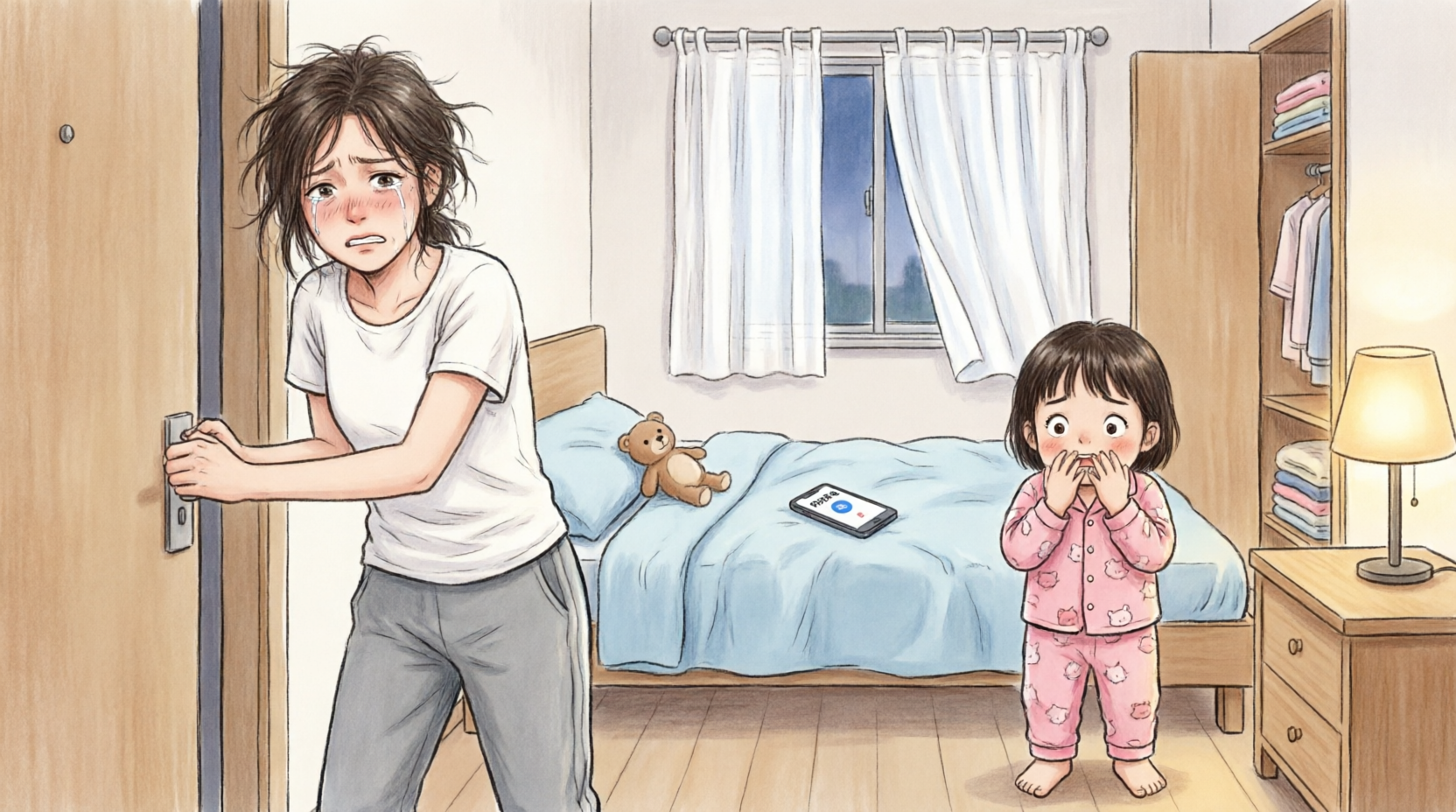
The Door That Would Not Open
The first thing that unsettled you was not the silence in the house, nor the way the afternoon sunlight stretched across the living room floor in long pale strips. It was the alarm panel glowing on the wall beside the front door, its soft blue light blinking in a pattern you had never seen before, as if the quiet suburban home you had lived in for years had suddenly developed a personality of its own.
Your daughter’s small hand tightened around your wrist.
Eight-year-old Maya rarely held on that tightly unless something truly frightened her, and when you glanced down, you saw the tension in her eyes as she stared toward the front door as if it had turned into something unfamiliar.
“Mom,” she whispered, her voice trembling slightly, “why is it making that sound?”
You had heard the faint chirp as well, though you tried to pretend it meant nothing. With deliberate calm, you walked toward the door and wrapped your fingers around the handle, fully expecting the simple click that had greeted you thousands of times before.
Instead, the handle refused to move.
You frowned, pulling again, harder this time, but the deadbolt held firmly in place, as though someone had sealed the door from the inside with intention rather than accident.
For a moment you simply stared at it.
Then the alarm panel chirped again.
The sound was quiet, almost polite, but it carried a strange sense of awareness, like the house was acknowledging your growing unease and reporting it to someone unseen.
You forced your shoulders to relax and turned back to Maya, who was watching you with wide eyes.
“Hey,” you said gently, kneeling beside her so your voice would sound steady. “We’re not stuck. The system is just acting weird. We’ll figure it out.”
She nodded, though the tightness of her grip on your sleeve told you she was not entirely convinced.
You reached for your phone.
The screen lit up immediately, but the signal icon showed nothing at all.
No bars.
No network.
Even the Wi-Fi symbol had disappeared.
The realization slid slowly through your mind, heavy and unwelcome: the house had been disconnected completely.
“Mom…” Maya murmured softly.
You looked down at her.
“I heard something,” she said.
At first you thought she meant the alarm panel.
But then you heard it too.
A faint thud echoed somewhere deeper inside the house, a dull sound that did not belong to pipes or settling wood.
It sounded like a careful footstep.
Your stomach tightened.
Your husband, Colin, was supposed to be on a business trip in Chicago. He had left that morning, suitcase rolling behind him, promising he would call when he landed.
Which meant one unsettling possibility remained.
Someone else was inside the house.
The Quiet Hiding Place
You did not allow panic to show on your face, because Maya was already frightened enough.
Instead, you gently guided her down the hallway toward the pantry beside the kitchen, the one place nearby that had a solid door and thick wooden frame.
“Let’s play a quiet game,” you whispered as you opened the door and ushered her inside.
The small space smelled faintly of cereal boxes and canned soup, the familiar scent oddly comforting in the middle of rising tension.
Maya looked up at you.
“What kind of game?” she asked.
You crouched in front of her and placed both hands on her shoulders.
“The kind where we stay very quiet and listen,” you said softly. “And you stay right behind me no matter what, okay?”
She nodded with serious determination.
Inside the pantry, you checked your phone again, though you already knew what it would show.
Nothing had changed.
Your mind raced through possibilities, searching for anything that might help.
Then you remembered something your mother had insisted on years ago.
A folder.
You pulled it from the shelf above the cereal boxes. Inside were printed documents—insurance papers, school records, copies of identification—and tucked behind them was a simple sheet of paper covered in handwritten phone numbers.
Your mother had always believed technology could fail at the worst moments.
Paper, she used to say, never lost its signal.
Colin had laughed about it once.
Now you found yourself grateful for the old-fashioned caution.
Among the numbers you spotted one that made your heart skip.
The landline.
You had almost forgotten the house even had one.
The phone still hung on the kitchen wall, rarely used but never removed.
You squeezed Maya’s hand.
“We’re going to walk to the kitchen,” you whispered. “Very quietly.”
She nodded again.
Together you stepped out of the pantry.
Every movement felt delicate, as though the floorboards themselves might betray you.
The house was so quiet it almost felt staged, like a room waiting for something dramatic to happen.
When you reached the kitchen, the old wall phone was exactly where it had always been.
You grabbed the receiver and pressed it to your ear.
Silence.
No tone.
Your chest tightened.
You lowered the receiver slowly, frustration rising in your throat.
Then your eyes drifted upward toward the framed family photograph hanging above the phone.
It showed the three of you at the beach last summer.
Colin’s arm around your waist.
Maya laughing between you.
You had never liked the picture much.
But today, for the first time, you noticed something hidden behind the frame.
A small black box.
A backup battery.
Your breath caught.
The alarm system had not simply been switched off.
Someone had prepared for it to stay off.
A Voice That Should Not Be There
Maya tugged at your sleeve.
Her eyes were wide again.
“Mom,” she whispered.
Before she could finish, a voice floated from the living room.
“Hello?” it called casually.
The voice was unmistakable.
Colin.
But he was not supposed to be home.
The sound of his voice, calm and familiar, sent a cold ripple through your body.
He sounded exactly like he always did when speaking to neighbors or coworkers—pleasant, reassuring, easy to believe.
Yet something about the tone felt wrong.
You pulled Maya gently behind you and stepped toward the hallway that led to the garage, where a side door opened to the outside.
Maybe that door was not locked.
Maybe you still had a way out.
Halfway down the hall, the living room light snapped on.
Bright and sudden.
You froze.
Colin stepped into view.
He was not wearing travel clothes.
No suitcase.
No jacket.
Just dark jeans and a gray sweatshirt, as relaxed as if he had spent the entire afternoon at home.
Behind him stood another man.
Broad-shouldered and silent, his hands resting in the pockets of a black coat.
You had never seen him before.
Colin smiled.
Once that smile had ended arguments and softened difficult conversations.
Now it looked unfamiliar.
Almost sharp.
“Hey,” he said gently. “Why are you hiding?”
He tilted his head slightly, pretending confusion.
“You’re making Maya nervous.”
Your daughter’s hand tightened painfully around yours.
You forced your voice to remain steady.
“Colin,” you said slowly, “who is that?”
Colin glanced at the stranger with casual amusement.
“Just someone helping me with a project,” he replied.
Then he looked back at you.
The warmth had vanished from his eyes.
“You weren’t supposed to know about it yet.”
The Story He Wanted to Tell
The stranger stepped forward one quiet pace.
His gaze moved from Maya to you as if measuring something.
Your mouth felt dry.
Every instinct told you that whatever was happening had been carefully arranged long before this moment.
Colin lifted his phone and tapped the screen.
The alarm panel chirped again in the hallway, confirming that he controlled every lock and sensor in the house.
“You’re making this complicated,” he said, sounding almost disappointed.
You understood immediately that the only advantage you had left was time.
So you kept him talking.
“Why would you do something like this?” you asked.
Colin sighed as if the conversation were tiresome.
“You’ve been distant lately,” he said smoothly. “I thought you might leave. I couldn’t risk losing everything.”
The explanation felt strange, like a story he had rehearsed many times.
“I never said I was leaving,” you replied quietly.
His eyes flashed with irritation.
“But you thought about it,” he snapped.
Then the calm smile returned.
“We can still keep things simple,” he continued.
His gaze drifted toward Maya.
“She’s young. She won’t remember much.”
Maya whimpered softly.
You stepped in front of her.
“Don’t talk about her like that,” you said firmly.
Colin’s expression hardened.
He turned slightly toward the stranger.
“Take her upstairs,” he said.
The stranger shifted his weight, preparing to move.
Your heart pounded.
If he separated Maya from you, the situation would become impossible to control.
You needed something—anything—that might slow them down.
So you pointed toward the corner of the living room.
“You can’t do anything,” you said loudly.
Colin frowned.
“What do you mean?”
“The house cameras record everything,” you replied. “And the footage uploads automatically. My sister has access.”
It was not entirely true.
But it was close enough to sound believable.
For the briefest moment, Colin hesitated.
The stranger glanced toward the camera near the ceiling.
Then Colin pulled out his phone and tapped the screen again.
A tiny light on the camera blinked off.
He smiled.
“Problem solved,” he said.
But you had never been trying to save the camera.
You only needed him to look away for a moment.
Running Toward Daylight
While his attention remained on the phone, your hand brushed against a metal baking tray on the kitchen counter.
You knocked it onto the floor.
The tray crashed loudly against the tile, the sharp noise echoing through the house.
Both men flinched.
That single second was enough.
You grabbed Maya’s hand and ran.
The garage door burst open as you shoved against it, cold air rushing toward you like a welcome shock.
You sprinted across the concrete floor and reached the side door keypad.
Your fingers flew across the numbers from memory.
The lock clicked.
You pushed the door open and sunlight poured in, bright and overwhelming.
Across the street stood your neighbor’s house.
You ran straight toward it.
Your fist pounded on the door.
“Please help!” you shouted.
The door opened quickly.
Mrs. Bennett, the elderly woman who lived next door, stared at you in alarm.
She took one look at your face and immediately stepped aside.
Inside the house she locked the door and reached for her phone.
“What happened?” she asked breathlessly.
You held Maya tightly against you.
“My husband is trying to hurt us,” you said. “Please call the police.”
She dialed without hesitation.
Through the window you saw Colin step out of the garage.
For a moment his expression showed pure frustration.
Then it vanished.
He raised a hand and waved toward the house as if nothing unusual had happened.
As if he were simply checking on his family.
The Smallest Voice
Police vehicles arrived within minutes.
Blue lights reflected across the quiet street as officers approached the house carefully.
Colin began speaking immediately, gesturing toward you and shaking his head as though everything were a misunderstanding.
But Maya stepped forward.
Her small voice trembled, yet she spoke clearly.
“I heard him,” she told the officer. “I heard Dad say, ‘Make it look like an accident.’”
The officer knelt beside her and listened carefully.
Colin tried to interrupt.
The officer raised his hand.
“Sir, please stop talking.”
Then the police entered the house.
You did not see everything they found.
But you heard enough.
Words like “tampered locks” and “flammable chemicals” drifted through the open doorway.
Your knees nearly gave out when you understood the truth.
This had never been a misunderstanding.
It had been a plan.
Colin was taken away in the back of a patrol car.
He looked furious, not frightened.
As the car pulled away, his eyes met yours once.
Then he looked away.
One Year Later
Life after that night moved slowly.
You stayed with your sister for months while the legal process unfolded.
Maya met regularly with a counselor who asked gentle questions while she colored pictures with bright crayons.
Some nights she woke up crying, and you would sit beside her bed until her breathing steadied again.
Eventually you found a smaller house.
It did not have the wide porch or polished kitchen of the old place, but sunlight filled the rooms every morning.
One quiet Saturday, Maya helped you water a small plant on the windowsill.
She looked up at you thoughtfully.
“Mom,” she asked, “are we safe now?”
You knelt beside her and brushed a speck of soil from her cheek.
“We’re safer,” you said softly, “because we listened when something felt wrong.”
She smiled.
And in that moment you realized that the real ending of the story was not the police lights or the courtroom or the night you escaped the house.
The real ending was your daughter learning that fear is not weakness.
Sometimes it is simply a voice asking to be heard.
And when you listen carefully, it can guide you toward the light.

