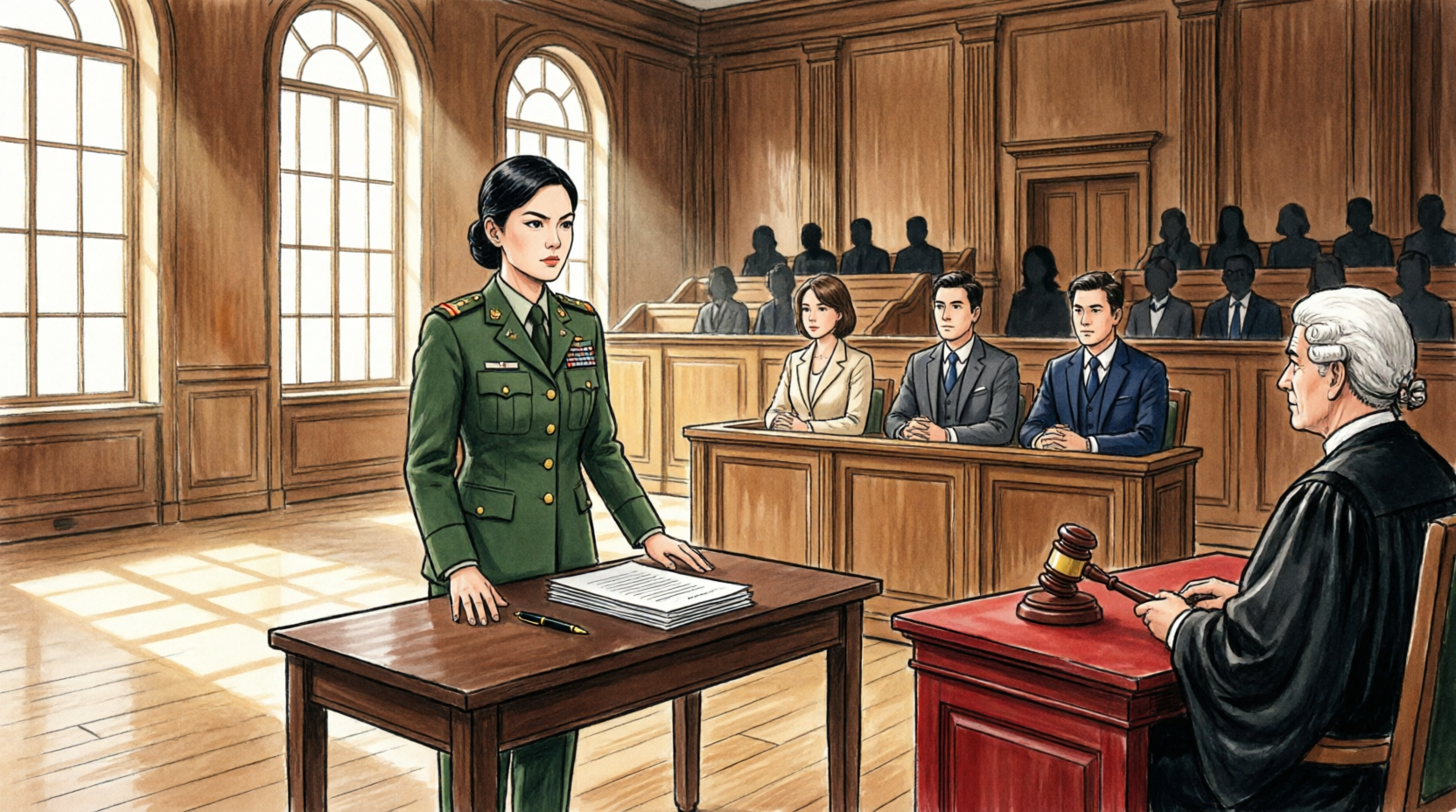
After My Millionaire Grandfather Died And Left Me Everything, My Parents, Who’d Ignored Me All My Life, Tried To Sue Me For The Money. When I Walked Into The Courtroom, My Mom Rolled Her Eyes, But The Judge Froze. “Wait… The Charges Are Against You?” He Said. They Never Knew Who I Really Was.
Part 1
My mother rolled her eyes the second I walked into the courtroom.
Not a subtle one, either. The full-body kind, like my existence was a stain on the day she’d spent hours ironing into place. She sat at the plaintiff’s table in a conservative black dress that screamed grief and restraint, except her face couldn’t hold the performance. That eye roll said what she never stopped saying in a thousand different ways: Here we go. Haley’s about to make everything about her.
My father didn’t roll his eyes. He just looked past me, bored, like a man stuck waiting at the DMV. Scott Morrison had been a professional hockey player once—big dreams, big shoulders, big appetite for attention—and even now, in a courtroom, he moved like he expected someone to ask for an autograph.
I didn’t look at either of them for long. I took my seat beside my attorney, Thomas Goldstein, and I let myself feel the weight of the room.
This wasn’t criminal court, where I usually lived. There were no handcuffs, no deputies guiding a defendant into place, no nervous family members clinging to hope that the system might bend for them. This was probate court—quiet, polished, full of restrained anger dressed in expensive fabric. The kind of court where people fought over what a dead person meant, because they couldn’t fight the dead person directly.
Across the aisle, my mother’s lawyer—Richard Palmer—stood to shuffle his papers with theatrical urgency. Palmer made his living off heartbreak stories told with perfect timing. He didn’t need facts; he needed a hook. He looked like the kind of man who could sell sadness.
The bailiff called the room to rise.
Judge Marcus Brennan entered, robe swaying, face calm. He took his seat, adjusted a stack of filings, and lowered his gaze to the docket like this was just another Tuesday.
Then he looked up.
His eyes moved from the page to my face, and something in him stopped. It wasn’t dramatic. It was worse—quiet, instant recognition. Like a door opening in his mind and letting in a whole history.
Judge Brennan blinked once, slowly, then set his pen down with care.
“Wait,” he said, not to the attorneys, not to the room, but to himself. “These allegations are against you.”
Palmer stiffened. My mother’s posture sharpened. My father actually looked up for the first time since we’d arrived.
Judge Brennan’s gaze stayed on me. He didn’t say my name yet, but I could tell he was matching the adult woman in front of him to the teenager he’d met years ago standing at Judge William Parker’s retirement party. My grandfather’s clerk, turned judge. A man who’d sat at my grandfather’s table, eaten my grandmother’s cinnamon bread, and watched my grandfather look at me like I was the best thing he’d ever helped create.
Judge Brennan cleared his throat and addressed the room.
“Before we proceed,” he said, voice measured, “I need to disclose that I had a professional relationship with Judge Parker. I clerked for him in the past, and I knew him personally.”
He paused, letting the air shift. “If either party has an objection to me hearing this case, you need to raise it now.”
Palmer’s eyes darted to my parents. He leaned in, whispering fast. My mother’s lips tightened. My father’s jaw ticked.
They didn’t know who I was.
That was the best part.
To them, I was still the abandoned baby. The inconvenient toddler left on my grandparents’ porch like a package they didn’t order. The teenager who stopped calling. The adult who disappeared into the background of their own lives.
They didn’t know I spent my days prosecuting people who lied for a living. They didn’t know I stood up in courtrooms like this and dismantled fantasies with evidence. They didn’t know my grandfather had prepared for this fight years before his death, the way he prepared for every ruling: carefully, quietly, with receipts.
Palmer straightened, forcing a confident smile. “No objection, Your Honor.”
Big mistake.
Judge Brennan nodded once, like he’d expected that answer. “Then let’s proceed,” he said, eyes sharpening. “Mr. Palmer, your opening statement.”
Palmer rose as if the courtroom were a stage. He adjusted his suit jacket, softened his expression, and walked to the center with the solemn cadence of a man about to perform grief on command.
“Your Honor,” he began, “this is a story about a devoted daughter and a loving father—separated by manipulation, by isolation, and by the calculated influence of someone who took advantage of an elderly man’s vulnerability.”
My mother dabbed at her eyes with a tissue she had definitely brought specifically for this moment.
I kept my face neutral. Inside, I was already tagging every phrase for later.
Vulnerability. Influence. Isolation. Manipulation.
All words people used when they wanted to turn love into a crime.
Palmer paced. “Judge William Parker lost his wife of sixty years. He was grieving. He was depressed. He was vulnerable. In that vulnerable state, the defendant positioned herself as his sole caregiver and convinced him that his own child—Diane Morrison—didn’t love him.”
I felt my chest go tight, not with pain, but with something older. The kind of anger that doesn’t flare; it calcifies.
Palmer’s voice softened even more. “The will we’re here about today doesn’t reflect Judge Parker’s true intentions. It reflects Haley Morrison’s calculated campaign to inherit his estate.”
Calculated.
The word landed like an insult to my grandmother’s garden, my grandfather’s Sunday dinners, the chess games, the homework, the quiet nights after my grandmother died when my grandfather sat in the dark holding tulip bulbs because he didn’t know what else to do with his hands.
Calculated was what my mother did when she showed up twice a year with expensive gifts she didn’t understand and left before dessert.
Calculated was what my father did when he stayed in the car so he didn’t have to face the man who raised the child he abandoned.
Palmer finished with a gentle flourish, stepping back like he’d just told a truth too heavy to hold.
Judge Brennan’s gaze moved from Palmer to me, then to my parents. The room waited, breath held.
Then Judge Brennan said, “Mr. Goldstein.”
Thomas stood. He didn’t pace. He didn’t soften his expression. He didn’t perform.
“Your Honor,” he said, “this case is simple. Judge Parker was brilliant, careful, and intentional. His will was not the product of coercion, but of decades of observation.”
Thomas looked straight at my parents. “The evidence will show that the plaintiffs received substantial financial support from Judge Parker during his lifetime—over twenty years—while barely maintaining contact. Meanwhile, Haley Morrison showed up. Consistently. For thirty-two years.”
He paused, then added, “The plaintiffs want the court to believe love can be forged. It can’t. But absence can be proven.”
Judge Brennan nodded slightly, eyes hardening.
“Call your first witness,” he told Palmer.
Palmer’s smile returned, bright and confident, like he hadn’t noticed the way the judge’s tone changed when he said my grandfather’s name.
“The plaintiff calls Diane Morrison.”
My mother stood, smoothing her dress with shaking hands. She walked to the witness stand like a woman stepping into a role she’d rehearsed. She raised her right hand, swore to tell the truth, and sat down.
Palmer approached her with gentle eyes.
“Mrs. Morrison,” he said, “tell the court about your relationship with your father.”
My mother’s voice wavered perfectly. “He was my hero.”
I watched her perform and thought about the last time I’d seen her in person before this lawsuit.
I was eighteen. My grandmother had just died. My mother came to the funeral, stood near the back, cried into my shoulder for thirty seconds like she wanted someone to see it, then disappeared before the reception.
Classic Diane Morrison behavior.
And now she was here, calling herself a devoted daughter.
The judge’s pen hovered above the paper.
My mother lifted her eyes and met mine for a second—just a second—like she wanted me to flinch. Like she wanted me to feel small.
I didn’t.
Because three months ago, I stood at my grandfather’s funeral and spoke words that made half the legal community cry. I buried the man who raised me. I read the letter he left, telling me I was the greatest joy of his life.
And today, I was exactly what he’d trained me to be.
The court didn’t know it yet.
But the judge did.
And my parents were about to find out that the daughter they abandoned didn’t grow up soft.
She grew up sharp.
Part 2
If my childhood had been a book, you’d think the plot twist came early.
A baby abandoned at three months old. Parents chasing careers and freedom. Grandparents stepping in, older and tired, deciding to start over when most people were counting down to retirement.
But the truth is, the real twist wasn’t that they kept me.
It was that they made me feel chosen.
My earliest memory is standing on a stool in my grandmother Helen’s kitchen, dumping chocolate chips into a mixing bowl. She let me pour in far too many. When the batter looked more like chocolate held together by dough, she laughed and said, “Best cookies have extra love and extra chocolate.”
Grandpa William came home in his robe sometimes—black, heavy fabric that made him look like a superhero. He’d scoop me up, flour in my hair, and ask how my day was with the intensity of a man preparing for oral arguments. Like the ants I’d found in the backyard were breaking news.
He listened. Always.
My grandparents never spoke badly about my parents, not once. When I asked where my mother and father were, Grandma would say, “They’re busy with important things.” She said it kindly, like she believed it.
Kids believe kind people.
But I wasn’t stupid.
I noticed the gaps. Other kids had parents who volunteered at school events. Mine had grandparents with early bedtimes and routines that smelled like peppermint tea and old books. At first, I didn’t care. Love was love, and my grandparents loved me in a way that filled the house.
Then I turned seven and got my first real crack in the story.
We had a Christmas concert at school. I had a solo—three lines in Rudolph. I practiced until my voice shook with nerves. My grandparents sat in the front row: Grandpa holding a video camera, Grandma clutching flowers from her garden like the performance was Broadway.
After the show, I watched my friend Emma get hugged by both her parents. Her mother kissed her forehead. Her dad lifted her into the air like she weighed nothing.
I turned back to my grandparents and asked, “Why didn’t my mom and dad come?”
Grandma smiled, but her eyes went sad. “They wanted to, sweetheart. They just couldn’t make it.”
I’d heard her on the phone the week before, calling my mother. I’d heard the silence, the excuse about Scott’s team holiday party, the way Grandma kept her voice sweet even when it hurt.
That night I stopped asking questions out loud.
Instead, I started watching.
When my mother visited, she arrived like a gust of expensive perfume and resentment. Diane wore designer clothes that looked wrong in our warm, worn living room. She kissed the air near my cheek instead of my skin, then spent the rest of the time critiquing how my grandmother was raising me.
“Too soft,” she’d say, as if tenderness were a flaw. “She needs discipline.”
Grandma would nod politely and offer coffee.
My father visited less. When he did come, he often stayed in the car. He’d honk until Diane came back outside. If Grandpa convinced him to step into the house, the air turned sharp, like everyone could feel the tension vibrating.
One time, I overheard Grandpa and Scott arguing at the front door. I was twelve, halfway down the stairs, frozen.
“One day that girl is going to be grown,” Grandpa said, voice low and dangerous. “And she’s going to remember who showed up for her.”
Scott laughed. Actually laughed. “Save the lecture, Your Honor. Diane and I are doing fine. Haley’s provided for. That’s what matters.”
“Provided for?” Grandpa repeated slowly. “Is that what you think parenting is? Writing checks?”
Scott scoffed. “It’s more than you did for Diane.”
Wrong thing to say.
Grandpa’s face went hard. “I raised my daughter,” he said. “I showed up. She chose to abandon hers. Don’t you dare suggest I’m the failure here.”
Scott left and never tried to come inside again.
I grew up watching my father on TV instead. Bruins games on in the living room. Grandpa didn’t care about hockey, not really. He cared that I knew my father existed somewhere, even if he chose not to exist in my life.
It could have made me bitter.
Instead, my grandparents made my life full.
Grandpa taught me chess when I was eight. Sunday afternoons, wooden pieces clicking on the board, him teaching me to think three moves ahead. He never let me win, which made me furious. When I finally beat him at twelve, legitimately, he was so proud he called three of his judge friends to brag like I’d won the Olympics.
Grandma taught me gardening. We had our own section of the yard—tomatoes, peppers, basil, tulips. She showed me how to read soil like a language. Dry means thirsty. Dark means ready. Patience means reward.
I didn’t realize until later she wasn’t just teaching me plants.
She was teaching me what consistent care builds.
They came to every soccer game, every debate tournament, every school play. Grandpa cleared his calendar, no matter what case he was hearing. Grandma made snacks and signs with my name. They cheered like maniacs.
I used to be embarrassed.
Now I’d give anything to hear Grandpa yelling from the sidelines again.
When I was eighteen, the universe took my grandmother away in one brutal afternoon. A stroke. Sudden. Unforgiving. One moment she was planting bulbs, the next she was gone.
I got the call from Grandpa while I was in class at college. His voice was small, broken. “She’s gone, Haley. She’s gone.”
I drove home six hours crying so hard my throat burned. When I arrived, Grandpa was sitting in her garden in the dark, holding the tulip bulbs she never finished planting.
I sat beside him. We didn’t speak. We just sat until the sun rose.
My parents came to the funeral.
They stayed for the service and left immediately after. No help with arrangements. No check-ins. No staying behind to fold chairs or hold Grandpa’s hand. Just long enough to be seen, then gone.
That was the moment I stopped making excuses for them.
It wasn’t confusion. It wasn’t busyness.
It was choice.
After Grandma died, it was just Grandpa and me. The house felt emptier, but somehow not lonely. We filled it with routines, with stories, with Sunday dinners that became sacred.
Sometimes we cooked Grandma’s recipes and pretended we didn’t miss her so much it hurt. Sometimes we ordered pizza and watched old movies. The food never mattered. The showing up did.
In the quiet after loss, Grandpa started talking to me about his work.
Not the glamorous parts. The hard parts. The weight of decisions that changed lives.
“The law is supposed to be blind,” he said one night over takeout, “but the people interpreting it aren’t. The trick is knowing when your humanity makes you more just and when it makes you biased.”
I soaked it up like religion.
That’s when I decided.
I would become the kind of person who showed up.
I would become the kind of person who didn’t flinch from truth.
And if the world ever tried to tell me my grandparents’ love didn’t count because it wasn’t convenient for someone else’s narrative, I’d be ready.
I didn’t know the fight would come from my own parents.
But Grandpa did.
He always thought three moves ahead.
Part 3
Law school was brutal in the way people brag about later.
Too much reading. Too much caffeine. Too many nights where my brain felt like a scratched record repeating case names until sunrise. I loved it anyway. Every time I wanted to quit, I thought about my grandfather sitting in a garden holding tulip bulbs and choosing to keep living.
I graduated at the top of my class.
Grandpa was in the front row recording everything like a proud parent. My parents weren’t there. They sent a card. Two sentences, generic enough to be addressed to a stranger.
I stopped being surprised years earlier.
The prosecutor job came fast. I thought I’d earned it purely on merit—grades, recommendations, interview. Later, Grandpa admitted he’d made calls. He’d vouched for me personally.
“I didn’t get you the job,” he told me. “I got you the chance. The rest is you.”
So I made sure the rest was me.
I worked harder than anyone in that office. Seventy-hour weeks felt normal. I took cases other prosecutors avoided—complex financial fraud, political corruption, white-collar crimes buried in spreadsheets and lies. I developed a reputation: thorough, relentless, prepared.
At thirty, I was handling cases that made headlines.
My parents had no idea.
Sometimes I imagined them watching the news, seeing my face on a courtroom steps interview, and feeling something—shock, pride, regret.
Then I remembered they didn’t watch anything that didn’t involve them.
After Grandpa retired, we doubled down on our Sundays. Dinner every week, no excuses. It was our ritual, the one thing that stayed unbreakable as everything else changed.
He taught me how to read people the way he read case law. He taught me courtroom strategy and the art of silence. He taught me how to keep my integrity when everyone around me found ways to compromise.
Then, three months ago, he died.
Eighty-seven. Peacefully in his sleep.
It should have been a mercy. It still felt like someone cut the floor out from under me.
His funeral was massive. Judges, attorneys, politicians—half the state’s legal world came to pay respects. People spoke about his decades on the Supreme Court bench, about his brilliance, his fairness, his legacy.
I delivered the eulogy.
I talked about Sunday dinners and chess games, about the way he listened like I mattered. I talked about Grandma’s garden and how Grandpa kept planting tulips after she died because love doesn’t stop just because someone is gone.
I saw my parents in the back row.
They arrived late.
They left early.
Classic Diane and Scott Morrison behavior.
A week later, we sat in an attorney’s office for the will reading. I expected sentimental things—books, his watch, maybe the old chess set.
What I got was everything.
The house. The investment portfolio. The savings. The life insurance.
Three million dollars.
I sat still, stunned. Not because of the money, but because I didn’t know my grandfather had built that much while raising me and caring for my grandmother and quietly supporting my mother’s adult irresponsibility for decades.
Then the attorney handed me a sealed letter.

